There is no shortage of vehicles available to purchase in the United States. The same can also be said for wheelchair accessible vans. When it comes to wheelchair vans, wheelchair users will find options varying from minivans and trucks to SUVs and sedans. But, when it comes to needing space and storage without compromising on handling, full-size vans are the preferred accessible vehicle for wheelchair users looking to shop for their next mode of transportation. Why is this exactly? In this post, we will cover the top 5 reasons wheelchair users buy full size vans and take a peek at some of the top selling full-size van models on the market.
Size Matters for Wheelchair Users
They say go big or go home, right? For wheelchair users looking to transfer into the driver’s seat or ride comfortably without leaving their wheelchair, there is no shortage of space inside a full-size van. And while it is likely that you already know that this type of van has more interior space, here’s a couple specifics that you might not know:
Extra Interior Headroom Reason #1: Added interior headroom can be achieved with a full size van by either lowering the floor or raising the roof. This option is popular with adult wheelchair users that sit fully upright in their chair and have a tall headrest. With the additional interior headroom, they can move around the interior cabin with ease and without having to worry about their safety.
Additional Load Capacity Reason #2: Both the chassis of a full-size van and also the lift used to convert it into an accessible vehicle have higher weight thresholds than most vehicles and ramps on the market. This becomes a necessity for some wheelchair users with larger, heavier power wheelchairs, thus making full-size vans with lifts for wheelchairs a popular option.
More Seating Options Reason #3: Flexible seating options come standard in all side-entry full size van conversions. For wheelchair users that are part of larger families, full-size vans are a popular option. With a variety of seating options, full size vans can comfortably seat six adults.
Enough Storage Space for All
Reason #4: Storage, storage, storage, and then some more storage. Because when it comes to storage, who would say no to more? Unlike a rear-entry minivan, sedan or SUV, wheelchair users won’t compromise storage space with a side-entry full-size van. This allows wheelchair users to take full advantage of the cargo space for spare wheelchair parts and equipment, any luggage or medical necessities they are traveling with, and also still have space for the other passengers’ belongings, as well.
Driveability for Wheelchair Users
Reason #5: Driveability. Full-size vans may seem intimidating to someone who has not driven one before. It is easy to see why this is; after all they are bigger than your average vehicle (but as we mentioned before, this is a benefit to some wheelchair users and their families). But in actuality, full-size vans handle much the same as any other vehicle on the open road.
The Best Selling Full-Size Accessible Vans
Now that we have covered the top five reasons why wheelchair users buy full size wheelchair vans, you might be left wondering which models they are buying. At Rollx Vans, we only carry the top selling full-size van models on the market which include the GMC Savana / Chevy Express, the Dodge Ram Promaster and the Ford Transit series. What makes these vans so popular? Let’s take a closer look at each of these models:
GMC Savana / Chevy Express Available in 4-wheel or all wheel drive, the GMC Savana or Chevy Express is one of the best selling full-size van models. Wheelchair users benefit from the 55 inch door height and available headroom options of 58 inches or 63 inches. And they love features like the rear back-up camera, the towing package option, and the option for a walk thru lift that allows for easy passenger access through the side doors. You can view our inventory of new and used GMC Savana and Chevy Express vans on our website .
Dodge Ram Promaster Another popular option for wheelchair users, the Dodge Ram Promaster is more in the mid-range between a minivan and full-size van in terms of sizing. Wheelchair users love the large interior of this van, the side door opening options of 57 or 68 inches, and also enjoy the towing capacity (up to 5,100 lbs!).
Ford Transit Series The last option on the best selling list, the Ford Transit van is also the newest full size van model on the market. Available in three model sizes, the Ford Transit van has something for everyone. New for 2020, the Ford Transit van is now available in all wheel drive with a twin turbo Eco-Boost engine. Passengers love the four person rear sofa seat that allows for additional passengers to ride in the vehicle comfortably and wheelchair users love the full automatic wheelchair lift and power doors.
Refrigerated truck is a complicated process with many challenges. It’s essential to maintain proper temperatures in order to ensure the food stays fresh and follows regulations to keep consumers safe, but this isn’t always easy.
Drivers who transport refrigerated goods require a deep knowledge of how refrigerated trailers function in order to execute a successful delivery. In this blog, we explore the top five refrigerated trucking challenges that the industry faces today.
Loss of Temperature
This is the first and most obvious challenge. The main cause of loss of temperature is poor loading practices, or when a package sits out on the loading dock too long. However, it can also result from the reefer unit being set at the wrong temperature — although reefer units are meant to maintain the temperature level, not take away heat and reduce the temperature. It is estimated by industry analysts that 32% of refrigerated cargo loaded onto refrigerated vehicles is at the wrong temperature at the time of loading. Temperature abuses that exceed the food tolerance level can have a huge effect on the quality of the food, leading to rejected loads by the receiver. Overall, loss of temperature can have a negative effect on your bottom line and reputation.
Equipment Failure
Just like any other piece of equipment, a reefer unit can experience problems and stop working. Some of the most common malfunctions include fluid leaks, faulty belts and hoses, faulty calibration, damaged air chutes, condenser issues, sensor malfunctions, door seals damaged, and bulkhead blockage. If these problems aren’t dealt with quickly, they can affect the temperature inside the reefer unit and compromise the quality of your load. To prevent this, modern refrigeration units can have more than 200 alarm or fault codes. However, don’t rely just on this technology — the best way to avoid equipment failure is to conduct regular maintenance checks.
Driver Mistakes
Any driver operating a reefer truck should undergo training so they know how to set controls for their reefer unit. Without this training, drivers may make the mistake of setting the reefer unit to start-stop mode instead of continuous-run mode or vice versa. In addition, drivers who aren’t familiar with the reefer’s alarm codes won’t know how to respond and identify a problem when an alarm is triggered. Another common mistake is forgoing a visual inspection of the load, which can cause drivers to miss an issue that could have been easily avoided. While equipment failure is unavoidable at times, driver mistakes can be eradicated with adequate education or by simply watching instructional videos that are available online.
Compliance Issues
In April 2016, the FDA finalized the Food Safety Modernization Act rule on the Sanitary Transportation of Human and Animal Food to prevent food contamination during transportation. This came as a response to listeria and salmonella outbreaks stemming from the handling of food. There are concerns because the document fails to clearly define what “adequately cleaned and sanitized” means, leaving it up to the discretion of the driver. This ambiguity leaves room for error and increases the likelihood of food contamination. However, fleets can do their best to eliminate any questions they may have about what constitutes as compliant practices by taking part in food safety training and keeping a record of procedures.
Identifying Quality Carriers
Due to the challenges listed above, it’s difficult to find a carrier with the experience and knowledge required to transport refrigerated loads without issue. On top of this, we are in the midst of a massive truck driver shortage. According to NPR, “The American Trucking Associations figures companies need about 60,000 drivers, a number that could top 100,000 in just a few years.”
International trade has existed for centuries, but there have always been limitations. When it comes to transporting perishable goods that must be kept cool, the challenges have been formidable. In the 1800s we sought to overcome these difficulties by placing ice and salt underneath temperature-sensitive goods during shipping. Often though, many of these goods would arrive spoiled, resulting in major losses.
By the 1900s, developments in refrigerated freight made it possible to transport goods over longer distances, with fewer losses, giving rise to cold chain logistics (or refrigerated logistics). What began with refrigerated (or reefer) train cars and cargo ships has exploded onto our highways with refrigerated trucks numbering in the millions.
Since then, the industry has grown to over 36 million loads of refrigerated products shipped each year. It seems this growth is likely to continue, as refrigerated containers, reefer ships, and other logistics software such as Transportation Management Systems software, improve. But even with these advances, challenges continue to remain, and restrictions are becoming increasingly difficult to navigate. Here’s what you need to know about refrigerated cargo transportation and freight logistics.
What is Transport Refrigeration?
Refrigerated vanor cargo ships, often referred to as a “reefer ships”, allow for the transportation of temperature-sensitive goods such as meat, seafood, produce, chemicals, and pharmaceuticals. These goods must be kept at appropriate temperatures to avoid spoilage. For many of these goods, refrigeration is absolutely essential, as they could not be transported without it. This is why the specifications for shipping such items are stringent.
You may wonder how these refrigerated transport methods work. For most, the technology is similar to your fridge and freezer at home, or the air conditioning unit in your car. Rather than producing cold, the units remove heat from an enclosed space. This is accomplished by an evaporator, compressor, and condenser system along with a gas or liquid coolant.
Unfortunately, there are a number of problems that can cause these units to work inefficiently. First, leaks are common problems in trucks, ships, and train cars that are constantly exposed to the elements and rough conditions. Second, each time the doors to the cooled compartment are opened, some heat gets in. This is particularly a problem for delivery vehicles which may have to make several stops on their routes. Finally, some small amount of heat can be produced by the products themselves, even after they’ve been initially cooled.
Shipping & Cargo Requirements
If you’re shipping perishable goods, either by land or sea, then expect a great deal of requirements and regulations. With the economic development of nations across the globe, and increased awareness among consumers who now favor perishable items in their diet, safety and health standards are more important than ever.
The implementation of the Food Safety Modernization Act only shows that these regulations are going to continue to affect shippers and carriers. Here are some of the requirements for refrigerated shipping that you need to consider, outlined by the GCCA (Global Cold Chain Alliance):
Proper refrigeration equipment design and maintenance
Type of transportation
Food safety procedures
Required temperatures for goods
Separation of goods
Sanitation standards
Trailer, container, and/or reefer requirements
Pre-loading considerations
Multi-temperature refrigeration
Pre-cooling
Packing considerations and requirements
Airflow/ ventilation
Processes of unloading
Time between shipping methods
Compliance requirements & reporting
Carbon dioxide limits (especially for items like fruits)
USDA requirements such as insertion of temperature probes to avoid insects and maintain specified limits
Documentation (especially important in the case of a claim
Shipping & Cooling Systems
There are several methods for shipping refrigerated goods. The most common is using reefer ships. Reefer ships are container ships that carry only refrigerated containers. They vary greatly from regular container ships in size, design, electrical distribution, power generation, and equipment. The special design of these ships makes them better suited for inclement weather since they are enclosed, sealed, and insulated. Because of their self-contained systems, they can often bypass cold storage upon arriving at their destination.
Reefer containers also have systems that cool the air off-put by the unit itself, in addition to their water cooling systems. This is used when a reefer shipping container is transported on a regular freighter, with the container is stored below deck where there is likely no proper ventilation.
Total loss refrigeration
An alternative to the typical mechanical refrigeration units discussed above, total loss refrigeration is a simpler solution used in some cases. During short journeys, frozen carbon dioxide or liquid nitrogen can be employed. It slowly evaporates, cools the entire container, and is vented out. This can last up to 30 days of transit. While this method has fewer maintenance costs, it’s impractical for most refrigerated transport uses.
Controlled atmosphere technology
Due to recent restrictions, new technologies are now focused on reducing greenhouse gasses as well as the cost-reducing potential of more efficient cooling systems.
Controlled atmosphere technology is a system in which the concentrations of oxygen, carbon dioxide, and nitrogen are carefully managed. This can help to delay ripening, aging, and decay as well as to improve the quality and taste of their goods. This technology is a step in the right direction, but there are still many challenges in the industry.
Challenges of Cold Chain Logistics
While the above is just a skim of the requirements to transport refrigerated goods, it at least touches on the complexity of cold chain logistics and the importance of supporting software to help manage it. However, compliance and regulations aren’t the only challenges. There are several other problems that refrigerated transportation can encounter through the course of daily operations.
Not Enough Specialized Transport Carriers
Competition has whittled down the number of refrigerated transport companies with reefer ships from twenty at the start of the millennium to a current total of eight worldwide. Diversified containerships that can hold reefer containers provide a faster return on investment.
Refrigeration Intricacies
Fruit and meat are the most common items transported by reefer ships, and always have been. But there is much more diversity in products transported today, and all have different requirements for transportation. Temperature control, ventilation, humidity, packaging, are all important and different for each item. Some items, like tomatoes and potatoes, require changes to the temperature while still in transit.
One solution to this has been pre-programmed multi-temperature systems, but as there are fewer companies offering refrigerated transport, this feature may be more difficult to come by.
Losses & Insurance Claims
For shipping companies who transport refrigerated goods, spoilage and loss is a real issue. If anything goes wrong with the climate control system in transport, entire loads can be lost, leading to huge expenses for the company. Due to the nature of perishable and temperature-sensitive items, many carriers do not cover them in their freight insurance policies. Even when they do, their liability is often limited.
Solutions for Shippers & Logistics Managers
While refrigerated transport and cargo logistics are complicated and costly, there are solutions to simplify, mitigate risk, and reduce costs. By following these guidelines, shippers and logistics managers can safely transport climate-controlled loads while avoiding most of the avoidable causes of loss and spoilage.
Proper cooling and packaging
The first way to avoid losses in transit is to prepare goods for shipment properly. In the case of refrigerated freight, especially for small shippers and e-commerce, products must be pre-cooled to specifications. Reefer trailers and containers can hold temperatures, but they aren’t designed to lower them. If it must cool down the packages to keep them at temperature, the container or trailer may experience strain and result in breakdown or failure.
This is the reason the first step in cold chain logistics is the cooling system used to bring goods to the proper temperature before shipment. Next, you’ll need to ensure that goods are stored in a climate-controlled facility until they are loaded onto a truck, ship, or plane. Just a few hours on the loading dock can cause some goods to warm up, leading to spoilage in transit. Finally, be certain to use proper packaging materials to keep warm air out of your goods, such as Styrofoam or insulated lining.
Documentation
Proper documentation is essential in any shipping logistics system, but even more so in the case of refrigerated or climate-controlled goods. If you ever have to file a claim, having the right documents are more likely to yield an accepted claim. You will need any receipts, records of inspection, pictures, videos from loading or unloading, documentation of any disputes, original order forms, appraisals, etc. Keeping the proper paperwork and documentation in order can mean the difference between an accepted claim and a rejection.
Software
Any type of supply chain management is complicated, but cold chain transportation adds further levels of complexity. Employing the right software, such as TMS, will allow you to centralize all of your data, keep track of shipments in real-time, and receive strategies for improvement.
Real-time freight tracking is becoming increasingly important in the transportation of refrigerated goods, as they are often integrated with temperature monitoring. These systems can tell when the door to the trailer has been opened, or when the shipment has halted, and even if or when the temperature changes in the container. This allows the shipper or carrier to take action before the shipment is compromised and also helps to stay compliant to shipping regulations.
You might have started a new business, perhaps your business is expanding & you need a new van, or you just want to replace an old one. Whatever your situation, choosing the right vehicle for your requirements is important.
You need the right van with the correct equipment for now & the future. So how do you make your mind up? Take a look at this handy guide to help you through the decision-making process
How will you be using your van?
Think About Payloads
Considering your daily business needs will help you decide what size van will suit you best. If you’re transporting supplies from your local merchant to site, you need to consider the size, weight & volume of your typical load to decide on the ideal payload for your van.
What is a van payload?
Payload is the maximum load a van can safely carry as specified by the manufacturer.
Here are some typical weights & sizes to help give you an idea:
A bag of dry sand -1330kg per cubic metre
A Euro pallet -1200mm x 800mm
Baled hay – Up to 225kg per cubic metre
A bag of cement – 25kg or 50kg
A sheet of MDF – 2440mm x 1220mm x 15mm weighs 30-37kg
A bag of potatoes – 50kg
A tin of 5L paint – 7kg
An overloaded vehicle could land you a fine & more, so it’s vital to consider the size, weight & types of cargo before you choose your van.
What Is Load Space & Why Is It Important?
Once you know the weights you’ll be transporting, you also need to calculate how much load space you’ll need. Load space is the available space inside a van that is designed to carry a load & is usually provided in litres or square metres.
If you know you’ll need to transport small tools or parts then a medium or small van might suit you, while if you know you need to transport several Euro pallets you might require a larger vehicle.
Think about how the load will be accessed. If you have a heavy load you may need access to the cargo area with a fork-lift truck. Access to the side of the van may also be important if you work in towns.
Finally, consider any special requirements the load may have. For example, a catering business may require temperature control.
How Many Seats Do You Need?
Calculate the maximum number of passengers you will carry. You may need a row of seats in the vehicle if your business involves teams, or if you are going to be using the van during the evenings & weekends with the family.
Think about driver comfort too. Most vans are pretty comfy these days, but if you spend all day in the van then it may be worth investing in a higher trim level for a little extra comfort.
Easy Access
Are there any access restrictions to consider where you will be working? For example, if there will be narrow streets or height restrictions then city vans with dual sliding doors that allow for curbside loading would be a good choice.
Type Of Journey
It’s also important to consider what types of journeys you’ll need to make. Short trips around urban areas put different demands on a van than long motorway trips.
Where will the load be carried?
How often will the van be at full capacity?
How frequently will you be using it?
Remember to think outside the box when you are considering how you will use your van. If you only carry large loads occasionally you might want to consider getting a smaller, more economical vehicle & hiring a bigger van as & when. Equally, a small van might be great value now, but think about your business needs in another year. Will a smaller vehicle still be suitable then?
What Are The Different Types Of Vans?
If you haven’t leased a van before then chances are you won’t know your panel van from your crew van & can only guess at the benefits of a car-derived van! Don’t worry, you are not alone. Take a look at our jargon-busting info below:
Panel Vans
Panel vans are the most popular & versatile van type on our roads. With a wide range of body styles they provide a good balance between load carrying ability & ease of driving.
Panel vans are used by many trades including electricians, plumbers & are popular with delivery firms.
Medium Panel Vans
The Ford Transit Custom is the nation’s favourite medium panel van along with the Mercedes Vito, VW Transporter & Vauxhall Vivaro.
Large Panel Vans
Larger vans such as the Mercedes Sprinter, Ford Transit, VW Crafter & Citroen Relay offer a range of larger payloads & vaster load space options.
Small Panel Vans
Small panel vans are ideal for sole traders or light delivery trades, & include the Ford Transit Connect, Vauxhall Combo Cargo & Citroen Berlingo.
Car-Derived Or Compact Vans
A van built on the platform of a car, with the rear seats removed to create loadspace. It is often used for light deliveries or by self- employed tradesmen who don’t need to carry too many heavy tools.
The most popular car-derived compact vans include the Ford Fiesta Sport Van.
Small Or Light vans
Carrying more than a car-derived van, the small van is easier to maneuver, generally more fuel efficient & easier to drive than a panel van. Small vans are favoured by trades with low load requirements & are favoured in a wide range of trades such as by plumbers, photographers & florists.
Popular small vans include the Citroen Berlingo, Ford Transit Connect & Volkswagen Caddy.
Crew Vans
Crew vans offer an extra row of seating behind the front seats for additional crew carrying capacity. They are usually a modified panel van & are also known as a double cab. The additional passenger capacity makes them ideal for businesses such as road gangs/scaffolders.
A wide range of vans offer crew options including the Renault Trafic & the Ford Transit Custom Minibus.
Specialist Vehicles
Some businesses require specialist commercial vehicles to cope with day-to-day operations. Our van range includes the following specialist body types:
Luton Vans: Popular with removal firms, Lutons are a box type body extending over the top of the cab for extra load space.
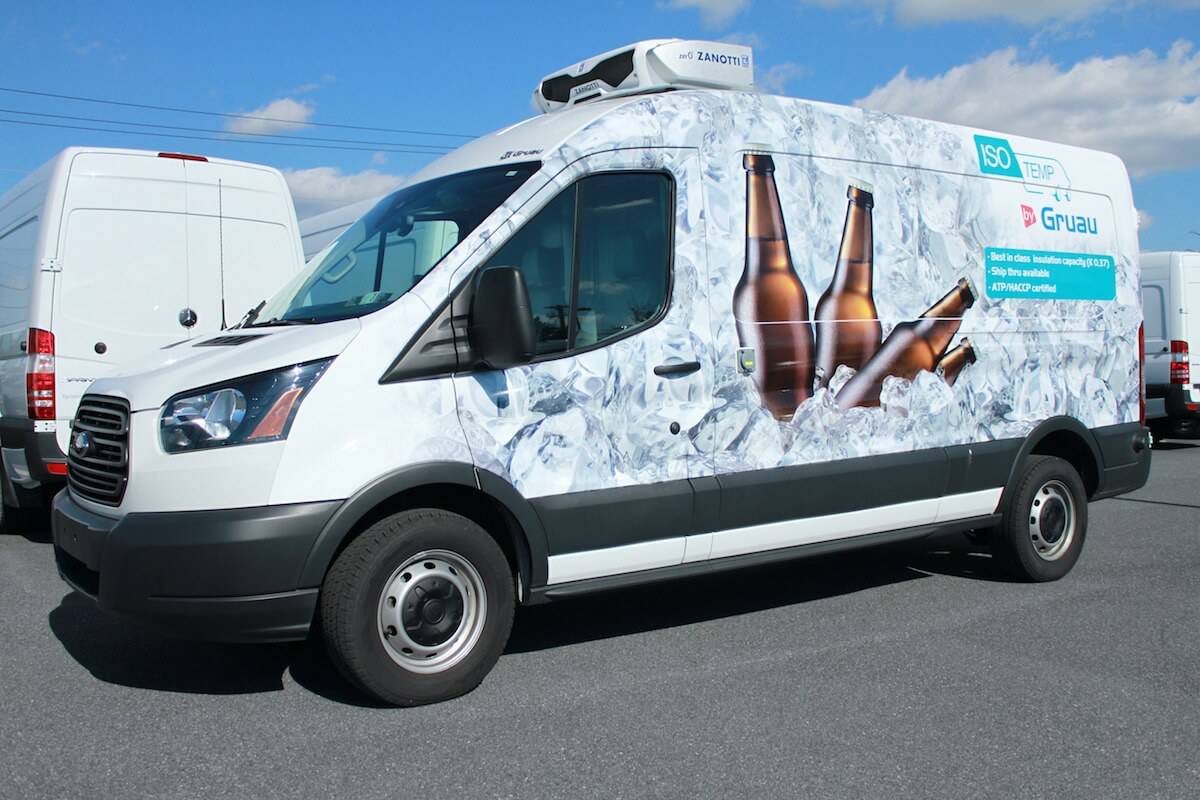
Refrigerated Vans: Refrigeration elements keep the contents of the van cool. Often used by catering firms or florists.
Curtain-side Vans: The van’s sides are made from canvas to facilitate easy loading. Great if access to the entire side of the vehicle is needed.
Tippers: A hydraulic ram pushes the front load area up. Useful for carrying heavy materials like aggregates which need delivery direct to site. Not to be confused with chassis cab vans or a conversion van.
Drop-sides: An open top with shallow sides that drop down for easy access. Often used in building/horticulture where bulky items need transporting.
How Do I Choose Van Size?
Now you know what type of van suits you best, you’ll need to consider what length & heights are best. Make a list of all the tools & equipment you carry, including for those bigger jobs where you have to transport more kit. This will help you determine the dimensions & load bearing capacity you need in your new van.
What Is A Van Wheelbase?
The distance between the front & rear axles has a big impact on the length & therefore the capacity of a van.
There are three options:
Short wheelbase
Medium wheelbase
Long wheelbase
The length of wheelbase will determine how much storage capacity you have & affect your van’s manoeuvrability.
On the Vanarama website the length of a wheelbase will be denoted by ‘L’ on van descriptions. For example, an L3 Ford Transit Van will be the tallest option available.
Don’t forget to consider extra equipment when you choose your wheelbase. If you need grabs, hoists or a tail lift for example, the wheelbase must be able to accommodate these.
Choosing The Right Van Height
Van manufacturers offer three different roof heights; low, medium & high. These & the different wheelbases are not always a standard size. So always double check sizing if you are comparing different vans.
Much like the lengths, the heights of a body type will be denoted by ‘H’ on van descriptions. For example, an L3H4 Ford Transit Van will be the longest & tallest option available.
Usually anything above an H2 is considered a high top van & should offer enough space to stand if necessary inside the load space.
The best body type will normally be the smallest one to do the job as this will be the most fuel efficient. Before selecting a low, medium or high roof there are some things to consider:
How much will your van need to carry?
Is it likely to run empty or light?
Are the loads high-volume/low-weight or vice versa?
Will you need specialist loading/unloading capabilities?
Are there any height or length limitations where you will use the van?
Wheels & Tyres
Few manufacturers will specify a tyre preference when customers order a new van, but there is usually an option to upgrade to alloy wheels. Alloys can also play a small part in your van better representing your business & making a strong first impression.
Cabin Comforts
Van cabins have improved a lot over the last 10 years. When you choose your van, make sure the cabin includes all the features you need to make driving & working in it a more comfortable experience – if it doesn’t, consider upgrading to a higher trim level.
The highest trim level of most panel, small & compact vans offer luxury features such as heated seats, infotainment systems, cruise control, climate control & music options like Apple Carplay or Android Auto.
Don’t Forget Running Costs
For any commercial van, running costs are a key consideration. When choosing your new van it’s important to take into account:
With the recent emergence of love for street food, it seems like everywhere I go, there’s a food truck parked on the curb.
Unlike the average hotdog cart, these trucks are custom-built to prepare and sell food on-the-go. More and more mobile restaurant owners have been opting for these trucks, as they offer space and flexibility to cook and serve on-broad the vehicle.
Typically, vans and trucks range from 15 feet to more than 30 feet, which is the perfect size for fitting in a team of at least two people – head chef and sous chef – and affording them ample space to work in.
And this is where my journey to find the perfect van for a food truck began.
However, I quickly realized that this wasn’t quite as straightforward as I had anticipated – just deciding on the right brand, make and model for a good van required extensive research, investment, and time.
So, the first step for this requires figuring out what your food truck will be offering, and how to optimize a van for it. Do you want it to be a rolling pizza van or a taco mobile on wheels? Would it run on gas or diesel?
Buying a food truck also requires a lot of back and forth communication with the manufacturers. For example, you need to know that the van you buy can easily be customized into a food truck – while having special features like a retractable awning, and a flat panel TV.
Another important consideration is whether a new truck would serve your needs better, or a used one.
New trucks tend to be rather costly, and they require longer lead time for the customization to be done. This option would typically leave you with very little funds for future renovations, and any additional elements that you would want to install yourself.
On the other hand, a used van would have none of these problems – and it is certainly more affordable than a new truck.
Regardless of whether you opt for a used or a new van, here are some of the best sprinter commercial van that can be converted into food trucks.
Best Vans Choices For Your Food Truck
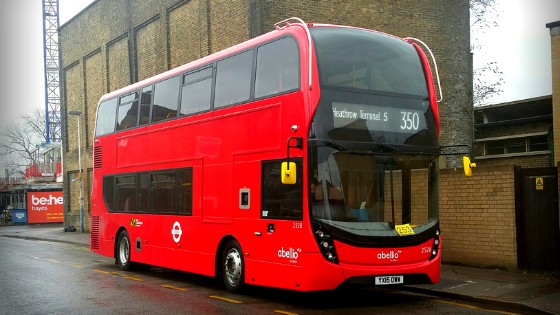
Alexander-Dennis Enviro400
Scrap the seating in the lower deck, and add in a huge kitchen with a bar and a carry-out window; this is really my favourite choice for a food truck. In fact, I would say that this bus is a food adventure just waiting to happen.
The upper deck seating area in the Enviro400 is ideally spaced for servers to manoeuvre up and down the aisle. I would further improve it by ditching the tour bus seats and replacing them with custom benches and anchored chairs.
Add in some romantic lighting, and it would be the perfect spot for a mobile date.
An additional perk is the standardized air conditioning that is installed in the lower deck – this means that your chefs and servers can stay cool in the blistering heat given out by the stoves and ovens.
Volkswagen Westfalia
This van is the first image that comes to my mind when I think of a food truck by the beach. Being picture perfect, however, isn’t the only selling point of this vehicle; it is one of the best options for anybody looking to start a food truck business without having to invest massive amounts of capital.
These iconic little vehicles have enough space to operate as a mobile food business with ease. Along with a lifting screened top, your chef and staff can easily wash up in the built-in sink, prep food, and even store equipment in little compartments which are built all over.
Additionally, the attached awning gives people the opportunity to cook outside – making it perfect for a summer barbeque set up.
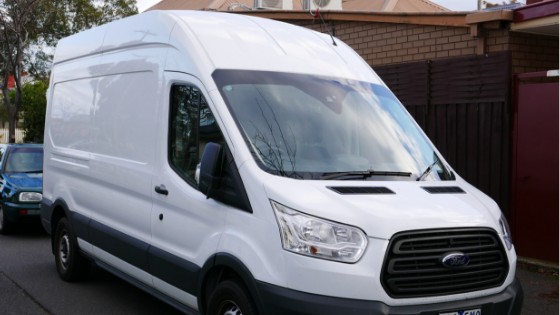
Ford Transit Full-Size Van
Ford vans have left me amazed at their versatility, and overall build quality for years.
With multiple body lengths available, three roof heights and wheelbases of two different kinds, Ford itself suggests that the Transit can be modified in 450 different ways.
The 180 degree opening rear doors allow for easy loading and unloading of ingredients, and other products. An easily installable awning lets the customers stay cool under the hot sun, and protected in case of rain.
The 487.3 cubic feet of cargo capacity, and 81.5 inches of interior cargo height, ensures that there is enough space for prep stations, grills and fridges. It also means that chefs can stand up comfortably without needing to crouch while doing their magic.
Accompanying the van is Ford’s reliability guarantee, which states that, “Transit durability test vehicles were driven more than 4.6 million miles, or far enough to circle the globe 185 times.”
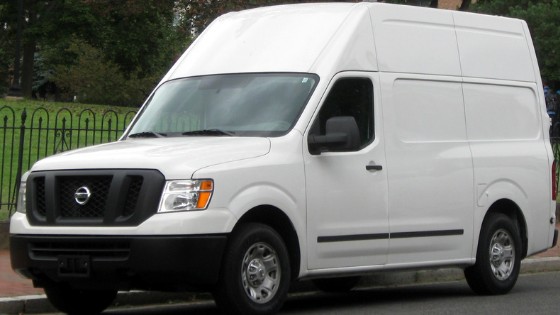
Nissan NV2500 Cargo
This Nissan van comes with a V8 powered engine, and 8700 pounds towing capacity with high roofs that are ideal for converting into a kitchen.
The 120 bolt electrical plugs in both the front and rear cabins provide up to 400 watts of usable power per plug; in other words, chefs can easily use the microwave and electric ovens at the same time. My favourite feature of this van is the foldable front passenger seat, which can be converted into a desk space, or perhaps even the counter.
The Nissan NV2500 is not only budget friendly, but a great choice for a food truck.
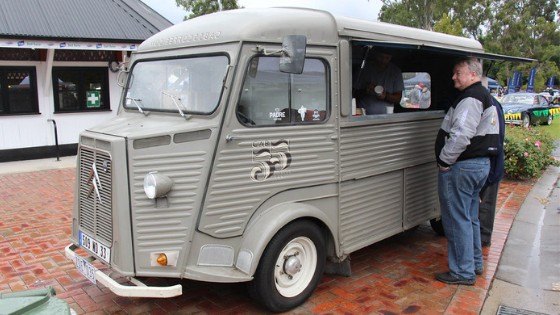
CITROEN H
The CITROEN H is only for people who realize the benefits of used vans over newer, more expensive models. The unusual shape of the Citroen H, and its vintage look never fails to catch the eyes of pedestrians – and as a food truck business, you really need to stand out to bring in more customers.
You can paint this van in specific colours, and revamp the interior by adding a drop-down hatch to make it the perfect food truck.
Besides these options, there are numerous other vans available in the market, like the VW camper which can easily be turned into a food truck, and the versatile Freightliner Sprinter Crew Van. Add on the multitude of customization options and upgrades, and you’re all set to open the food truck you’ve been dreaming about.
The world as a whole is doing its bit for the environment, and so you should be too.
One of the UK’s largest contributors to climate change is unsurprisingly the amount of cars we have on the road, and companies with van fleet pest controlare a big part of this. While companies like Mercedes-Benz and Nissan are pioneering the new world of electric vans not everyone can afford to totally switch over to the green alternative just yet, and so must make sure their internal combustion fleet is as eco friendly as possible.
Today we are going to look at the 5 top tips we have for making sure your fleet is as green as possible. They’re all simple, and all save you money! So there’s no excuse not to be practising them as an everyday measure.
1. Weight
Now this may seem like a tricky point, especially if you run a courier service with your fleet, but removing the excess weight from your vehicle will mean less fuel is burned on every journey. If you have to carry large loads as part of your business then there will be no getting around that, but try saving weight elsewhere in the car.
Things like toolkits, large jacks and even full sized spare wheels all add considerable weight to the overall payload of the vehicle. Replacing them with compact jacks and space-savers can be a simple and easy way to reduce the emissions of your vehicle. Even items belonging to the driver like spare boots and a large jacket add weight that needs to be moved, it may not make a big difference, but every little helps.
2. Tyres
Properly looking after your tyres is one of the easiest ways to keep your fleet’s environmental impact to a minimum. This is because of the simple principle that objects roll more efficiently with a higher surface tension, for example snooker balls are very hard and so roll very well, and an underinflated football will always provide more underwhelming results compared to one pumped to capacity.
Your tyres are the exact same, and so regularly checking their pressures is vital to ensuring you are not wasting fuel dragging extra material over the road surface. Keeping your tyres at the proper pressure will also increase each of their lifespans, as the surface area of the tyre in contact with the abrasive road surface will be minimised at any one time.
3. Minimise the use of Air Conditioning
This is rich from us, we know. At Cool Running Rental all of our vans use scaled up air conditioning units to lower the temperature inside their storage bays, but we still say limit the use of aircon where you can. The reason for this is that air conditioning units use a large amount of electricity and this puts a bigger strain on the output of your vehicle’s engine. To compensate, it burns more fuel to meet the output.
Next time you’re driving turn the aircon on and listen carefully to the engine, you will hear the revs ramp up perfectly in time with you pressing the A/C button. Now again, we’re not saying don’t use aircon at all, it’s there for a reason and should be used accordingly, but if the day isn’t all that warm, try driving with a window open and breathing fresh air instead. At lower urban speeds the amount of drag caused by having the window open will be negligible compared to the savings in fuel.
It is also incredibly important to make sure your aircon is properly serviced and functional. As with everything efficiency is key, and if part of your A/C system is singing out of tune then this will cause other elements to have to work harder to compensate, resulting in a greater fuel usage (and more than likely an underwhelming air conditioning output). Ensuring your system pressures and refrigerating gases are at the correct levels, and that the system is tuned well will make a noticable difference to your fuel usage.
4. Have your vehicle serviced regularly
There are a myriad of reasons to ensure your vehicles are serviced and maintained properly, but a very important one is the environmental impact your vehicle has. An engine is a finely tuned machine with an acceptable (and importantly regulated) output. Through use and abuse the engine may begin to break down however, meaning that it loses efficiency in key areas. This is completely normal, but it is very important to stay on top of.
A key example of something to monitor and regularly maintain is the oil levels and quality within the engine. As we all know an engine requires oil to run smoothly, but the oil will also need replacing after a certain number of miles. This is because as the oil ages it becomes thicker and more viscous causing it to act more and more like a gel than a fluid. In extremis this could lead to the flow of oil stopping altogether, as it is too thick to fit through the various tubes and apertures in the engine. The efficiency of oil is paramount to the overall efficiency and therefore output and emissions of the engine, and must be taken care of for this reason.
Engine cooling is also an important measure to check, as this is another big part of what keeps your engine running at its best. Ensuring that your coolant and radiator are working properly means that you don’t run the risk of your engine running too cold and wasting fuel, or too hot and eventually exploding. If you begin to notice your engine holding at a different temperature to normal (most likely the centre of your temperature gauge), then have it looked at by a professional as soon as possible to avoid long lasting damage and unnecessary environmental impact.
At Cool Running Rental, we service and clean all of our vans regularly to ensure that they are always running at peak performance. This means that we only put out the bare minimum emissions possible with our vans, but also that we aren’t often caught out with unexpected problems, as all of our vehicles are well looked after and maintained.
5. Driving style
Everyone is guilty of being in a rush sometimes, and this can cause us to employ the driving style normally reserved for racing drivers and criminals on the run. Excessive accelerating and braking may make you feel like you’re getting to your destination faster, but in actual fact it is just wasting fuel and pumping out more emissions, for the sake of a few extra minutes.
There are many things to consider and think about when buying awheelchair van. The very first would be to determine what type of vehicle is the best for you.
These days it seems just about anything can be converted to a handicap accessible vehicle, from pickup trucks to automobiles to SUV’s to motorcycles. The most popular and practical is the minivan.
These offer the most interior space, great gas mileage, fast in and out with a ramp for wheelchair passengers and easy transfer in and out of the driver seat for a wheelchair bound driver. There’s also a good variety of manufacturers and models to choose from.
The advantages of a wheelchair accessible car are they look great, get better gas mileage than a minivan, are easy to park and if you only need hand controls, you can even drive a sports car.
If you opt to go the wheelchair accessible van route, an important decision you’ll need to make to make is what type of entry the van will have. Rear entry vans and side entry vans are each more accessible under different scenarios.
Side entry vans make it much easier for handicapped individuals to get into pilot or co-pilot seats. On the other hand, rear entry vans allow disabled drivers to park in regular spaces and are usually cheaper. This type of entrance also doesn’t require any awkward maneuvering once loaded into the van.
Generally, your personal situation will dictate whether you require a specific entry.
And finally, a buyer must figure out how they will actually get themselves and their wheelchair into the van. Whether it’s a simple ramp or industrial lift, each method has its own pros and cons.
Whether the wheelchair accessible vehicle being considered is an individual’s first purchase or twenty-first, staying up to date on the latest technology and vehicle prices is essential to get a good deal and the best conversion for that person’s particular lifestyle.
So you’ve just started a new business. Now you need a vehicle. Maybe you need to haul stuff around town, or maybe it will even be your mobile office. You need a cargo van that’s dependable, and able to do the job, but why stop there?
Today’s cargo vans offer much of the same tech available in passenger cars. From Apple CarPlay and Android Auto to adaptive cruise control, you can have it all, plus room for tools, merchandise, or whatever else you need to haul. When it comes to the best cargo vans for small businesses, these are our top picks.
Ford Transit
The Ford Transit has been the go-to van for businesses around the world for decades, but it’s only been on sale in the United States since the 2015 model year. The Transit marked a major change from the old Ford E-Series, with a more space-efficient design and downsized engines for better fuel economy.
The Transit is getting a major update for the 2020 model year that adds more tech features to that solid foundation. A standard WiFi hotspot can support up to 10 devices, and works up to 50 feet away from the van. The 2020 Transit is also available with tech from Ford’s passenger cars, including the Sync 3 infotainment system with Apple CarPlay/Android Auto compatibility, and driver aids like autonomous emergency braking, adaptive cruise control, lane keep assist, and post-collision braking. Ford’s Sync AppLink also allows drivers to use certain apps without plugging in their phones.
On the power side, the 2020 Transit is available with a 2.0-liter turbodiesel four-cylinder engine. Ford claims this engine will produce more torque than the outgoing 3.2-liter inline-five diesel, while returning better fuel economy. Two gasoline 3.5-liter V6 engines – one turbocharged, one naturally aspirated – are also available. For 2020, Ford’s ubiquitous 10-speed automatic transmission is standard across the board – offering a wider spread of gear ratios than any other full-size van. All-wheel drive is also available as an option for the first time.
Ford Transit Connect
Ford was the first automaker to bring a modern small van to the United States, and the current-generation Transit Connect is still a great option for small businesses. It’s a perfect fit if you need to haul cargo, but don’t need a full-size van.
With its relatively low seating position and compact proportions, the Transit Connect drives more like a car than a traditional van. Power comes from a 2.0-liter four-cylinder engine with direct injection (Ford also offers a more basic 2.5-liter four-banger for fleet customers). For 2020, the Transit Connect also gets several new driver aids, including adaptive cruise control, lane keep assist, and autonomous emergency braking.
The Transit Connect has plenty of connectivity tech, too. Like the larger Transit, it’s available with a WiFi hotspot that can support up to 10 devices, as well as Ford’s Sync 3 infotainment system with Apple CarPlay and Android Auto, and a wireless phone charger.
Mercedes-Benz Sprinter
It may be surprising to learn that a manufacturer famous for luxury cars also makes commercial vehicles, but Mercedes’ Sprinter is the preferred choice of large companies like FedEx and Amazon.
The recently-redesigned Sprinter borrows some tech from Mercedes’ passenger cars. It was actually one of the first vehicles to get the MBUX (Mercedes-Benz User Experience) infotainment system, which includes natural-language voice recognition and a voice assistant that responds to the prompt “Hey Mercedes.” Apple CarPlay and Android Auto are available as well, and the larger optional touchscreens have pinch-and-zoom capability.
If you’ve got more than one van, Mercedes also offers a data-management platform to help you keep track of them. A built-in modem allows owners to track everything from a van’s current location to its maintenance records. That makes it easier to schedule when vans will be used, and when they will be taken out of service for maintenance work. It’s also presumably a way for nosy bosses to keep tabs on van drivers.
Nissan NV200
The Nissan NV200 is a compact van that tries to maintain some of the feel of larger vans. Its tall seating position and cab-forward design will likely be more familiar to drivers stepping down from full-size vans than the rival Ford Transit Connect and Ram ProMaster City.
Like the Ram, the Nissan has asymmetrical doors that can open up to 180 degrees. Interestingly, Nissan took the opposite approach to Ram, placing the narrower door on the driver’s side so it doesn’t get ripped off by passing cars. Maybe someone should just figure out a way to make van doors smaller.
The NV200 is a bit light on tech, but it does offer better warranty coverage than its rivals, at five years/100,000 miles for both the basic and powertrain warranties. The passenger version of the NV200 has also proven to be pretty rugged in New York City taxi service.
Refrigerators aren’t often thought of as being interesting (unless you run a refrigerator van business like we do), but we know that there is much more to the world of fridges than you’d think. That’s why we at Cool Vans have put together this list of weird refrigerator facts!
We offer the best reefer and refrigerator vans. All of our vans are cutting edge, a step above the competition, and ready for a full day of work. We offer rentals for those who use reefer vans every once in awhile, and reefer van purchases for those who will need a van daily!
There Is a National Clean Your Fridge Day
That’s right, there really is a day for every occasion. On November 14th of every year, refrigerator owners are expected to clean out their fridges. We do hope that this isn’t the only day of the year that people clean their fridges, but it’s a free country. Much like our refrigerator vans, we think that fridges should be cleaned often for best use. If you need tips for cleaning your refrigerator or refrigerator van, check out our cleaning guide here.
The Largest Fridge in the World is 27 Kilometers Long
That’s right, five hundred feet beneath France and Switzerland there is a near 27 kilometer (~17 mile) long refrigerator. Though it could contain several lifetime supplies of ice cream sandwiches, it is actually where the world’s largest particle accelerator is. Called the Large Hadron Collider, the facility helps physicists run experiments to further their understanding of the way the universe works.
Freon Isn’t in Fridges Anymore
The chemical that most people associate with refrigeration is actually no longer used for it. Freon is considered too environmentally detrimental for consumer use, and cheaper, safer refrigerants like HCFC-22 and HCFC-14 have replaced them. These days freon is only used outside of the US in refrigerators, and even then, it is rare. Our own refrigerator vans haven’t used freon ever. The models that we carry, are some of the most advanced on the market, and we proudly rent them out in the Las Vegas area at very affordable rates.
There Are Secret Fridges that Protect Plants All Over the World.
These secret refrigerators are dotted in far reaching places like Antarctica, Finland, and Russia. Other ones are even under universities! They were built to hold seeds for long periods after the start of the cold war because genetic engineering was on the rise, and a potential nuclear war could drive away all life. The fridges were built to hold seeds for both research and to replant the earth. Pretty dark, but still cool to know that there are refrigerators out there like this.
Portable Fridges Are Growing in Popularity
Despite the fact that over 8 million fridges are purchased every year in the United States, a growing amount are not the full-size home fridges we normally see. This is because, these days, young adults expect to rent for most of their lives or have taken up semi nomadic or nomadic existence by working on the move from vans or trucks. Using portable fridges is, therefore, easier to move from apartment to apartment or have strapped in the vehicle they live out of. If anyone is looking for a more mobile lifestyle and lives in the Las Vegas area, we sell reefer vans that would make fantastic live-in refrigerated vans, if retrofitted well!
Well, we hope that this article is as entertaining for you as it has been for us! If you need perishables protected in transit or for short term storage, check out our rent or purchase one of our state-of-the-art refrigerator vans!
As a savvy business person, you are always on the look-out for ways to save and get better return on your. As an expert in commercial Van and Truck rentals we Special Offers can offer you that ‘cheap’ route and provide greater value for your money.
The Dangers of “Cheap”
There are some companies out there that market their rental vans as “cheap deal” and “a bargain” because they have cut corners. Some of the issues you may face when working with these providers might include:
Ignored routine maintenance and critical safety checks
Use of inappropriately-sized tyres and replacement components
Rental vans that have known safety issues
Tips for Finding Cheap Van Rentals
Save money on your next Van and Truck rental without compromising safety. This is why we offer genuine Special Offers while giving you access to our well-maintained, reliable fleet. Here are some ways you can save on your next rental van:
Daily Deals: We offer Daily savings opportunities that change each month. For example, you can get our large van for an unbeatable per day. We also offer Comprehensive Hire Drive Insurance, if required.
Midweek Specials: If you are renting a van in the middle of the week, National Truck Rental offers special Discounts on multiple sizes of van rentals.
Weekend House Movers Special: For those moving to a new house over the weekend, we have great weekend deals – including our Mini Mover for just €165.
You do not have to worry about safety or reliability.















 Commercial Van Solutions