Power only trucking. Perhaps you’ve heard the term before. But, what is it?
When a company has a full trailer that needs to be shipped, but no truck or driver to move it, then they hire one. This is especially true for companies that, economically, don’t need their own fleet. Depending on how much freight you need to move, you can hire from one driver upto an entire team. This is power only trucking.
What Are The Benefits Of Power Only Service?
A special factor to note about trucks that provide power only service is that they utilize a fifth wheel. This makes it easier to accommodate a vast array of cargo sizes and weight. Standard axle and four-axle units are usually available too.
One of the biggest benefits of power only is that you can have a truck and driver pronto! Say, you get your containers filled, but discover you are a few drivers/trucks short of what you originally planned. This is where power only trucking comes in.
As well, sometimes companies get unexpected freight that needs to go fast. When the unpredictable happens, shippers can call up a power only service to handle the load.
Power only service also makes it easier for smaller companies to find reliable drivers that have the experience and licenses to carry their loads.
What Loads Are Commonly Moved By Power Only Services?
Power only is a flexible service, molded to accommodate all types of loads. Generally, this service is utilized for moving the following:
What is Refrigerated Transportation and How is it Changing the World Around Us?
What is Refrigerated Transportation?
Refrigerated transportation (or reefer freight) is a method for shipping freight that requires special, temperature controlled vehicles. The vehicle transporting the products being shipped has a built-in refrigeration system that keeps products at a desired temperature throughout the transportation process.
The first rudimentary version of refrigerated truck was born in the 1800s, when cargo transporters would place ice and salt below temperature-sensitive goods in train cars. This process was horribly inefficient and inevitably led to major losses in the value of goods and profitability.
In the 1900s, more efficient modes of refrigerated transportation were developed, and improvements in technology have given us cold chain logistics, which has become a massive industry and continues to grow.
The Benefits of Refrigerated Transportation
For many product types, refrigerated transportation is not an option, it is an absolute necessity. The benefits of refrigerated transportation are centered around safety, compliance and basic supply and demand.
Shippers of perishable products rely on refrigerated delivery service
The most obvious benefit of refrigerated transportation is that it keeps products from deteriorating and losing their value during the transportation process. This is not only true for food, such as produce, meat and dairy, but also for other sensitive items such as medical products and pharmaceuticals.
A rising demand for fresh perishable goods
Refrigerated transportation allows products in need of temperature-controlled transportation to be moved from point A to point B more quickly and efficiently than alternative modes of transportation. Because of this, items in high-demand, such as fresh meat and seafood, rely on refrigerated transportation.
Refrigerated freight applies to a wide range of product types
When people think of the types of products that necessitate refrigerated freight, the mind goes straight to perishable foods. In truth, refrigerated or temperature-controlled transportation is necessary for many other types of products, ranging from precious art to valuable chemicals and personal care products.
Compliance and regulation in the world of shipping
Recent regulations have made it absolutely imperative for shippers to seek out and implement refrigerated transportation. We will explore this further in the following section.
What is the State of the Refrigerated Freight Industry?
The refrigerated transportation industry is booming. In fact, the refrigerated transportation market in the US is projected to grow at a compound annual growth rate of 12.44 percent from 2014 to 2019. The market is projected to reach 3.25 billion tons by 2022. There are a variety of reasons for this growth:
Regulation makes refrigerated delivery service a must
The first is increased scrutiny by the FDA for safe food handling throughout the supply chain from manufacturer to the end user. One of the obvious pieces of the supply chain is temperature controlled vehicles for safe transportation of the product as to maintain freshness and prevent foodborne illness.
In fact, in 2015, the FDA’s Food Safety Modernization Act (FSMA) ruled that transporters of refrigerated freight be required to implement procedures for complying with provisions for temperature control, as well as the way this information would be relayed to both shippers and the end user.
The Act also included stricter requirements for training drivers on temperature management and reporting for each shipment. Companies which have successfully adapted to these regulations are the most qualified long term partners for shippers seeking to move refrigerated freight.
A refrigerated truck can be vital to businesses that need to transport goods at a certain temperature.
For example many food products will need to be transported at a certain temperature in order to prevent them from going off or out of date. There are plenty of different styles and types of refrigerated van available; therefore choosing the right refrigerated van can be an important decision and a costly one if it is not made correctly.
In this blog entry we have put together some top tips and things that you should consider when choosing your refrigerated van.
It is important that you provide the seller or the company converting your vehicle with as much detail as possible so that they can help you work out which type of van will be most appropriate for your industry specific needs. You might want to consider…
What temperature do you require your goods to be chilled at?
This depends on what food you are transporting. For example, ice cream needs to be at -20 and frozen meat no warmer than -15. If you’re carrying bread or cold meat you would be using just chilled operation at around plus 2 or 3, similar to a home refrigerator temperature.
Do you require a chiller van or a freezer van?
Again this will require you to think about the type of products/ goods that you are going to be transporting in these vehicles. Some conversions will allow you to split the temperature in the van so that you can transport good that might require different storage temperatures. All RVR vans have dual compartments, allowing you to carry foods at different temperatures.
Will you need to defrost the goods in your van?
Most vans will defrost on a timed basis. Systems and kits can also be installed to help maintain a constant temperature within the van. All RVR vans have an automatic defrosting system.
Will you need to keep the van refrigerated overnight?
Some vans will allow you to attach a plug in electric stand that will allow you to keep the goods in your van refrigerated and cooled over night without the need for the van engine to be kept running. This can often be a cost effective solution for storing your food at the correct temperature required. All RVR vans have this facility.
How long are you going to need your van for?
Varying contracts can usually be taken out on hiring a refrigerated vehicle. This can range from day hire to weekend hire, monthly hire to seasonal hire or long term contract hire.
Remember a good refrigerated van business should be able to help you with all your refrigerated needs.
Whether you realize it or not, you rely on refrigerated vans every day of your life! In fact, keeping refrigerated trucks at the right temperature when transporting food can actually save you from illness and disease.
About 48 million people get sick from a foodborne illness every year in America. About 3,000 of the 128,000 people who end up in the hospital from these illnesses will die.
If you are starting your own food delivery business or have something perishable to transport, then this article is for you.
The importance of refrigerated truck temperatures cannot be understated. Here is everything you need to know about the importance of temperature regulations.
Why Refrigerated Trucks?
There are many uses for refrigerated trucks aside from just transporting food. For example, refrigerated vehicles are often haul pharmaceuticals that must maintain specific temperatures.
Temperature-controlled transport is also protects fine art and antiques that require a stable climate to preserve them. Personal care products such as perfumes and cosmetics can be damaged by extreme climates and temperatures.
If you’re hauling food or other delicate items you must have a reliable refrigerated vehicle to ensure your cargo arrives intact at its destination.
Temperature Risks
Some foods are more likely to spoil from fluctuations in temperature than others. For example, ice cream will quickly melt if there is an equipment failure during the trip.
This means that refrigerated goods must be checked often to be sure that they are safe and preserved. If your truck’s temperature is not maintained, an entire shipment of food products could be ruined.
Food is vulnerable to bacteria, disease-causing microbes, or pathogens that can only grow at higher temperatures. Food such as meats including chicken, beef, pork, and turkey are more vulnerable to foodborne illnesses.
That’s why making sure to track the humidity levels and the exact temperature of a refrigerated truck is so important. If frozen items within the truck were to thaw, refreezing the food could still result in foodborne illnesses.
Refrigerated Trucks You Can Rely On
Having a refrigerated truck fail you while transporting items is a serious deal. Not only could your entire shipment be ruined but you could also be risking the health of a large number of people.
That’s why it’s important to make sure you are renting or purchasing your refrigerated truck from a reliable source. Before being put to use the refrigerated transport vehicle must be approved by health authorities in the region.
It’s also important to determine what types of food you will be hauling. Find a truck that will maintain the right temperature for your goods—whether heated, frozen, or refrigerated. This will keep your food and your customers safe from food or beverages that have been infected or contaminated by bacteria.
Create the Coolest Truck
When it comes to keeping your business cool, refrigerated trucks help protect your consumers and goods during transportation.
Refrigerated truck temperature is an aspect of your business you can’t ignore. This can make or break your delivery as well as your customer loyalty.
Refrigerated trucks are very complex specialist machines that provide an essential service in the transport of perishable goods and vital medicines. These vehicles make a considerable impact on most people’s lives, but due to their background nature not many people pay them much mind. Well here at Cool Running Rental we want to change that, and so today we will be looking at exactly how these modern machines are born.
What is a refrigerated van?
Before we get started, let’s look at what actually makes up a refrigerated van.
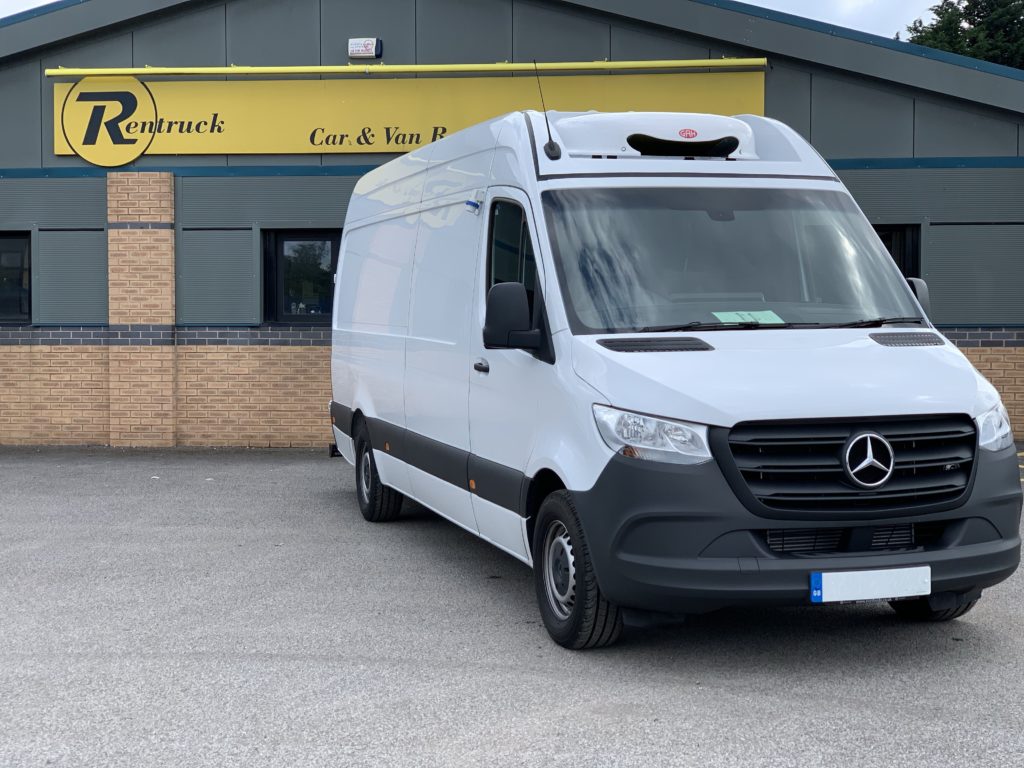
A refrigerated vehicle can be any class of vehicle; be it van, lorry or train car, that has been adapted to have a temperature controlled storage compartment and an onboard refrigeration unit. What this means is that you have a way to move goods that need to stay cold in one self contained vehicle.
How do they actually work?
To understand the process of converting a refrigerated van, we need to know what actually goes into one. In essence, they work exactly like a household fridge. The biggest element of any temperature controlled vehicle is the insulation, which allows you to maintain a constant temperature inside regardless of the temperature outside. In theory a well insulated van should be able to easily transport ice over a relatively long distance without it melting as the insulation should keep heat from getting in.
The second key part of a refrigerated vehicle is the refrigerator itself. This operates by circulating a coolant fluid through the inside atmosphere of the vehicle, collecting any heat (this part is called the condenser), and then transporting this heat outside of the vehicle via the evaporator, before recirculating the coolant back inside to repeat the process. What this creates is a one way cycle for the heat to leave the vehicle without being able to get back in. This, combined with the insulation effect in the storage compartment means that the temperature will only go down as the system is active, and is how we have refrigerated vehicles!
So how are they actually made?
Most refrigerated vans actually start out life as regular transit vans, and are converted to the specialist role later on, and this is what we are going to discuss today.
Preparation and unit installation
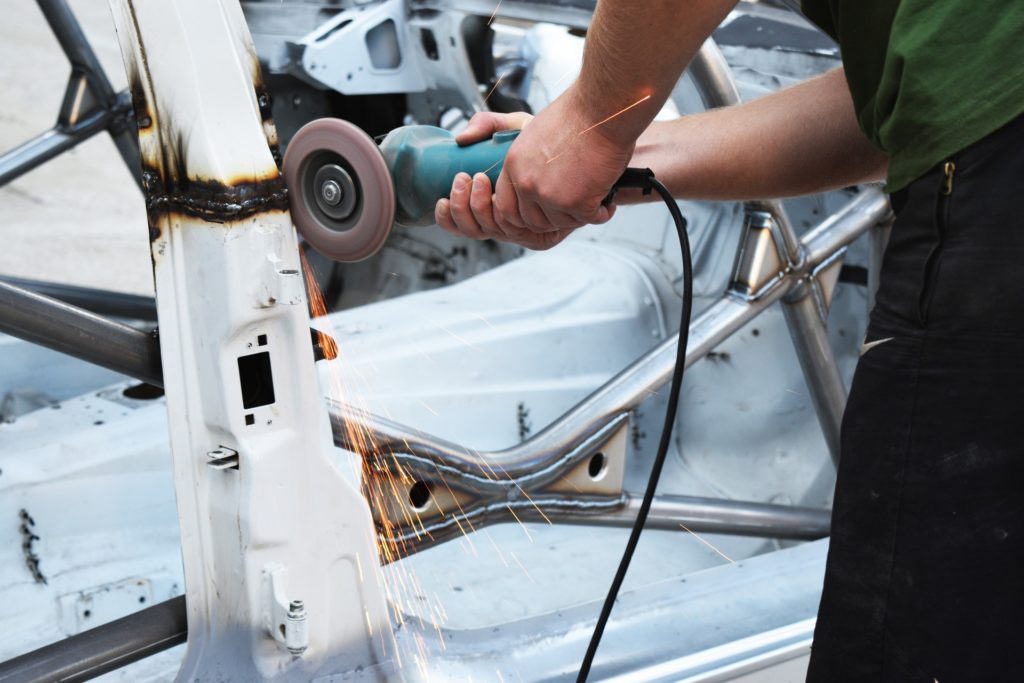
Before anything can be added to the van, it needs to be stripped back to its bare bones. This means removing all internal panels, and ensuring that the entire structure of the vehicle is clean, working properly and free of damage. Once the shell is good to go, fitting the refrigeration unit begins.
Fitting the unit itself will vary from vehicle to vehicle as some larger vehicles can fit the unit above the cab, and some have to fit it on the roof. In both cases, the body of the vehicle has to be adapted. This means making a significant cut to the body of the vehicle that has to be made in a way that will not affect the structure. Often this aperture is cut in the roof panel, between structural pillars so as to support the heavy refrigeration unit securely.
Once the cut has been made, the refrigeration unit is then carefully lowered into place and secured to the structure of the vehicle. At this point the vehicle has technically been converted, but the real magic comes with the insulation.
Insulation
Installing an insulation kit to a vehicle is like tailoring a suit to fit. To maximise space inside the van while maintaining a perfect seal the insulation panels have to be custom made to fit the type, make and model of vehicle you are putting them in. Once created, these panels fit together like a giant jigsaw, to create a perfectly encapsulated chamber inside.
The insulation installation often begins with the flooring panels, as these provide the foundation for the rest of the chamber and allow you to secure the entire system to them without compromising the integrity of the van’s native flooring that could lead to corrosion. Once the floors are in, we move on to the major bulkhead and first wall panels.
It is important to secure the cab bulkhead and side door panel as soon as possible, as once the remainder of the system is installed these areas will most likely be inaccessible. With the major bulkheads secured the remaining wall panels are carefully slid into place and positioned right up next to each other, with a small gap for the sealing trim to go between.
The next major hurdle to overcome are the rear wheel arches. As these are one of the biggest contributors to heat in the back of a vehicle, due to the tyres and brakes radiating heat into them, these must have an extra layer of insulation wrapped around them, and then set in place using a wheel arch cover. Tightly insulating this area is one of the key factors that will make or break a vehicle conversion.
With all the panels in place, a seal will be created throughout the entire storage area. Every little gap between panels and every small crevice in the corners is filled with an insulating foam, and then set in place with a special trim, creating a perfect seal. This is extended to the doors with a double layer of rubber gasket seal, that perfectly traps any cold air from getting out, and keeps any hot air from getting in.
Finishing touches
With the van insulated, and refrigerated, it is time to add the electrics and other finishing touches to make it a perfectly serviceable vehicle again. This includes adding a special coating to the floor of the vehicle to protect the insulating panels from the wear and tear of goods being taken in and out, and also to protect against any moisture that may be present inside. With all of the above complete, this van is then ready to transport perishable goods over long distances without any worry of them being damaged.
Here at Cool Running Rental we specialise in providing temperature controlled vehicles for hire to specialist services that need them. Many people fail to realise the importance that refrigerated vehicles hold in today’s world, and many more people are unaware that the technology is actually older than you might think!
So why is mobile refrigeration important? Well, without it many of the simple things we enjoy in life wouldn’t be possible. For instance the mass transport of perishable foods from one place to another, the key factor in the success of Supermarkets, would be impossible without the help of refrigerated vehicles!
Another key role that refrigerated vans perform is transporting vital medical supplies such as blood and vaccines through the cold supply chain to hospitals and other places where they are desperately needed. Refrigerated vans haven’t just made our lives easier, you could say they also save lives.
But where did modern refrigerated transport start? With one, very talented man.
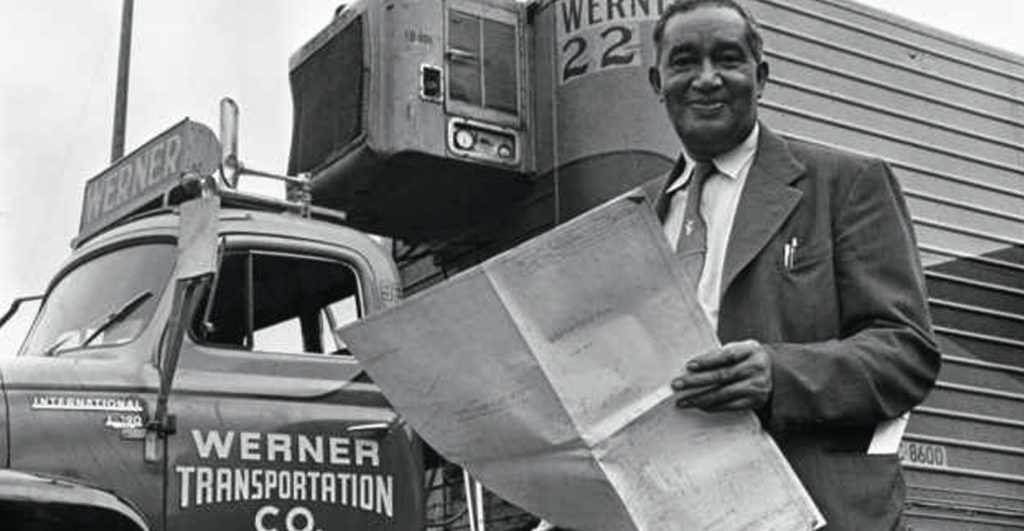
Frederick McKinley Jones – The “King of Cool”, and the father of modern mobile refrigeration.
Image credit: worldkings.org
Frederick McKinley Jones was a remarkable man, who battled a difficult upbringing and eventually became one of the great success stories of 20th Century America.
Early Life
He was born in May of 1893 to parents of different races in Cincinnati Ohio, and it wasn’t long before his childhood had taken him down a difficult path. Jones’ mother had abandoned him and his father, and by the age of 7 Jones had been sent to live with a Catholic Priest in Kentucky, after his aging father could no longer care for him.
Little is known about these years in Jones’ life, apart from that his father died just 2 years after sending him away. Another year later, at the young age of 11, Jones decided to run away from Kentucky, and seek work in his hometown of Cincinnati.
Upon arriving back in the Ohio city, Jones managed to get by doing a variety of odd jobs and piecing together a wage. One of these jobs however, would be the making of Frederick McKinley Jones. He had began work as a cleaner in an automotive garage, sweeping floors and tidying tools, and over time developing a keen interest in the mechanics of motorcars.
This budding passion grew, and Jones spent several years working at the garage, steadily moving from janitor to apprentice, and eventually from apprentice to foreman. He had mastered the trade of vehicle mechanic by the age of 19, and had set himself up for greatness.
Pre-War
In 1912 Jones decided to leave the Cincinnati garage that had been his home for the better part of a decade, and set out to find work elsewhere, eventually landing at a farm in Hallock Minnesota. Here his job was to fix and maintain the farm’s vehicles, and this was also an opportunity for him to expand his knowledge of other technologies and machinery.
During his time in Hallock, America joined the First World War, and as a young male Jones was drafted to go and serve on the European continent. Jones’ service was no detriment to his learning though, as he was employed to make repairs to a wide variety of machines and other equipment.
Post War
After the war, Jones returned to the farm in Hallock and continued to learn as much as he could, this time in the field of electronics. His experience in the war had no doubt aided his learning, and before long he was embarking on a very large project. The town of Hallock had decided to fund a new radio station and they needed an engineer to fabricate the transmitter needed for the station.
Naturally Jones took to the challenge like a fish to water and before long the new Hallock radio station was operating successfully, relying every day on the remarkable talent of a man with no formal education. This new-found skill for electronics brought Jones onto the radar of a man called Joseph Numero, a leading name in the Cinema industry whose company made filming equipment. Numero hired Jones to improve the sound equipment made by Cinema Supplies Inc., based upon a device Jones had created on the farm in Hallock that could combine sound with motion pictures and revolutionised the cinema industry.
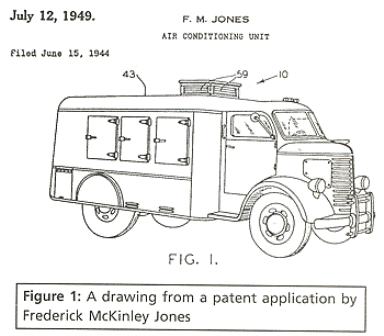
This friendship with Numero would soon turn into Jones’ greatest success. In 1938 Jones invented the first truly portable air cooling unit that was designed for vans (where all the predecessors had been mounted on trains due to their size). Originally designed for businesses transporting perishable foods, Jones’ units gathered success quickly as they allowed small shops to sell their wares much further-a-field, as opposed to before where they had only been able to service their immediate localities.
Following the successes of Jones’ invention, his friend Numero decided to sell Cinema Supplies Inc., and together they partnered a new company: the US Thermo Control Company, which later went on to become the Thermoking that we still use today!
Image credit: worldkings.org
World War 2
Like many other technology companies, the Thermo Control Company (TCC) found themselves benefitting from the necessities of war. With the outbreak of conflict in Europe, Africa and Southeast Asia the Army’s needs for rations, both food and medical, grew at an alarming rate. Jones and Numero were well suited to this growing need, as their vans could preserve supplies and take them further to the Army’s hospitals, or right onto the front line.
Specialist logistics units sprang up across the Army, including the aptly nicknamed “Penguin Fleet”, whose job it was to transport blood, medicine and food to ensure that the fighting lines were well provisioned, and the wounded received the treatment they needed. This vital service that TCC’s refrigerated vans were serving was well compensated, and by 1949 TCC had grown to be worth $3million, a mighty sum equivalent to 10 times that number today!
How have modern vans changed?
In truth, modern refrigerated vans haven’t changed their core mechanics much since Frederick McKinley Jones’ pioneered the technology. The units have become smaller and more efficient, and the insulation of the vans has become more effective, but the core concept remains the same!
The major modernisation in refrigerated vans has come in the vehicles that they are based on! As time has progressed, the trusty “white van” has become more and more accessible to smaller businesses, and with them the refrigerated conversions.
Commercial suppliers like Mercedes and Volkswagen have helped to create an industry aimed solely at providing transport for these small to medium sized companies, and combined with the modern Thermoking refrigeration units the transport of perishable goods has never been easier.
Where is the future of refrigerated vehicles headed?
With the advancements in electric vehicles, it is no surprise to see that refrigerated vans aren’t far behind the curve.
Nissan have already released their e-NV200 which can be readily converted, and we’re very excited to see what can be done with Mercedes’ eVito, as we have already used the traditional engine Vito to great effect!
Refrigerators aren’t often thought of as being interesting (unless you run a refrigerator van business like we do), but we know that there is much more to the world of fridges than you’d think. That’s why we at Cool Vans have put together this list of weird refrigerator facts!
We offer the best reefer and refrigerator vans. All of our vans are cutting edge, a step above the competition, and ready for a full day of work. We offer rentals for those who use reefer vans every once in awhile, and reefer van purchases for those who will need a van daily!
There Is a National Clean Your Fridge Day
That’s right, there really is a day for every occasion. On November 14th of every year, refrigerator owners are expected to clean out their fridges. We do hope that this isn’t the only day of the year that people clean their fridges, but it’s a free country. Much like our refrigerator vans, we think that fridges should be cleaned often for best use. If you need tips for cleaning your refrigerator or refrigerator van, check out our cleaning guide here.
The Largest Fridge in the World is 27 Kilometers Long
That’s right, five hundred feet beneath France and Switzerland there is a near 27 kilometer (~17 mile) long refrigerator. Though it could contain several lifetime supplies of ice cream sandwiches, it is actually where the world’s largest particle accelerator is. Called the Large Hadron Collider, the facility helps physicists run experiments to further their understanding of the way the universe works.
Freon Isn’t in Fridges Anymore
The chemical that most people associate with refrigeration is actually no longer used for it. Freon is considered too environmentally detrimental for consumer use, and cheaper, safer refrigerants like HCFC-22 and HCFC-14 have replaced them. These days freon is only used outside of the US in refrigerators, and even then, it is rare. Our own refrigerator vans haven’t used freon ever. The models that we carry, are some of the most advanced on the market, and we proudly rent them out in the Las Vegas area at very affordable rates.
There Are Secret Fridges that Protect Plants All Over the World.
These secret refrigerators are dotted in far reaching places like Antarctica, Finland, and Russia. Other ones are even under universities! They were built to hold seeds for long periods after the start of the cold war because genetic engineering was on the rise, and a potential nuclear war could drive away all life. The fridges were built to hold seeds for both research and to replant the earth. Pretty dark, but still cool to know that there are refrigerators out there like this.
Portable Fridges Are Growing in Popularity
Despite the fact that over 8 million fridges are purchased every year in the United States, a growing amount are not the full-size home fridges we normally see. This is because, these days, young adults expect to rent for most of their lives or have taken up semi nomadic or nomadic existence by working on the move from vans or trucks. Using portable fridges is, therefore, easier to move from apartment to apartment or have strapped in the vehicle they live out of. If anyone is looking for a more mobile lifestyle and lives in the Las Vegas area, we sell reefer vans that would make fantastic live-in refrigerated vans, if retrofitted well!
Well, we hope that this article is as entertaining for you as it has been for us! If you need perishables protected in transit or for short term storage, check out our rent or purchase one of our state-of-the-art refrigerator vans!








 Commercial Van Solutions