Posted in cargo van, Commercial Van, Ideas & Tips, Multifunction Power Systems, News & Updates

Know the different types of forklift trucks and choose the right one for your operation

Forklift trucks have been here for a little under a century and today, it finds usage in every warehouse operation in different corners of the world. The first forklifts were developed owing to manpower shortage caused by the First World War.

In the early 1920s, the design of forklift evolved from a tractor to a machine that boasts vertical lifting mast. Development of forklift advanced with the advent of the Second World War. It played a significant role in armies throughout the world during the Second World War.

After the Second World War, the development of forklift gained momentum. The battery-driven forklifts made its appearance in the 1950s. The specialized forklifts like Narrow Aisle Reach truck also came into being during this time. In the 1960s and 1970s, improvements in electronic control were undertaken. This helped forklifts to acquire more versatility. The companies also started considering warehouse efficiency.

Today, we can power forklift using a number of options like diesel, gasoline, compressed natural gas, and liquid propane gas.

Classifications of Forklift

There are different types of forklift trucks. Let’s check out on them

  • Counterbalance Forklift Trucks

This is one of the most common types of forklift trucks and most people think of it as soon as forklift trucks are mentioned. The forks protrude from the machine’s front. The truck is possible to be driven to the exact location of the load. No reach facility is thus necessary here. These are diesel, gas, or electric powered.

  • 3 Wheel Counterbalance Forklift Trucks

This is similar to the counterbalance forklifts. It just includes a single drive wheel. These are perfect to use in applications where space is limited. This truck ensures maximum productivity.

  • Reach Trucks

These trucks are designed chiefly for warehouse operation.

They are perfect to operate in the narrow aisle warehousing spaces. They come with 2 outer legs that help in distributing the load of the weight. The drive wheel is located under the seat of the operator. The driver sits sideways while operating the machine.

Some manufacturers design these trucks with a tilting cab mechanism. This ensures a more comfortable viewing position for the operator.

  • Hand Pallet Trucks

These trucks are designed to move palletized loads; they are simple to operate.

A huge variety of hand pallet trucks is available.

  • Euro pallet compliant
  • Standard pallet compliant
  • Foldable
  • Low profile
  • Wide fork spread
  • All-terrain
  • Stainless steel construct
  • Narrow fork spread
  • Short forked
  • Long forked
  • Powered Pallet Trucks

These trucks operate in a way similar to the hand pallet trucks. Here the lifting of the load, as well as truck movement, is powered by an electric motor within the machine. It comes with a ‘paddle’ control that selects the forward and the reverse direction. It also boasts a button control to lower or raise the forks. As with all electric-powered trucks, the batteries need to be charged.

These trucks operate best on smooth and flat surfaces.

  • Teletrucks

These are specialist machines. They come with an extending mast rather than a standard straight mast found on the reach or the counterbalance trucks. The chief benefit on offer is excellent access. Cost is its drawback. There are also a few reliability issues owing to complexity in the structure and the design.

Which Forklift Truck Should you Opt For?

Most people make the mistake of thinking that just any forklift truck can do the job. These commercial vans are a customized piece of equipment built specifically for end-users based on need. The following points will help you choose the right forklift truck.

  • Match Specifications to Facility

The specification of a given forklift truck must match with the need of a facility. This is especially significant for big businesses that require a large number of forklifts.

  • Know the Needs

A good dealer will spend time finding out your needs and pinpoint a machine that can cater to all these needs. The key points covered here include

  • Weight
  • Dimension
  • Forklift class
  • Packaging of the material to be lifted
  • Know the Local Laws

Remember the local laws and government policies. It may dictate a few specifications that the forklift needs to possess.

Posted in cargo van, Commercial Van, Ideas & Tips, Multifunction Power Systems, Refrigerated Van

3 Key Steps to Setting up a Small Fleet

1. Preparation and Planning for your Small Fleet

The first step is most crucial to the success of your up and coming small fleet. You need to consider the impact of running your own company and how you will best manage it. Below are some tips to bear in mind when starting up:

  • The Market. Be sure to spend time carefully researching the market niche for your small fleet. Learn your customer base and size up your soon-to-be competitors. It is important that you know what you are up against and that you have a strategy to build your own loyal customer base. Decide how you are going to get your name out there. If possible, use your vehicles like moving billboards. Plan to have your fleet vans wrapped and get your company name and logo out there on the streets. Projecting a good image to potential customers is extremely important.
  • Expenses. Make a detailed plan of your expenses and your projected profits. Some expenses may include the purchase of a new vehicle or business location. There will also be payroll taxes, worker’s compensation and insurance, and of course your employee’s wages and benefit costs. How much you are able to spend on start-up costs will determine the size of your fleet but don’t make the mistake of multiplying your profits by the number of vehicles. Expenses may outweigh the profits in the beginning however that should change as you break further into the market.
  • Management. Plan how you will manage your small fleet in the most efficient way possible. Think about your invoicing and filing systems. How will they be best managed so it is an easy process for you and your customers? Scheduling is also important. GPS tracking devices can be extremely useful for this. By knowing exactly where your drivers are at all times, this will allow you to schedule their next appointments and give your customers an estimated arrival time.

There is a lot of planning needed when starting up a small fleet of your own and it is a good idea to get a second opinion. Speak to a consultant or a friend who may have gone through the same thing. They will make sure nothing is overlooked and will have helpful tips to get you started. 

2. Choosing the Right Vehicle for your Small Fleet

The next step is to choose the right cargo van to best maximize your potential. Take a look at the characteristics you’ll need the most in your fleet. Some factors include:

  • Price. Decide what are you willing to spend on your van. Do you want to buy it for the least amount possible in the beginning, and maybe upgrade once you are making a steady profit? Or do you want to bite the bullet and get a more expensive van that will last you for many years?
  • Fuel savings. Are you concerned with getting the best mileage possible? If you foresee your vehicles traveling over large distances daily, then a van with high fuel savings probably makes the most sense. Not only will you be saving money but you will also be making less of an impact on the environment.
  • Size. The size of your vehicle depends on your job. For fleets in a busy city, a smaller van makes more sense as it can fit into tight spaces and underground parking lots. However, it depends on what you will be using your vehicle for. If you plan to create a work station in the back of vehicle, then a high roof van is a much better option. Your employees will have the space to stand up without bending. The van size also depends on what you plan to carry. If you will be hauling skids, you need to make sure they will fit in your van and that they will not be heavier than the vehicle’s load capacity allows.

These are just a few suggestions to look into when choosing your fleet vans. Do some research on the cargo vehicles available and narrow them down to the one you think will meet your small fleet needs.

3.  Van Equipment for Your Small Fleet Van

Lastly, choose an upfit for your small fleet vans. Having the right van equipment for your work is an important factor in keeping the tools in your vehicles organized and in keeping your employees safe. Here are some products that you might consider putting in your vehicle for a better work experience:

  • Shelving. Outfitting your vehicle with shelving is a smart choice. Instead of having all your tools rolling free in the back of the van, they can be placed neatly on the shelves. This will help keep everything tidy and decrease the amount of time your employees spend searching for their parts and equipment. Bins and dividers can also be purchased with the shelves to offer an individual spot for the smaller tools.
  • Partitions. If you plan to put tools and equipment in the back of your vehicle, then a partition is mandatory. Although most cargo vans are sold with an OEM version, you may want to upgrade to one that will better suit your needs. For example, if your employees will constantly be entering the back of the van, you will want a partition with a door. Partitions are there to keep your driver’s safe, so why not get the most use out of them as possible?
  • Ladder Racks. If carrying any sort of ladder in your fleet van, a roof rack is absolutely necessary. There are many different types available out there to suit your needs. First, decide which type of ladders and how many each vehicle will need to carry. Then research the rack that will be the most beneficial. If your employees will be accessing their ladders many times during a day, maybe a drop-down rack is the best option to reduce strain. If you are transporting both ladders and additional materials, then a cargo rack would be ideal.

These three items are just scratching the surface when it comes to van equipment. There are many other options to choose from for your small fleet vans, including floors and an endless variety of accessories.

Overall, there are great profits that can come out of owning a small fleet. As your small fleet becomes increasingly well known and you are able to break into the market, monetary benefits will follow. Yet maybe more than that, is a sense of satisfaction that comes with running your own company. You are your own boss with the ability to build your small fleet around the corporate values you believe in.

To get a consultation about the right package for your fleet, contact one of our fleet specialists.

Posted in cargo van, Commercial Van, Ideas & Tips, News & Updates, Van Ladder Racks

How to Choose a Ladder Rack for Your Work Van

A ladder racks for vans is one of the simplest and most effective ways to customize the storage space for your work van. While most vans come with some form of cargo transportation for the extra items which cannot fit inside the van, customizing the rack to suit your specific needs is one of the best ways to organize yourself and deliver the maximum efficiency in your business.

An added ladder rack will revolutionize your business regardless of whether you are a contractor, plumber, landscaping expert or other contractors.

Increasing the levels of safety as you transport your tools: the ladder rack is made in a manner that secures bulk cargo safely. This minimizes the possibility of something falling off the roof during transportation and keeps everyone safe on the road.

  • Enhancing capacity: The other amazing benefit which you get from this type of ladder is that it increases the amount of cargo which you can carry on the roof or other parts of the vehicle. A ladder takes a lot of space inside the van, but will not be a problem when placed atop the vehicle. 
  • Efficiency and productivity: Most contractors waste a huge chunk of their time loading and unloading equipment from their vans. This is something which can be avoided when you attach the ladder to the top of the roof as it will increase access.

Those are a few of the benefits which come with installing the right rack for your ladder.

Assess you transport needs

The first thing to consider is the length and the weight of the ladder that you will be transporting, and also if you will be transporting other things in addition to the ladder. If you have other bulky items that you will be carrying on the ladder in addition to the ladder, you have to look for a large enough rack to accommodate the other items. Alternatively, you can have a rack custom made to suit your specific needs.

Consider your type of van

Not all rack types and design will fit onto all van types. The crucial thing to understand here is that different vehicle manufacturers make ladders and racks which are specifically suited to the vehicle model. The most commonly used vans by people in the delivery and service industry include the Mercedes Sprinter, Ford Transit, and the Nissan NV series. When getting the rack, ask the supplier if it is customized to suit your specific vehicle model. If not, look for a supplier who has racks that will fit your vehicle, or opt for customized van ladder racks.

Think about the safety features

Safety is the most important thing when it comes to the use of vans for transportation purposes. Safety is actually the main reason why vans are outfitted with a rack, and you, therefore, need to ensure that the method used to fasten the ladder onto the rack, and the rack onto the roof, ensure maximum safety of the load towed. Ask whether the ladder rack has passed all the necessary safety tests to be fit for the road. Also, remember that you will be in the best position to get a rack that is safe to suit your transportation needs when you buy from competent suppliers.

Durability

The ladder rack will be on top of the van, and out in the harsh weather a lot of the time when you are out on projects. This means that elements such as water dirt, grime, and other dust will continuously be in contact with the material used to make the rack. If you want the rack to last, you have to make sure it is made of weather resistant material. Galvanized metal and alloys that are rust and corrosion resistant are the best. Painting and powder coating also helps form an extra protective layer and prevent the material used to make the ladder from getting rusty.

Ease of use

It is also crucial to consider how easy it is to use the Ladder Rack for Van that you are thinking about buying. The ease of use depends on the ladder’s accessibility, and the amount of manual operation needed. The ideal ladder should be hydraulic, and it should need an as little manual operation as possible. When the rack is easy to operate, the work cut out for your crew is reduced by half and they are able to get productive in other aspects of the project.

Variety

The last and most important consideration that you need to have in mind is the design options that are available and compatible with your vehicle. Do not settle on one design before you have seen everything that is available, looked at their features, strengths, and weaknesses. Take time in the comparative shopping, and this will enable you to arrive at the ideal rack system for your needs.

Those are the considerations that you ought to have in mind when selecting a rack system for your van. Ask for expert advice from auto mechanics and the rack suppliers before making a purchase. Most importantly, have an expert install the rack system for you. It will assure you that safety measures have been adhered to and that the proper installation process has been followed.

Posted in cargo van, Commercial Van, Ideas & Tips, Refrigerated Van, Van Ladder Racks

How to Choose Between Interior vs Roof Mounted Ladder Racks

For most mobile professionals the one piece of equipment that is necessary for almost all trades is a ladder. For some, it is an extension ladder, for others it is a step ladder for but for all mobile tradesmen the challenge is which ladder rack will best transport it safely and efficiently.

There are many different types of custom ladder rack, but the key decision seems to be split between the two main kinds: interior or roof mounted ladder racks. Ladder size is one consideration but so is the quality of your rack. Keeping it out of the elements is a positive factor for some tradesmen, especially if they work primarily indoors.

There are more aspects to consider for this decision than initially meets the eye and each with its own set of advantages and disadvantages. One’s decision should focus on three key considerations: storage capacity, safety implications and productivity.

Shelley Ernst has written an excellent article that goes into the details on making the best decision for yourself or your fleet.

In comparing the pros and cons for each rack type she evaluates:

Ladder size – large 40-foot extension ladders can only be carried safely on a roof mounted ladder rack and interior racks are limited to ladders less than 12 feet depending on interior space available.

Rack costs – roof mounted racks cost more and for high-roofed cargo vans a drop down ladder is an essential investment.

Roof height clearance – roof mounted racks add the overall height of a vehicle and this can limit access to some areas and underground parking garages.

Wind resistance – roof mounted ladder racks increase wind drag on a vehicle and can reduce the fuel economy sometimes by as much as 20%.

Theft – interior ladder racks can be more secure and help prevent ladder theft.

Posted in cargo van, Commercial Van, Ideas & Tips, News & Updates, Refrigerated Van

Choosing a Refrigerated Van – Guide

A refrigerated truck can be vital to businesses that need to transport goods at a certain temperature.

For example many food products will need to be transported at a certain temperature in order to prevent them from going off or out of date. There are plenty of different styles and types of refrigerated van available; therefore choosing the right refrigerated van can be an important decision and a costly one if it is not made correctly.

In this blog entry we have put together some top tips and things that you should consider when choosing your refrigerated van.

It is important that you provide the seller or the company converting your vehicle with as much detail as possible so that they can help you work out which type of van will be most appropriate for your industry specific needs. You might want to consider…

What temperature do you require your goods to be chilled at?


This depends on what food you are transporting. For example, ice cream needs to be at -20 and frozen meat no warmer than -15. If you’re carrying bread or cold meat you would be using just chilled operation at around plus 2 or 3, similar to a home refrigerator temperature.

Do you require a chiller van or a freezer van?


Again this will require you to think about the type of products/ goods that you are going to be transporting in these vehicles. Some conversions will allow you to split the temperature in the van so that you can transport good that might require different storage temperatures. All RVR vans have dual compartments, allowing you to carry foods at different temperatures.

Will you need to defrost the goods in your van?


Most vans will defrost on a timed basis. Systems and kits can also be installed to help maintain a constant temperature within the van. All RVR vans have an automatic defrosting system.

Will you need to keep the van refrigerated overnight?


Some vans will allow you to attach a plug in electric stand that will allow you to keep the goods in your van refrigerated and cooled over night without the need for the van engine to be kept running. This can often be a cost effective solution for storing your food at the correct temperature required. All RVR vans have this facility.

How long are you going to need your van for?


Varying contracts can usually be taken out on hiring a refrigerated vehicle. This can range from day hire to weekend hire, monthly hire to seasonal hire or long term contract hire.

Remember a good refrigerated van business should be able to help you with all your refrigerated needs. 

Posted in cargo van, Commercial Van, Ideas & Tips, News & Updates

5 Top Tips: How To Look After A Wheelchair Accessible Vehicle (WAV)

What do you love the most about getting a new wheelchair van (WV)? Is it the excitement of getting the latest make and model? Having a car that is adapted for you? The way it drives or how brand spanky new it looks? In the beginning, you will be keen to keep it looking new by ensuring its clean and tidy at all times.

As times goes by the novelty of having your WAV soon wears off. Like most things, and you may gradually stop looking after it as well. Instead of continually buying the ‘new car’ air freshener in the hopes of making it smell like it’s new again, why not try these top tips on how to look after a wheelchair accessible vehicle (WAV).

5 Top Tips_ How To Look After A Wheelchair Accessible Vehicle (WAV)

How To Look After A Wheelchair Accessible Vehicle (WAV)

The following tips will help maintain the efficiency of your wheelchair accessible vehicle (WAV) and benefit you in the long run, especially when the times comes to give your Motability vehicle (unless you own your WAV) back at the end of your lease as you may qualify for the ‘good condition bonus’ payment from the Motability Scheme.

Basic maintenance

As for all vehicles, it’s important to ensure your WAV is serviced yearly and MOT tested on time. These must be carried out by a professional garage. Other than service and MOT tests, it’s also important to check oil, water, brakes and fluid levels. It’s a good idea to get into a routine of checking these things on a regular basis as well as checking tyre pressures. This will ensure any problems or wear and tear are resolved as soon as possible. Although I’m not physically able to carry out these checks on my WAV I am responsible for ensuring my insured drivers do so.

Washing

It may sound insignificant but washing your WAV is in fact very important. By keeping the vehicle clean inside and outside will ensure it remains in great condition and protects against any damage to the paintwork. Acid rain, road salt, snow, sun and bird droppings are just some of the main causes of damage.

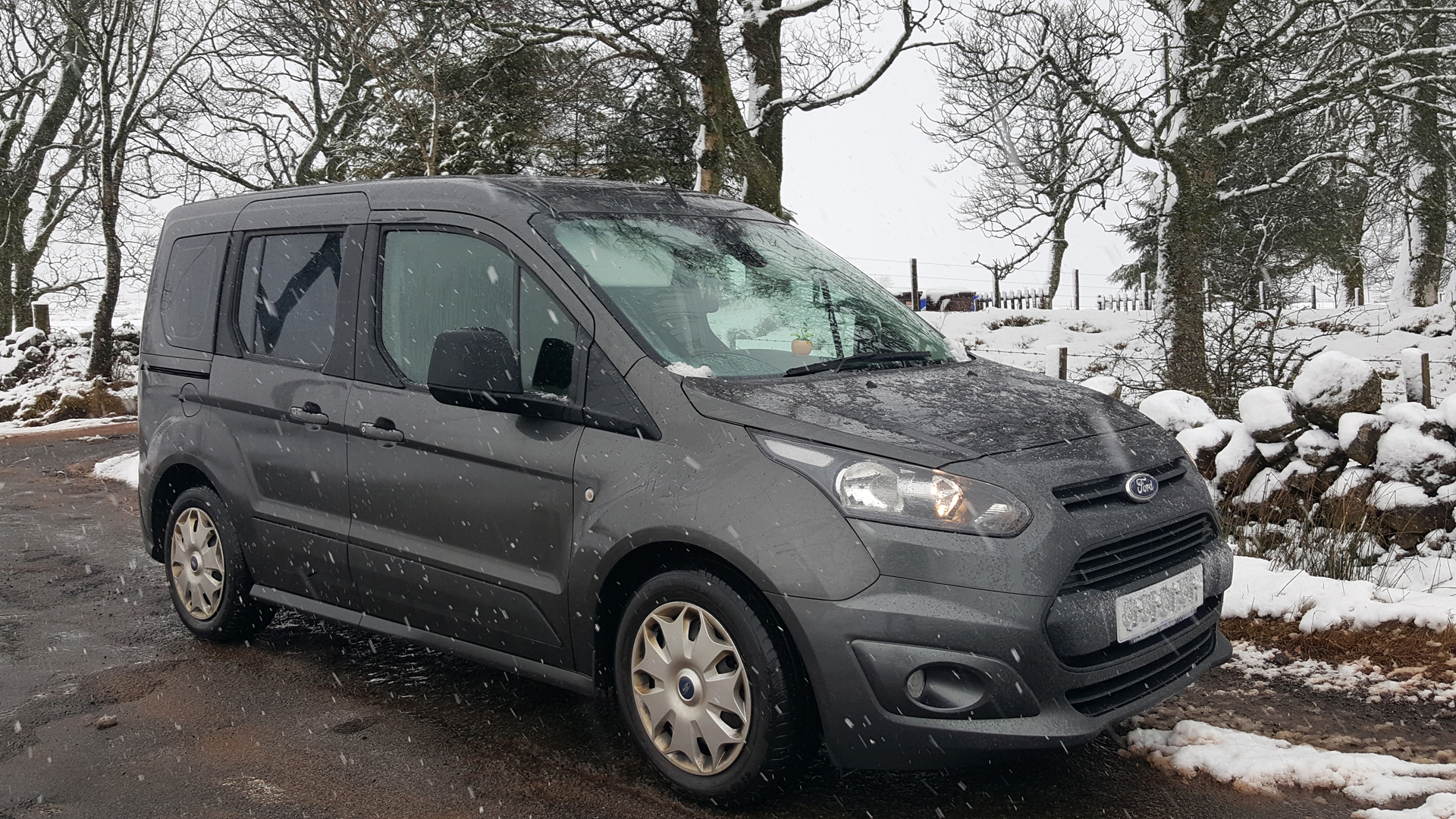
Ford Connect Freedom™ WAV parked on a snowy road. 5 Top Tips How To Look After A Wheelchair Accessible Vehicle (WAV)Ramps & Lifts

Ramps are essential for a WAV. The ramp is what makes the vehicle a WAV after all so it’s important the ramp is kept in excellent working condition. Otherwise, it will become redundant and we don’t want that. Depending on your needs and the type of WAV you have, the ramp may be manually operated or electric. Both should be checked regularly for any damage, wear or tear, dirt build up, faults and oiled as required.

Restraints/Tiedowns

Seatbelts are vital when travelling in any vehicle and that goes for wheelchairs too. Wheelchairs must be secured at all times once inside your WAV. Wheelchair restraints ensure your wheelchair is safely tied down to prevent accidents. It’s important to clean the restraints on a regular basis as dirt buildup can affect the way in which it works and lead to faults. Check for signs of wear and tear and replace the belts if they are becoming badly damaged.

Documentation

Keep all paperwork for your WAV in a safe place so you know where to find it. This is especially handy when it’s time to service, MOT or renew the lease. Emergency contact numbers for breakdowns and tyre repairs are important to always have in your WAV and phone. You just never know when the unexpected might happen so it’s best to be prepared at all times.

Posted in cargo van, Commercial Van, Ideas & Tips, News & Updates

FOOD TRUCK 101: HOW TO GET YOUR FOOD TRUCK READY FOR SUMMER

close up of a white person's hand holding a cone of fish and chips with a blurry beach in the background

It’s been a tough winter and spring, but summer is here and people are hungrier than ever for food truck treats. But is your truck ready to handle the summer rush?  

We have got the food truck 101 on how to get your sprinter commercial van as a food truck ready to handle this summer season. 

Let’s take a look at what you need to ready your rig in no time! 

Make Your Food Truck Shine Like New

Many food truckers are seasonal. Things like weather and other normal wear and tear during the offseason can really bring the look of your food truck down. 

The fact is, you have roughly seven seconds to make an impression on a customer and if they have the choice between a sparkling clean and shined up food truck or a dingy rundown rig they are probably choosing the former.

Make sure your food truck looks sparkling clean and you’ll be sure to attract more customers.

Get the Maintenance Out of the Way

Procrastination is not your friend. Do not wait until you are in the thick of the food truck season to fix the leak in the radiator or upgrade your tires.

The following is a maintenance checklist for your food truck:

  • Oil change
  • Check tires
  • Inspect ventilation and exhaust fans 
  • Fill up all fluids 
  • Flush holding tanks

Getting these routine maintenances checked off early in the season will give you more time to focus on promoting the business and creating delicious food. 

Keep It Cool

Be sure your a/c system is running at top notch. You don’t want it blinking out on you during some of the hottest and busiest days of the year. Keeping your employees in a comfortable work environment will improve efficiency and morale. 

Make sure you also have chilled options on your food truck menu for customers looking to cool off. You might have iced drinks, or frozen desserts on offer.  

Amp Up Your Social Media Presence 

There are over two billion monthly users on the Facebook platform alone. Factoring in other social media sites like Instagram and Snapchat, you can reach more customers in multiple ways. 

Get a jump start on a social media campaign this summer to draw new customers in and keep existing customers intrigued and hungry for more. 

Consider posting things like the following:

  • Promotion swag 
  • The location you will be posted and what time
  • Daily or weekly specials
  • Special events that you will be apart of like food truck festivals
  • New menu items or menu changes

Make sure to take pictures of your food and post them as well! Feedback from your followers will help you promote your food truck and get a feel for what is popular.

Encourage your guests to take photos as well. Consider offering a small discount or reward system for guests who tag your food truck or post photos of their meals. 

The Skinny on Food Truck Summer

Keep cool this summer with these tips on how to keep your truck rolling and the customers coming!

Don’t get bogged down in the stress of preparation; instead, get the hard stuff out of the way early so you can be creative and hustle this summer.

Posted in Ideas & Tips, Multifunction Power Systems, News & Updates, Refrigerated Van

FOOD SAFETY: THE IMPORTANCE OF KEEPING REFRIGERATED TRUCKS AT THE RIGHT TEMPERATURE

close up photo of glass jars filled with milk

Whether you realize it or not, you rely on refrigerated vans every day of your life! In fact, keeping refrigerated trucks at the right temperature when transporting food can actually save you from illness and disease.

About 48 million people get sick from a foodborne illness every year in America.  About 3,000 of the 128,000 people who end up in the hospital from these illnesses will die.

If you are starting your own food delivery business or have something perishable to transport, then this article is for you.

The importance of refrigerated truck temperatures cannot be understated. Here is everything you need to know about the importance of temperature regulations.

Why Refrigerated Trucks?

There are many uses for refrigerated trucks aside from just transporting food. For example, refrigerated vehicles are often haul pharmaceuticals that must maintain specific temperatures.

Temperature-controlled transport is also protects fine art and antiques that require a stable climate to preserve them. Personal care products such as perfumes and cosmetics can be damaged by extreme climates and temperatures.

If you’re hauling food or other delicate items you must have a reliable refrigerated vehicle to ensure your cargo arrives intact at its destination.

Temperature Risks

Some foods are more likely to spoil from fluctuations in temperature than others. For example, ice cream will quickly melt if there is an equipment failure during the trip.

This means that refrigerated goods must be checked often to be sure that they are safe and preserved. If your truck’s temperature is not maintained, an entire shipment of food products could be ruined.

Food is vulnerable to bacteria, disease-causing microbes, or pathogens that can only grow at higher temperatures. Food such as meats including chicken, beef, pork, and turkey are more vulnerable to foodborne illnesses.

That’s why making sure to track the humidity levels and the exact temperature of a refrigerated truck is so important. If frozen items within the truck were to thaw, refreezing the food could still result in foodborne illnesses.

Refrigerated Trucks You Can Rely On

Having a refrigerated truck fail you while transporting items is a serious deal. Not only could your entire shipment be ruined but you could also be risking the health of a large number of people.

That’s why it’s important to make sure you are renting or purchasing your refrigerated truck from a reliable source. Before being put to use the refrigerated transport vehicle must be approved by health authorities in the region. 

It’s also important to determine what types of food you will be hauling. Find a truck that will maintain the right temperature for your goods—whether heated, frozen, or refrigerated. This will keep your food and your customers safe from food or beverages that have been infected or contaminated by bacteria.

Create the Coolest Truck

When it comes to keeping your business cool, refrigerated trucks help protect your consumers and goods during transportation.

Refrigerated truck temperature is an aspect of your business you can’t ignore. This can make or break your delivery as well as your customer loyalty.

Posted in Commercial Van, Ideas & Tips, News & Updates, Uncategorized, Van Ladder Racks

Our Top 5 Tips To Keep Your Fleet As Eco Friendly As Possible

The world as a whole is doing its bit for the environment, and so you should be too.

One of the UK’s largest contributors to climate change is unsurprisingly the amount of cars we have on the road, and companies with van fleet pest control are a big part of this. While companies like Mercedes-Benz and Nissan are pioneering the new world of electric vans not everyone can afford to totally switch over to the green alternative just yet, and so must make sure their internal combustion fleet is as eco friendly as possible.

Today we are going to look at the 5 top tips we have for making sure your fleet is as green as possible. They’re all simple, and all save you money! So there’s no excuse not to be practising them as an everyday measure.

1. Weight

a scale showing weight

Now this may seem like a tricky point, especially if you run a courier service with your fleet, but removing the excess weight from your vehicle will mean less fuel is burned on every journey. If you have to carry large loads as part of your business then there will be no getting around that, but try saving weight elsewhere in the car.

Things like toolkits, large jacks and even full sized spare wheels all add considerable weight to the overall payload of the vehicle. Replacing them with compact jacks and space-savers can be a simple and easy way to reduce the emissions of your vehicle. Even items belonging to the driver like spare boots and a large jacket add weight that needs to be moved, it may not make a big difference, but every little helps.

2. Tyres

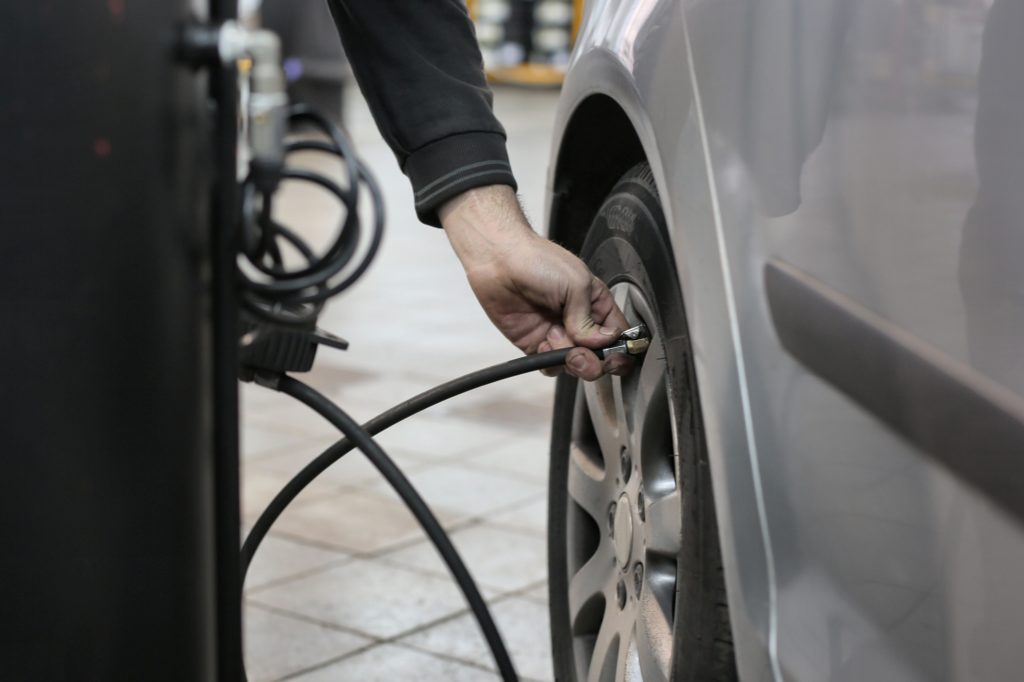
someone blowing up the tyre of a vehicle

Properly looking after your tyres is one of the easiest ways to keep your fleet’s environmental impact to a minimum. This is because of the simple principle that objects roll more efficiently with a higher surface tension, for example snooker balls are very hard and so roll very well, and an underinflated football will always provide more underwhelming results compared to one pumped to capacity.

Your tyres are the exact same, and so regularly checking their pressures is vital to ensuring you are not wasting fuel dragging extra material over the road surface. Keeping your tyres at the proper pressure will also increase each of their lifespans, as the surface area of the tyre in contact with the abrasive road surface will be minimised at any one time.

3. Minimise the use of Air Conditioning

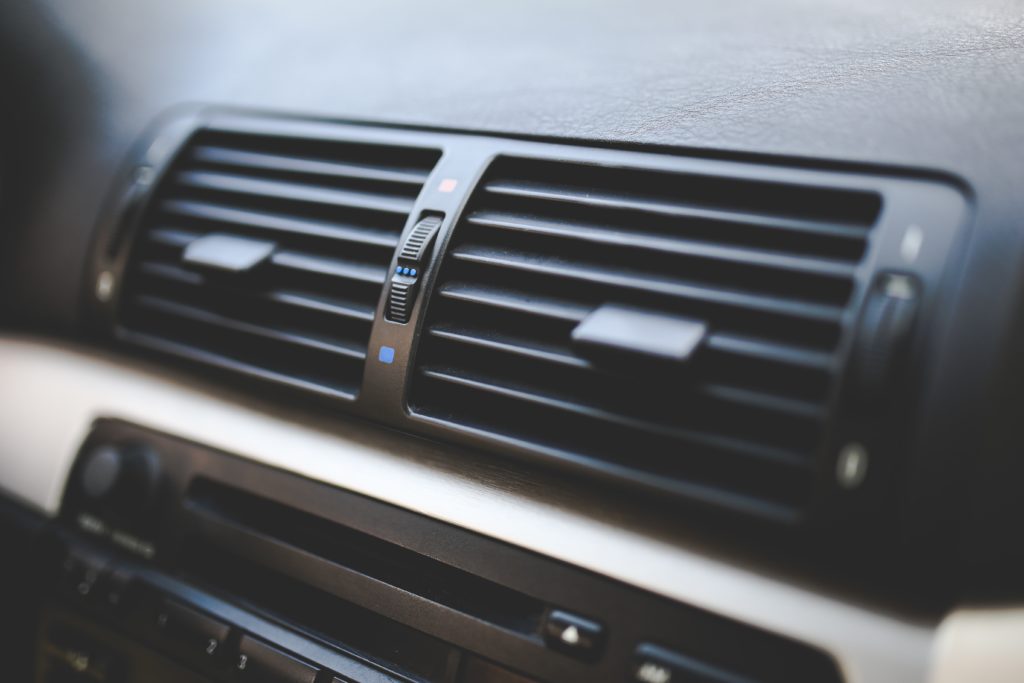
air conditioning vents inside a car

This is rich from us, we know. At Cool Running Rental all of our vans use scaled up air conditioning units to lower the temperature inside their storage bays, but we still say limit the use of aircon where you can. The reason for this is that air conditioning units use a large amount of electricity and this puts a bigger strain on the output of your vehicle’s engine. To compensate, it burns more fuel to meet the output.

Next time you’re driving turn the aircon on and listen carefully to the engine, you will hear the revs ramp up perfectly in time with you pressing the A/C button. Now again, we’re not saying don’t use aircon at all, it’s there for a reason and should be used accordingly, but if the day isn’t all that warm, try driving with a window open and breathing fresh air instead. At lower urban speeds the amount of drag caused by having the window open will be negligible compared to the savings in fuel.

It is also incredibly important to make sure your aircon is properly serviced and functional. As with everything efficiency is key, and if part of your A/C system is singing out of tune then this will cause other elements to have to work harder to compensate, resulting in a greater fuel usage (and more than likely an underwhelming air conditioning output). Ensuring your system pressures and refrigerating gases are at the correct levels, and that the system is tuned well will make a noticable difference to your fuel usage.

4. Have your vehicle serviced regularly

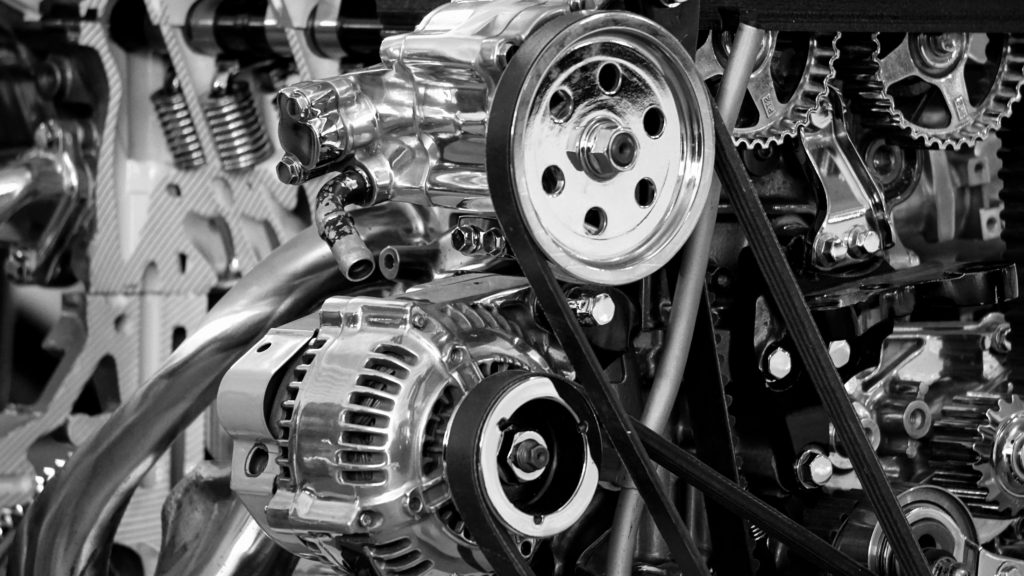
A car engine on display

There are a myriad of reasons to ensure your vehicles are serviced and maintained properly, but a very important one is the environmental impact your vehicle has. An engine is a finely tuned machine with an acceptable (and importantly regulated) output. Through use and abuse the engine may begin to break down however, meaning that it loses efficiency in key areas. This is completely normal, but it is very important to stay on top of.

A key example of something to monitor and regularly maintain is the oil levels and quality within the engine. As we all know an engine requires oil to run smoothly, but the oil will also need replacing after a certain number of miles. This is because as the oil ages it becomes thicker and more viscous causing it to act more and more like a gel than a fluid. In extremis this could lead to the flow of oil stopping altogether, as it is too thick to fit through the various tubes and apertures in the engine. The efficiency of oil is paramount to the overall efficiency and therefore output and emissions of the engine, and must be taken care of for this reason.

Engine cooling is also an important measure to check, as this is another big part of what keeps your engine running at its best. Ensuring that your coolant and radiator are working properly means that you don’t run the risk of your engine running too cold and wasting fuel, or too hot and eventually exploding. If you begin to notice your engine holding at a different temperature to normal (most likely the centre of your temperature gauge), then have it looked at by a professional as soon as possible to avoid long lasting damage and unnecessary environmental impact.

At Cool Running Rental, we service and clean all of our vans regularly to ensure that they are always running at peak performance. This means that we only put out the bare minimum emissions possible with our vans, but also that we aren’t often caught out with unexpected problems, as all of our vehicles are well looked after and maintained.

5. Driving style

two benneton f1 cars

Everyone is guilty of being in a rush sometimes, and this can cause us to employ the driving style normally reserved for racing drivers and criminals on the run. Excessive accelerating and braking may make you feel like you’re getting to your destination faster, but in actual fact it is just wasting fuel and pumping out more emissions, for the sake of a few extra minutes. 

Posted in Ideas & Tips, News & Updates, Refrigerated Van

Refrigerated Vans: The Conversion Process

Refrigerated trucks are very complex specialist machines that provide an essential service in the transport of perishable goods and vital medicines. These vehicles make a considerable impact on most people’s lives, but due to their background nature not many people pay them much mind. Well here at Cool Running Rental we want to change that, and so today we will be looking at exactly how these modern machines are born.

What is a refrigerated van?

Before we get started, let’s look at what actually makes up a refrigerated van.

A refrigerated vehicle can be any class of vehicle; be it van, lorry or train car, that has been adapted to have a temperature controlled storage compartment and an onboard refrigeration unit. What this means is that you have a way to move goods that need to stay cold in one self contained vehicle.

How do they actually work?

To understand the process of converting a refrigerated van, we need to know what actually goes into one. In essence, they work exactly like a household fridge. The biggest element of any temperature controlled vehicle is the insulation, which allows you to maintain a constant temperature inside regardless of the temperature outside. In theory a well insulated van should be able to easily transport ice over a relatively long distance without it melting as the insulation should keep heat from getting in. 

ice melting

The second key part of a refrigerated vehicle is the refrigerator itself. This operates by circulating a coolant fluid through the inside atmosphere of the vehicle, collecting any heat (this part is called the condenser), and then transporting this heat outside of the vehicle via the evaporator, before recirculating the coolant back inside to repeat the process. What this creates is a one way cycle for the heat to leave the vehicle without being able to get back in. This, combined with the insulation effect in the storage compartment means that the temperature will only go down as the system is active, and is how we have refrigerated vehicles!

So how are they actually made?

Most refrigerated vans actually start out life as regular transit vans, and are converted to the specialist role later on, and this is what we are going to discuss today.

Preparation and unit installation

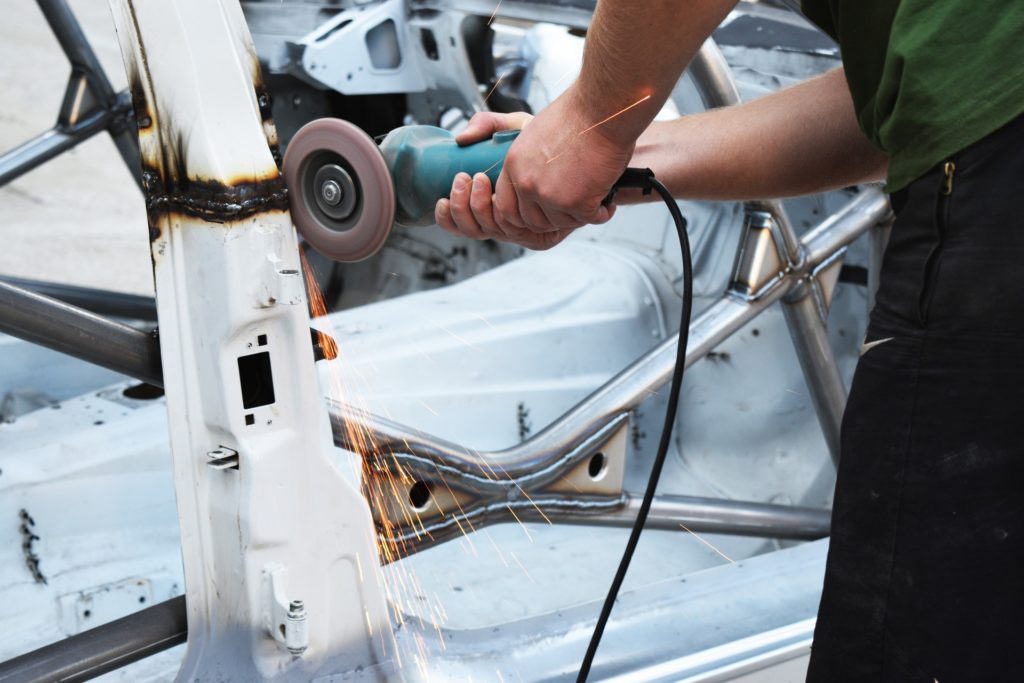
Before anything can be added to the van, it needs to be stripped back to its bare bones. This means removing all internal panels, and ensuring that the entire structure of the vehicle is clean, working properly and free of damage. Once the shell is good to go, fitting the refrigeration unit begins.

grinding a vehicle

Fitting the unit itself will vary from vehicle to vehicle as some larger vehicles can fit the unit above the cab, and some have to fit it on the roof. In both cases, the body of the vehicle has to be adapted. This means making a significant cut to the body of the vehicle that has to be made in a way that will not affect the structure. Often this aperture is cut in the roof panel, between structural pillars so as to support the heavy refrigeration unit securely.

Once the cut has been made, the refrigeration unit is then carefully lowered into place and secured to the structure of the vehicle. At this point the vehicle has technically been converted, but the real magic comes with the insulation.

Insulation

Installing an insulation kit to a vehicle is like tailoring a suit to fit. To maximise space inside the van while maintaining a perfect seal the insulation panels have to be custom made to fit the type, make and model of vehicle you are putting them in. Once created, these panels fit together like a giant jigsaw, to create a perfectly encapsulated chamber inside.

The insulation installation often begins with the flooring panels, as these provide the foundation for the rest of the chamber and allow you to secure the entire system to them  without compromising the integrity of the van’s native flooring that could lead to corrosion. Once the floors are in, we move on to the major bulkhead and first wall panels.

It is important to secure the cab bulkhead and side door panel as soon as possible, as once the remainder of the system is installed these areas will most likely be inaccessible. With the major bulkheads secured the remaining wall panels are carefully slid into place and positioned right up next to each other, with a small gap for the sealing trim to go between.

The next major hurdle to overcome are the rear wheel arches. As these are one of the biggest contributors to heat in the back of a vehicle, due to the tyres and brakes radiating heat into them, these must have an extra layer of insulation wrapped around them, and then set in place using a wheel arch cover. Tightly insulating this area is one of the key factors that will make or break a vehicle conversion.

With all the panels in place, a seal will be created throughout the entire storage area. Every little gap between panels and every small crevice in the corners is filled with an insulating foam, and then set in place with a special trim, creating a perfect seal. This is extended to the doors with a double layer of rubber gasket seal, that perfectly traps any cold air from getting out, and keeps any hot air from getting in.

Finishing touches

With the van insulated, and refrigerated, it is time to add the electrics and other finishing touches to make it a perfectly serviceable vehicle again. This includes adding a special coating to the floor of the vehicle to protect the insulating panels from the wear and tear of goods being taken in and out, and also to protect against any moisture that may be present inside. With all of the above complete, this van is then ready to transport perishable goods over long distances without any worry of them being damaged.

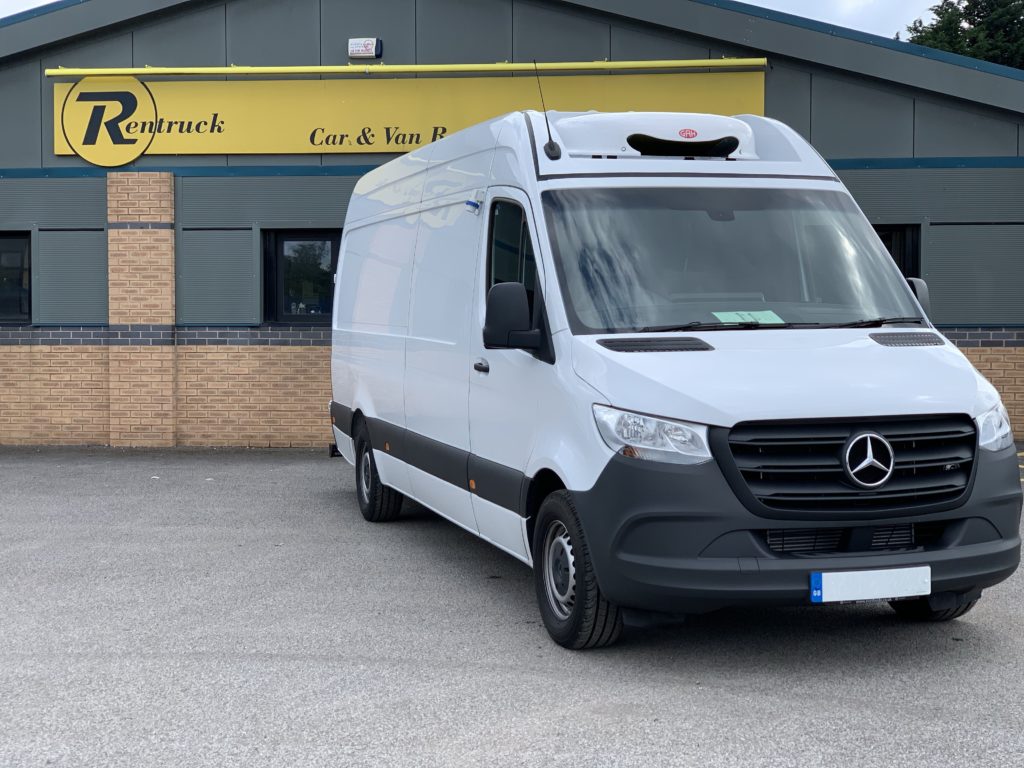
Mercedes Sprinter 313 outside Rentruck