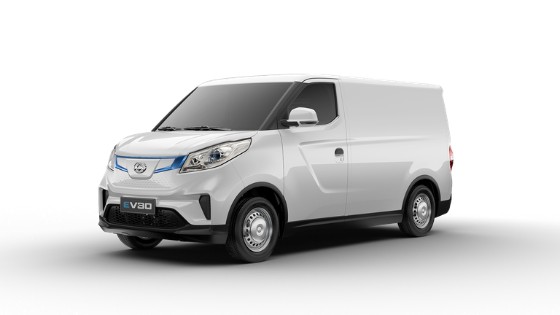
Posted in cargo van, Commercial Van, sprinter commercial van, sprinter work van

How to choose the right van for your business

Choosing a new sprinter work van for your business can seem overwhelming with the amount of options that are out there. We are going to take a look at the pros and cons of the different types available and a couple of examples of each.

Before looking at what types of vans are available, we’re going to briefly discuss the definition of what a van actually is. Unfortunately, it is a little bit of a grey area. HMRC, the DVLA and the ABI all have slightly different classifications as to what can be classed as a van, for tax, licensing and Insurance purposes respectively.

Fortunately, the vehicle manufactures themselves categorise the vehicle at point of sale so you can gain clarification at this point. It will also state on the vehicles V5 what the vehicle is.

Types of vans

There is a massive variety in the types of van available from car derived vans to refrigeration vans but we are only going to take a look at the ones which will be useful for you.

Car derived vans

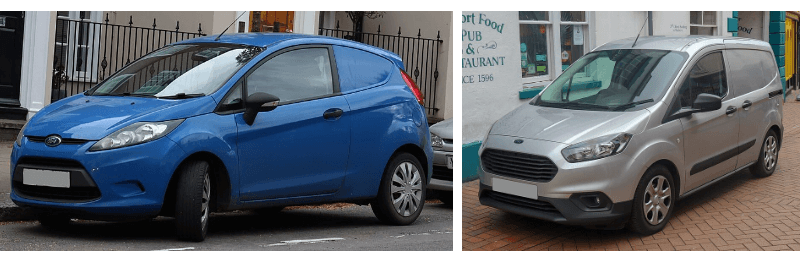
Ford Fiesta van photo credit | Ford Transit courier van photo credit
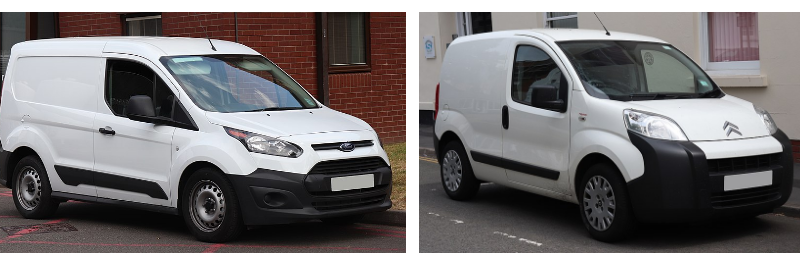
The clue is in the name with this type of van, its car which has been converted into a van essentially. They have a maximum loading weight that shouldn’t exceed 2 tonnes. Car derived vans are great if you work primarily in an urban area. Their smaller size makes parking and navigating narrow streets easier, and generally they are cheaper to run and purchase than a larger van.

There used to be two main rivals when it came to the car derived vans: the Ford Fiesta Van and the Vauxhall Corsa van. Due to a number of factors, both manufacturers stopped selling the respective models. Ford, however, have done a recent u-turn and re-released the fiesta van, meaning they are now the only option if you are buying a new car van.

Ford are also offering the Transit Courier, a van smaller than their existing city van, the Transit Connect, based on the Fiesta platform but with more van like styling and practicality.

City van

Ford Transit Connect van photo credit | Citroen Nemo photo credit
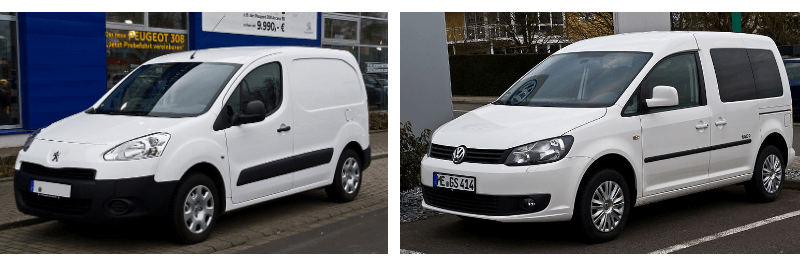
Peugeot Partner photo credit | VW Caddy photo credit
City vans are similar in size to a car sized van but with a more practical body type. Just like car derived vans, city vans can make a great choice for those that are working in a heavily built up area, whilst offering a little more flexibility in what they can carry.

When it comes to choosing a new city van, it’s important to understand that a lot of the manufactures now platform share. What this means is that the vans are essentially the same. In some cases the van may be exactly the same and essentially a badge engineering exercise has taken place, in others the vans may share the same chassis but have manufacturer specific engines in them etc.

Ford offers their Transit Connect, which quite often comes out at the top of best van lists. VW offer their Caddy which nearly always comes out on the top of owner satisfaction surveys. Away from these two popular models, alternatives consist of the Fiat Fiorino and the Citroen Nemo, which are slightly smaller or the Vauxhall Combo, the Citroen Berlingo, or the Peugeot Partner.

Panel van

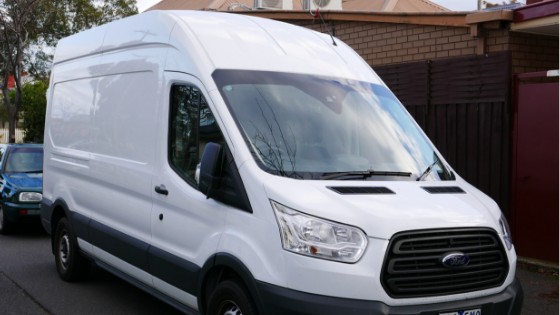
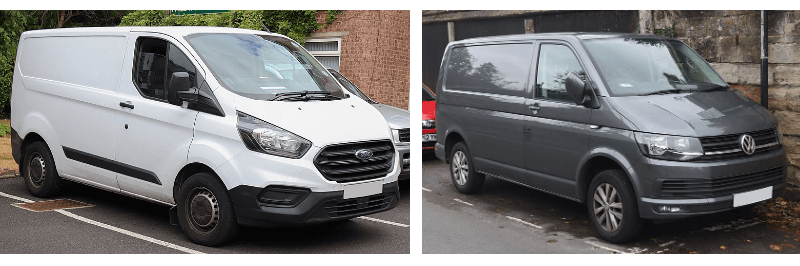
Ford Transit photo credit / VW T6 photo credit
The most popular type of van in the UK is panel van. This is the type of vehicle most people think of when someone says the word van. Available in  arrange of different sizes, from SWB low top vans that have a similar footprint to a saloon to LWB high top vans that can rival a box van in carrying capacity.

The Transit van is iconic of panel vans in the UK as a whole, and with good reason. Having been the UKs no 1 selling van since its launch in the in 1965, it has gone from strength to strength with hundreds of varieties available.

It has been the humble panel van variant though that has kept it at the top of the charts. New Transits have become increasingly car like, both in their cab and in their driving.

In 2nd place is the VW Transporter. Commanding a premium over the cheaper Transit, Transporters, like their smaller Caddy relative consistently come out at the top of any owner satisfaction survey.

Alternatives are not to be sniffed at either, platform sharing is again common throughout the sector, with the latest Citroen Dispatch, Peugeot Expert and Vauxhall Vivaro all sharing the same underpinnings, whilst the Renault Traffic and Nissan NV300 share theirs.

Other types of vans to consider

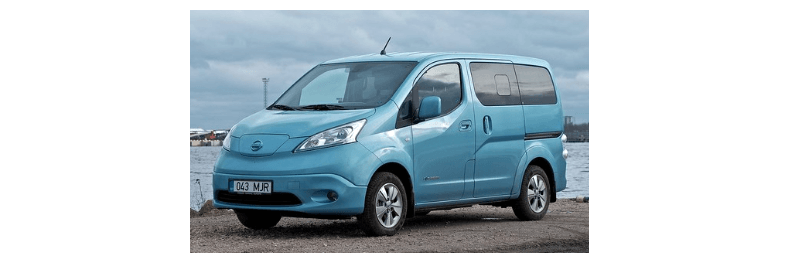
Nissan electric van photo credit

Whilst diesel is still the fuel of choice for the overriding majority of vans, electric vans are slowly starting to make inroads.

If you work in a built up area and long distances aren’t part of your daily route, consider an electric van, you’ll benefit from lower fuel bills and VED whilst still maintaining the practically of a conventional van

4×4 vans, whilst a small segment of the overall van market, have their place for those that want to keep moving whatever the weather. Whilst not as off road capable as dedicated 4x4s, such as a pick up, if you work somewhere particularly prone to icy roads or snow they may be a sensible choice.

Posted in cargo van, Commercial Van, Ideas & Tips, sprinter commercial van, sprinter work van, Uncategorized

The Best Vans For Food Trucks

With the recent emergence of love for street food, it seems like everywhere I go, there’s a food truck parked on the curb.

Unlike the average hotdog cart, these trucks are custom-built to prepare and sell food on-the-go. More and more mobile restaurant owners have been opting for these trucks, as they offer space and flexibility to cook and serve on-broad the vehicle.

Typically, vans and trucks range from 15 feet to more than 30 feet, which is the perfect size for fitting in a team of at least two people – head chef and sous chef – and affording them ample space to work in.

And this is where my journey to find the perfect van for a food truck began.

However, I quickly realized that this wasn’t quite as straightforward as I had anticipated – just deciding on the right brand, make and model for a good van required extensive research, investment, and time.

So, the first step for this requires figuring out what your food truck will be offering, and how to optimize a van for it. Do you want it to be a rolling pizza van or a taco mobile on wheels? Would it run on gas or diesel?

Buying a food truck also requires a lot of back and forth communication with the manufacturers. For example, you need to know that the van you buy can easily be customized into a food truck – while having special features like a retractable awning, and a flat panel TV.

Another important consideration is whether a new truck would serve your needs better, or a used one.

New trucks tend to be rather costly, and they require longer lead time for the customization to be done. This option would typically leave you with very little funds for future renovations, and any additional elements that you would want to install yourself.

On the other hand, a used van would have none of these problems – and it is certainly more affordable than a new truck.

Regardless of whether you opt for a used or a new van, here are some of the best sprinter commercial van that can be converted into food trucks.

Best Vans Choices For Your Food Truck

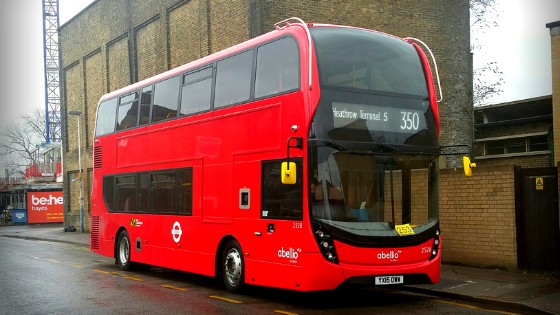
Alexander-Dennis Enviro400

Scrap the seating in the lower deck, and add in a huge kitchen with a bar and a carry-out window; this is really my favourite choice for a food truck. In fact, I would say that this bus is a food adventure just waiting to happen.

The upper deck seating area in the Enviro400 is ideally spaced for servers to manoeuvre up and down the aisle. I would further improve it by ditching the tour bus seats and replacing them with custom benches and anchored chairs.

Add in some romantic lighting, and it would be the perfect spot for a mobile date.

An additional perk is the standardized air conditioning that is installed in the lower deck – this means that your chefs and servers can stay cool in the blistering heat given out by the stoves and ovens.


Volkswagen Westfalia

This van is the first image that comes to my mind when I think of a food truck by the beach. Being picture perfect, however, isn’t the only selling point of this vehicle; it is one of the best options for anybody looking to start a food truck business without having to invest massive amounts of capital.

These iconic little vehicles have enough space to operate as a mobile food business with ease. Along with a lifting screened top, your chef and staff can easily wash up in the built-in sink, prep food, and even store equipment in little compartments which are built all over.

Additionally, the attached awning gives people the opportunity to cook outside – making it perfect for a summer barbeque set up.

Ford Transit Full-Size Van

Ford vans have left me amazed at their versatility, and overall build quality for years.

With multiple body lengths available, three roof heights and wheelbases of two different kinds, Ford itself suggests that the Transit can be modified in 450 different ways.

The 180 degree opening rear doors allow for easy loading and unloading of ingredients, and other products. An easily installable awning lets the customers stay cool under the hot sun, and protected in case of rain.

The 487.3 cubic feet of cargo capacity, and 81.5 inches of interior cargo height, ensures that there is enough space for prep stations, grills and fridges. It also means that chefs can stand up comfortably without needing to crouch while doing their magic.

Accompanying the van is Ford’s reliability guarantee, which states that, “Transit durability test vehicles were driven more than 4.6 million miles, or far enough to circle the globe 185 times.”

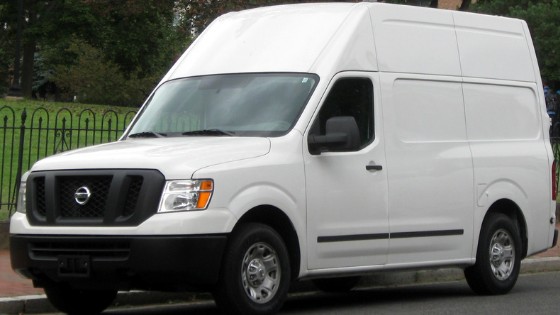
Nissan NV2500 Cargo

This Nissan van comes with a V8 powered engine, and 8700 pounds towing capacity with high roofs that are ideal for converting into a kitchen.

The 120 bolt electrical plugs in both the front and rear cabins provide up to 400 watts of usable power per plug; in other words, chefs can easily use the microwave and electric ovens at the same time.
My favourite feature of this van is the foldable front passenger seat, which can be converted into a desk space, or perhaps even the counter.

The Nissan NV2500 is not only budget friendly, but a great choice for a food truck.

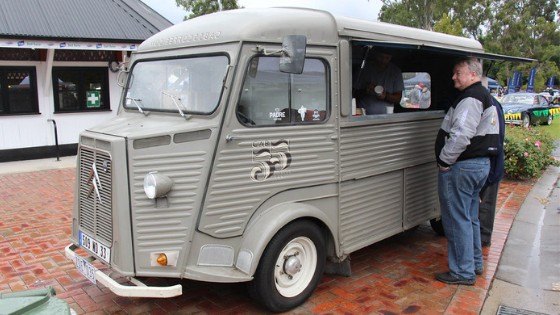
CITROEN H

The CITROEN H is only for people who realize the benefits of used vans over newer, more expensive models. The unusual shape of the Citroen H, and its vintage look never fails to catch the eyes of pedestrians – and as a food truck business, you really need to stand out to bring in more customers.

You can paint this van in specific colours, and revamp the interior by adding a drop-down hatch to make it the perfect food truck.

Besides these options, there are numerous other vans available in the market, like the VW camper which can easily be turned into a food truck, and the versatile Freightliner Sprinter Crew Van. Add on the multitude of customization options and upgrades, and you’re all set to open the food truck you’ve been dreaming about.

Posted in cargo van, Commercial Van, Ideas & Tips, Multifunction Power Systems, News & Updates

How To Safely Secure Your Van Load

So here’s my story and a lesson for van owners; last Tuesday, I was transporting some supplies when I heard a loud boom followed by the sound of tins rolling around in the back of my van. This could only mean one thing – I had not secured the van load properly.

According to the Highways Agency, around 22,000 road impact incidents in the UK are caused due to objects falling off vehicles.

Add to this, the fact that businesses can take legal action on grounds of stolen goods and/or damaged assets is reason enough for you to be concerned about the safety of your cargo. 

Here are a few ways you can secure your van load, eliminate the risk of damaged goods and maintain personal as well as public safety.

Plan Ahead

Last-minute preparations and rushing through-loading could lead to accidents and cargo damage.

This is why planning in advance and knowing the nature of your cargo is a good idea. In short, this information can help you prepare for your journey and arrange for the tools and security equipment you would require while loading, transportation and unloading.

You can ask yourself the following questions to plan ahead:

  • What is the state of the cargo? Solid or liquid?
  • Is the vehicle appropriate for this kind of cargo?
  • Is the cargo non-slip or can it topple forward or backwards?
  • Is my load securing equipment in immaculate condition?

Asking these basic questions can give you an idea of the equipment – or arrangements – you need in order to avoid an incident.

Line The Floor

Add a layer of wood, especially plywood, if your van doesn’t already have a floor lining. This provides a flat base for non-slip goods to sit on and adds a sturdy layer between the cargo and the van.

As an added bonus, you will be able to easily unload the cargo by sliding it off the van instead of having to pick it up.

Follow The Large Items First Rule

Ever packed a suitcase? Loading a van is the same, with perhaps a little more tact.

Start off by fixing bigger cartons, materials and items and then add the smaller articles around them.

Large items can be used to build a makeshift structure for smaller items; since the former are also usually heavier, packing them first can eliminate the risk of them rolling around and damaging the goods inside.

Similarly, keep the heavier loads at the bottom and the lighter loads at the top. This helps reduce the chances of heavier items falling on smaller packages and causing damage to the cargo.

You can also use a cargo bar, cargo net or a ratchet strap to stop heavier objects from sliding and rolling around while you’re driving. Fragile items, such as mirrors and chinaware, should be closer to the bottom of the van to avoid breakage in case of unexpected bumps.

Balance The Load

Make sure a load of your van is centred and as close to the structure as possible. The skeleton of the vehicle gives support to the cargo kept along the walls, especially heavier cargo.

Placing heavier goods on one side of the vehicle (on the right side for example) could increase the chance of it toppling over if you make a sharp turn.

This is why it is important to space out your load and store heavier packages of more or less the same weight on both sides.

Check The Weight Ratings On Your Van

Anchor points in the van can be used to hook straps in and secure objects. Make sure the gross weight (GVW) of your vehicle is enough for the goods you’re transporting – this will also help you avoid heavy penalties due to an overloaded van.

Tether items to the van in the direction of travel; if you secure the goods perpendicular, it will put extra strain on the straps to hold the contents back.

Check the quality and condition of your security straps and nets regularly – remember, even a small hole or tear could decrease its strength significantly.

Drive Carefully

Vans make up 16% of all motor vehicles in the UK which means that owners need to be even more careful while they’re on the road.

Carrying a van loaded with goods comes with its own set of driving protocols, especially since sudden movements, sharp turns or last-minute braking could damage the material you’re carrying.

Similarly, smaller items may roll over if you take a sharp turn or hit the brake pedal at the last minute. For your and the cargo’s safety, it’s better to pick a low traffic route to your destination so that you can drive slowly and carefully to the unloading point.

Lock Up Properly

Did you know a van is broken into every 23 minutes? These statistics show that it’s extremely important to use proper locks and upgraded security.

With van thefts on the rise, it might be a good idea to not leave a loaded van unattended. This may sound obvious, but make sure all the doors are locked and the windows are shut even if you’re going to grab a snack from the shop across the road.

For added security, you can opt for CatLoc – a security device installed around the vehicle’s diesel particulate filter (DPF) or catalytic converter to prevent vehicle theft or cargo tampering. With this device, any attempt to break into the vehicle will activate the alarm and notify the authorities of possible theft.

If you’re looking for cheaper security options, you can also invest in steering wheel locks, hand brake locks, lockable fuel caps and wheel nuts.

These are some of the ways you can ensure the safety of your cargo van and eliminate the risk of theft, property damage or tampering.

Posted in cargo van, Commercial Van, Ideas & Tips, News & Updates

How Much Does It Cost To Run A Van?

Van running costs are a key consideration for most businesses when they’re choosing a new commercial van. By understanding the total costs involved you can then justify the expenditure to your business.

Initial Cost

This can vary hugely depending upon both the cost of your van & how you choose to fund your vehicle. If you decide to buy a van outright you’ll need plenty of cash readily available.

If you choose to lease a van, your up-front costs will usually be lower & the more you put down at the start, the lower your monthly rentals will be.

Fuel Consumption

Depending on the number of miles you cover, fuel is one of the biggest costs for any business. Choosing the right fuel type can save you serious money in the long term.

Fuel consumption will be the key running cost, so check out the quoted pence per mile figure with the manufacturer. Think about what sort of driving you will do & what will be in your van.

When a van is fully loaded the unit cost of transporting your load is lower meaning improved fuel economy. It can be really beneficial to consider how you will plan your journeys to improve fuel economy.

Diesel vs Petrol vs Electric

Diesel, which delivers a higher miles per gallon yield than petrol, is still the most popular fuel choice for commercial vehicles. With tax breaks being offered by the Government for driving eco-friendly vehicles, however, more people are considering alternative fuel types.

Electric vans are ideal for shorter journeys with running costs starting at just 4p per mile. These also have the advantage of being exempt from the London Congestion Charge, Toxicity Charge & are suitable for Low Emissions Zones.

Insuring Your Van

Insurance costs will differ greatly depending on the value & nature of your van & its load. Investigate whether it’s worth investing in additional security measures to help secure your van & its load. This might help bring your premium down. Vanarama offers competitive van insurance coverage, just ask your account manager when you call us for more information.

Vehicle Excise Duty/ Road Tax

VED van tax (sometimes called “Road Tax”) is usually charged annually with each vehicle type falling into a tax band. This tax band is dependent on the registration date of the van as well as the engine size. When you lease a vehicle, VED Tax is included in your monthly rentals.

Transmission: Automatic vs Manual Vans

Your choice of transmission is largely a personal, rather than economic choice. Automatic vehicles are often a little more expensive than manual ones, but can also be more fuel-efficient. An Automatic gearbox will often prove its worth in convenience alone. Vanarama offers a wide range of automatic vans, including the compact & popular Ford Transit Connect.

Servicing & Maintenance

A well-maintained van is more likely to comply with the BVRLA’s “fair wear & tear” guidelines that a funder will use to judge the condition at the end of you lease. This will save you a lot of money at the end of your contract.

Servicing, on average, costs around £125 a pop, but won’t include any new parts or repairs required. While regular servicing may sound like an additional cost, it will save you money in the long run.

To help you do that, Vanarama offers Service Plus, an all-in-one maintenance package that includes:

  • Routine servicing & maintenance
  • Standard usage tyre replacement
  • MOTs if required
  • And additional cover for wearables

Disposal

The final aspect to consider is what happens when you need to replace your vehicle.

If you’ve taken a Contract Hire agreement, the van is returned to the funder at the end of your contract. Contract Hire allows you to avoid the maintenance costs that usually come with buying a used van.

Posted in cargo van, Commercial Van, Ideas & Tips, News & Updates

5 Best Vans To Look Out For In 2020

The market for sprinter commercial van is in a constant state of growth, as made evident by the rising number of new van registrations that went up 5.4% in May 2019 – making it a consecutive fifth month of growth.

Furthermore, the rapid growth in e-commerce businesses has given rise to 24,040 courier related businesses and a massive revenue of £23 billion a year – leading to rising demand in reliable commercial vehicles, including vans.

Vehicles are the prime concern for many businesses today as they transport equipment, workers, and business-related cargo to-and-fro all day long. They are in dire need of reliable and heavy-duty vans, to carry out their business activities without any issues.

We’ve compiled a list of five best vans that’ll hit the market in 2020 – analyse them side by side and make an informed purchase that fulfils your company’s needs.

Volkswagen Transporter T6.1 Facelift

An upgraded version of T6, this model has an improved 2.0 litre TDI turbocharged diesel engine that can be outfitted with different motors, all conforming to the anticipated emission regulations, making this one of the most environmentally friendly vans on our list.

The power output ranges from 90hp to 199hp, of which the 199hp variable comes with two turbochargers unlike the rest of the range which has a single turbocharger.

Looks-wise, what captures our attention first is the front end grille s for air intake necessary for its cooling requirements. On the inside, you’ll find car-like comfort with the integrated 9.2inch touchscreen infotainment system.

The van also has a built-in communication system powered by an e-SIM card to perform multiple online services on the go.

You can utilise the space under passenger bench to fit longer parcels which increases the max cargo length to 2,800 mm in short-wheelbase and 3,300 mm in long-wheelbase transporters providing a payload of almost of 1.2 tonnes.

The electric versions of this van are more cost-effective and ideal for commercial purposes.

It’s expected to hit the dealerships till March 2020.

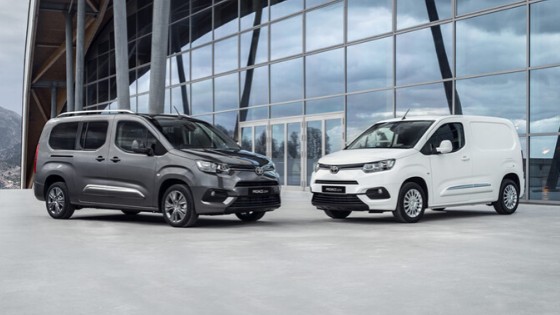
Toyota Proace City

Revealed in 2019, Toyota Proace City won’t be released in the U.K. market till 2020.

It’s based on the Citroen Berlingo, Vauxhall Combo Cargo and Peugeot Partner – which makes for a successful launch as the trio are known to be the best amongst small vans.

Toyota lets the buyer choose from a 1.5-litre diesel engine or a 1.2-litre petrol engine, both providing 75hp to 130hp horsepower.

These vans are extremely fuel-efficient, giving up to 65.7 miles per gallon.

Additionally, the two wheelbases maximise the length of the load up to 1,817 mm and 2,167 mm and load volume up to 3.3 cubic m and 3.9 cubic m, respectively. However, the smart cargo version lets items up to the length of 3,090mm (for short wheelbase) and 3,440mm (for long wheelbase) slide in easily. This provides a load volume of up to 3.8 cubic m and 4.3 cubic m, accordingly.

Relating to the payload, it comes in 2 types – standard 2.0t which has a payload of 660kg up to 680kg and heavy-duty 2.4t which can take a payload of up to 1.0 ton.

Moreover, it possesses a towing capacity of 1,500 kg making for a power-packed small commercial van.

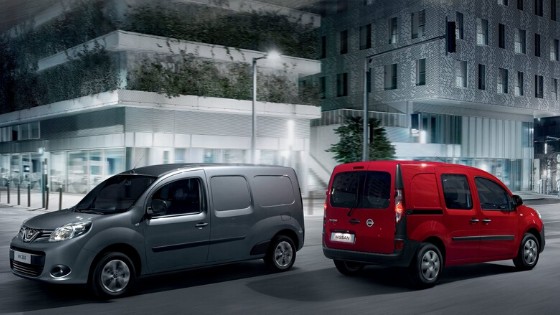
Nissan NV250

Nissan has been dedicated to providing the U.K. market with the best small vans since the 90s – the new NV250 is a great van that promises a lot.

The K9K 1.5-litre unit powers the Renault-design model -it’ll be sold in three separate horsepower options – 80hp with 210Nm, 95hp with 230Nm, and 110hp with 260Nm.

It is also possible to choose amongst long wheelbase and short wheelbase options that provide a max length of 2,115mm and 1,731mm, respectively, with a load-through facility that increases it further, up to 2.87m (long wheelbase) and 2.5m (short wheelbase).

The payload capacity falls a bit short as compared to its competitors, from 650 kilos to 850 kilos in short wheelbase and 800 kilos to 850 kilos in long-wheelbase – but then again that makes it an ideal choice in the small van segment.

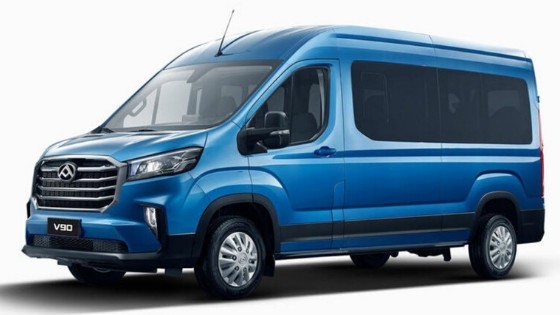
LDV V90 2020

With a stylish interior design furnished with the latest technologies, this model also comes with remote-controlled locks and ignition, cruise control adaptable to your current terrain, and a 9-inch touch display integrated with Android Auto, DAB Radio and Apple Carplay.

It has a newly designed 2.0-litre engine unit which holds power to produce 400NM and 177hp with a torque that delivers 1,500 rpm.

The V90 is available in both rear and front-wheel drive with an electric version, which will deliver 200 miles to a gallon – most likely to be launched by the end of 2020.

LDV EV30 UK

Increasing the payload without compromising on the driveability is a top priority for engineers. The LDV EV30 accomplishes both these aims thanks to an aluminium body which not only reduces the weight of the vehicle but also increases its payload.

The 85kW motor will be offered with two sets of batteries – 35kW/h, which gives you about 127 miles and 55kW/h which offers about 200 miles on the NEDC cycle.

Moreover, its power steering is electrically assisted, which gives it an effortless and smooth drive.

While traditional handbrakes are common in vans, this model comes with an electronic parking brake which provides extra room in the cabin, allowing for a third seat.

Orders for LDV EV30 will be opening in January 2020, whereas, manufacturing will commence in March 2020 with the initial deliveries for the U.K. starting from April 2020.

In Conclusion

The vehicles you use say a lot about your company; its professionalism and its standards – add to that fact that drivers appreciate a smooth and reliable drive that makes them feel safe on the roads.

Buying a commercial van is no easy task with so many options to select from, but our selection aims to make it as stress-free as possible.

So when it’s time to upgrade or add to your existing fleet, make sure you choose wisely and consider from the options laid out for you above!

Posted in cargo van, Commercial Van, Ideas & Tips, Multifunction Power Systems, Refrigerated Van

How Does Van Leasing Work?

If you’re looking for a brand new van to drive your business forward, but don’t want to pay out a lump sum upfront, leasing might just be for you

What Is Van Leasing?

Refrigerated van leasing is when you pay a monthly fee to drive a van. Think of it as renting, but typically for a longer period. You’ll pay a small initial rental at the beginning, a monthly fee for the term of your lease and hand your van back at the end. Simple!

Why Lease A Van?

The benefits of leasing a van are becoming clear as it gets more and more popular. These include:

  • An Affordable Fixed Monthly PaymentThis is one of the key benefits of leasing. It allows you to stay on top of your monthly budget and keep your outgoings low by spreading your payments over time.
  • Not Dealing With A Depreciated AssetLike almost all vehicles, vans depreciate in value over time. Leasing means you’re not left with a used van to sell. You simply give the van back at the end of your contact & you can upgrade to a brand new model – just like you would with a mobile phone.
  • Advanced Breakdown CoverLeasing with Vanarama also makes you eligible for benefits including Advanced Breakdown Cover, so throughout your lease you never need to worry about your business being off the road.
  • A Range Of Extra SavingsYou won’t need an MOT or road tax on a brand new van for the first 3 years. If you’re VAT registered you can also claim this back on a commercial vehicle.

How To Lease A Van: Step-By-Step Process

  1. Choose Your Van The first step is to choose the van you want. We have a wide variety of the latest models to make your business, look the business
  2. Choose Your Lease Package Next up you choose the type of lease you want, how long you’d like to lease for (typically 2,3 or 5 years) and how many miles you think you’ll drive in that time.
  3. Provide Your Financial Details We’ll then need some details from you to secure credit from one of the finance companies we partner with. This is when they’ll do a credit check to ensure you’re able to afford the monthly payments. You’ll tell us how much you can afford as your initial payment and we’ll take holding deposit to secure your new van.
  4. Van Delivery Once all the paperwork is sorted, your van will be delivered direct from the dealer, straight to your door!
  5. Enjoy Your Van For the Length Of Your Lease Contract And that’s it, you’ll keep your business moving for the length of your lease.
  6. Return Your Lease Van Finally, at the end of the lease, you simply hand the van back and, if you want to, you can upgrade to the latest model and start the process all over again!

What Are The Different Leasing Options?

There are 3 main lease options we offer at Vanarama. These include Van Business Contract Hire, which is our most popular form of leasing. The others are Van Business Finance Lease and Van Contract Purchase which come with an option to own the car at the end of your term.

What Is Van Business Finance Leasing?

Van Business Finance Leasing is when you pay a monthly fee to drive a new van but you have responsibility for the vehicle at the end of the lease. So alongside the initial rental, you will also pay a final payment.

This has pros and cons… if the value of the van is higher than expected at the end of your lease, you can sell the van, pay the final payment and make a profit. However, there is always a risk the van will have depreciated in value and you will be liable for a balloon payment higher than the value of your van. Beware, you also can’t personally own the van at the end of the lease and you will need to sell it on.

What Is Van Business Contract Hire?

Van Business Contract Hire is leasing in its purest form and is the most popular package we offer. You pay a monthly fee to drive your van and get to give it back at the end of your lease.

There are lots of advantages to Van Contract Hire including initial payments that tend to be the lowest amongst all the options, affordable monthly payments and no risk of being stuck with a depreciated asset at the end of your contract.

What Is Van Contract Purchase?

Van Contract Purchase is typically offered to those that really want to own their van at the end of their lease. Unlike the other two options, Contract Purchase allows you to personally own the van.

With this option you still have the advantage of fixed monthly payments but they do tend to be higher than the other two options. You will also have a final payment you’ll be liable for.

How Are My Fixed Monthly Payments Calculated?

For every type of lease agreement, there are 4 variables that determine what your monthly payment will be:

  1. The Cost Of The Vehicle The first is the cost of your new van. The lower the value of your van, the lower the initial rental and monthly payments will be. Remember, because of the significant volume of vehicles we lease, we’re eligible for discounts on all our vehicles which we pass straight onto you. So leasing with Vanarama means you’ll pay less!
  2. Interest Rates When you lease your van, you’ll be doing a deal with one of the funders in our panel. The deals the funders offer will very much depend on the interest rates at the time. The good news is that even if interest rates increase between getting a quote and delivery of your van, your quote won’t increase. However, if interest rates go down, we’ll pass this saving onto you and you’ll see your monthly payments decrease.
  3. Residual Value As well as your mileage and the length of your lease, what your van is estimated to be worth at the end of your term is another important factor when calculating your monthly payments. There are a range of variables affecting the estimated residual value including the lenders’ personal experience, how many of that model they have and the perceived risk of that vehicle.
  4. Initial Rental At the beginning of your lease, you’ll pay an initial rental. This, alongside the length of the agreement, will affect how much your monthly payments will be. You can decide how much you want to pay up front based on how much you can afford. But remember, the more you pay upfront, the less you’ll pay in the following months.

Leasing FAQs

How Much Does It Cost To Lease A Van?

This really depends on the type of van you’re after. At Vanarama we have some amazing deals, meaning you could lease a brand new Citroen Berlingo for as little as £139 per month*, a Fiat Fiorino from as little as £115 per month* and the popular Ford Transit from as little as £195 per month*. On average our customers spend around £250 per month on a van lease with us.

*Prices correct at time of publication 25/2/20 and are subject to change based on current offers.


Are All Leased Vans New?

At Vanarama we only lease brand new vans. Of course, you can lease a used one elsewhere, but why would you want to when it often works out cheaper (and certainly better) to lease new?


How Long Does Delivery Take?

Obviously this is dependent on the vehicle you choose, whether it’s in stock and if you’re having accessories fitted. If the van you choose is in stock and available, it can take as little as 2-3 weeks to be delivered.


What Is A Pre-Reg Van?

A pre-reg van is a brand new van that has already been registered (given a registration plate by the DVLA). Depending on how long a van has been registered for might mean we can offer you a much better deal.


Is Tax & Insurance Included In Your Van Contracts

VED Tax (sometimes known as road tax) is included as part of your monthly payments. Insurance is not included, but we have some excellent and competitive policies including Multi-Year Insurance which freezes the annual premium of your van insurance for the entire duration of your lease.

Posted in cargo van, Commercial Van, Ideas & Tips, News & Updates, Van Ladder Racks

Have a Van? Start a Business!

There’s a lot of focus on using the Internet and technology to start a business these days. But it isn’t the only way to scratch out a living. If you own a cargo van – or come across one cheap – there are an enormous array of businesses you can start pretty much right away. With a little investment and a lot of creativity, you could be earning real money from your van for the foreseeable future. Let’s take a look at some ideas.

picture1

Rent it out

Vans are needed in a variety of situations by many different people. But they don’t want to buy one – hiring for a day or two at a time is all people need. House clearing, moving home, transporting equipment to special events – people need vans all the time. So why not consider renting it out? You can pull in a substantial amount of cash – and eke out a little more by providing a ‘man – or woman – and van’ service. If you have never thought of your van as a money-making opportunity, it’s time to think again.

Adapt it

You can modify your van for almost anything. Take a look around for some van storage solutions and kit it out to your needs. If you have a trade, it’s the perfect place to keep your tools and equipment. You can install specialist storage and deliver flowers to people on behalf of local or national flower shops. Have any culinary skills? You could even fix it up to start a mobile catering business – as long as you get your food licenses, first.

Advertise on it

If you don’t have time to spare to start a business, why not advertise for a local small business? They give you a nice little fee, and you drive around with their logo and company description on your van. It means no work for you, and you can expect extra income every month for doing nothing.

Carry things in it

Any business dealing in products needs a method to deliver their goods. So why not take advantage by turning your van into a courier service? You’ll need to educate yourself about the basics of logistics to make sure it pays. But the truth is that many consumers and businesses are left completely frustrated by the big couriers, who often disappoint. If you can provide better customer service than the major players, you will soon pick up a good name for yourself.

Collect things in it

Here’s something you can start almost right away. First of all, apply for a scrap metal license. Create a few thousand flyers and post them through every door in your town or city, offering to clear any scrap metal. Offer your service for free. In every town and city, there are hundreds of people who have scrap metal or old domestic appliances that are taking up room. All they need is a way of getting rid of it. You arrange a collection time, fill up your van, and take it to your local scrap metal yard. Everything you have in the back of your van will be easy profit, minus your fuel costs.

Posted in cargo van, Commercial Van, Multifunction Power Systems, News & Updates

How to find the best vehicle for your business

Over half of new car sales in the UK are funded by a business of some type, as opposed to being bought privately, so despite tax changes making them seem less advantageous for some employees, business purchases have a significant bearing on the new car and gruau van market. There are several factors to consider over and above a vehicle’s basic everyday suitability when it comes to choosing.

Company car funding

A key decision is how you might fund a vehicle. There are various options ranging from buying outright with cash, hire purchase and various forms of tax efficient leasing such as business contract hire. Indeed, leasing can be tailored to suit your ideal monthly budget and include costs such as maintenance and replacements to provide fixed costs, making it easier to keep track financially.

Leasing offers other tax benefits depending on your company set up; in some cases 100 per cent of the VAT can be claimed back if the vehicle is used solely for business. Other payments are sometimes tax deductible so it literally pays to investigate your funding options thoroughly.

Benefit in Kind (BIK) tax

The tax man sees the company car as a perk and it’s classed as a Benefit in Kind and is therefore liable for tax. The car’s CO2 emissions and retail price, expressed as a P11D value, are taken into account to arrive at the BIK figure. The P11D value is basically the price of the car but less non-taxable costs, such as the first year’s road tax.

There are currently no less than 25 BIK bands based on CO2 emissions with the more polluting models attracting BIK taxation at a higher percentage of their retail price.

Therefore, lower emission models will cost less in taxation. Be aware diesel vehicles attract a 3 per cent surcharge over petrol vehicles with the same emissions; consequently, you’d have to assess whether you do enough miles for the usually better fuel economy of diesel over petrol to outweigh the higher BIK costs.

In searching for the ultimate in emissions-based tax saving you may look at electric vehicles but be careful. While they previously didn’t attract BIK tax, they’re now taxed at 7 per cent with the figure set to increase each year.

Other costs

Fuel – an obvious one of course, but properly considering whether to plump for diesel or petrol (if not an all electric model) does have a significant bearing on costs.

Some business users fall into the trap of basing their thinking purely on economy, but bear in mind the tax implications above and whether enough miles are covered to make diesel worthwhile.

Insurance – choosing a vehicle that isn’t too expensive to insure can make a big difference to costs, especially if you’re running several cars all requiring insurance renewals each year. A good comparison website can help you compare costs of different models and insurers.

Vehicle usage

In the end of course, the vehicle has to do the job you’re buying it for whether it’s a delivery van, motorway express for high mileage employees, or a compact and economical office runabout. The wide choice of new cars and other vehicles mean it should be possible to run something that makes the most sense financially and does the job you need of it.

Posted in cargo van, Commercial Van, G30 Gas Drive, Ideas & Tips, News & Updates

3 Businesses You Can Start With A Van

If you have an immense entrepreneurial drive and want to do something a little different – now is the time to consider investing in a commercial van business.

Alternatively known as a mobile business, this business model allows you to make money by travelling to different locations to render your services or deliver a product. And the best part is that you get to be your own boss!

For those who are weary of the nine-to-five routine, starting up a van business will give you the flexibility to work at your convenience.

Additionally, the rapid increase in light-weight vans – currently at an all-time high of 3.9 million – is a promising sign for the future of the mobile business industry in the UK.

Let’s dive into the top three viable van business ideas you can get started with:

1. Food Van Business

food van business - business ideas

A van can help you take advantage of this lucrative business opportunity in the food mobile business.

You could opt for a mobile coffee or juice bar, or even serve fast-food items – ice-cream vans are a popular option as well.

The most successful food vans, however, serve a particular niche; for example, sandwiches or pretzels or target an ethnicity such as Chinese, Italian or Mexican.

Some Stats From The Food Business

Food vans can be a full-fledged business idea that involves delivering freshly made meals to people attending concerts, festivals and even near public places with plenty of foot traffic.

With 28 million people attending live musical concerts in 2015 – just imagine the demand!

The rising popularity of mobile food businesses have opened up the industry for innovation; according to a report, 34% of vendors say that they are able to brainstorm creative menu ideas and bring in innovation, which in turn increases their sales.

What You Need To Get Started

All you need is a van of your own that you can paint to showcase your business, contract with a reliable supplier and a strategic location to kick-start your business.

School cafeteria management services often invest in mobile food vans to showcase healthy eating options. This is often done to stress the importance of having a wholesome breakfast.

There! You have a perfectly creative idea to venture into the food van business.

With creative menus, you can pique the interest of the children in school cafeterias and give them convenient Grab ‘N Go eating options for a win-win situation.

2. Moving Van Business

moving van business - business ideas

Is your van sitting idle in the garage? Do you wish you could put it to some use?

Get that vehicle out, clean it up and make it presentable; then take the first step towards starting your own moving business.

This requires minimal upfront investment – just an extra pair of hands to help you with lifting those cupboards and sofas.

Let The Stats Do The Talking

Did you know that in an average month in the UK, around 100,000 households move into a new home? – do the math and imagine the business that it can generate for your moving van service.

As you get more clients on board, you can probably think of buying another van – but put that off for later consideration.

How To Get Started

Here’s how you can differentiate your moving van business from others in the industry:

  • Offer value-added services such as ‘same-day’ moving, a complimentary sofa cleaning service or helping the client to set up their furniture
  • Learn basic packing and moving procedures
  • Provide exceptional customer service throughout the moving process. After-sale customer service and a cordial follow-up will further improve your credibility

Once you get the hang of it, you can branch out into similar businesses such as a towing service, van rental, mobile valet, party transportation, delivery business, etc.

3. Cleaning Business

cleaning business - business ideas

Cleaning is an indispensable part of any facility; be it residential or commercial and establishing yourself in this line of work has promising prospects.

While most other businesses that you can start-up in a van require some degree of skill, a cleaning business is one that requires a minimal financial investment.

Some Stats From The Industry

According to a market research report, the number of cleaning businesses in the UK amounted to 23,378 in 2019 with a total revenue of six billion euros.

With the cleaning market estimated to grow by 95 million pounds, now is a great time to invest your time, resources and energy to establish a strong footing in the industry.

The various types of cleaning businesses that you can explore include; cleaning entire facilities such as offices and homes, construction sites, after-party clean-up or windows, gutters, air ducts and other general or specialised janitorial services.

Here’s What You Need To Get Started

You just need to have a knack for cleaning and be able to deliver excellent service to secure some long term clients. Your van can be conveniently turned into a storage space for your supplies including mops, vacuum cleaner and other cleaning supplies.

Remember, having your own van will give you the advantage of optimising delivery time and ensuring maximum customer satisfaction.

Some handy tips to get you started include:

  • Survey your target market and competitors to get an idea of the cleaning business opportunities
  • Tap into a smaller niche to expand on your customer base
  • Offer packages with complementary services to attract customers
  • Collaborate with bigger agencies to get hold of more projects

Conclusion

Who would have thought that a van could be utilised in so many different ways to generate a steady flow of income?

Well! Now that you know, it’s time to get your creative juices flowing and start transforming your van into a money-making asset.

Posted in cargo van, Commercial Van, Ideas & Tips, News & Updates

How To Convert A Van Into A Camper Van

As someone who has a deep-rooted love for wanderlust and is addicted to travelling, the prospect of living a carefree life out on the road is very exciting.

And I’m not alone: according to the latest statistics, the number of caravans and motorhomes in Britain is expected to increase by more than 50,000 by 2022. That’s a staggering number and is sure to transform the mobile living industry.

The definition and experience of a mobile lifestyle are different for everyone – and you need to plan according to your budget, preferences and the van that you intend to convert into a camper van.   

When I started travelling, I took the time to figure out whether the camper life would suit me or not and the preventive steps that I need to take to make the most of my mobile lifestyle. 

With experience, I have also realized that what might work for one, might not necessarily be very good advice for someone else with a completely different end goal in mind.

So, whether you are a newly married couple looking forward to beginning your new life with an adventure, a solo traveller looking for some affordable travel options or a freelancer in search of some inspiration – let’s explore the possibilities of converting a van into a fully functional camper van.

Planning And Designing The Van’s Layout

As each person has a unique set of requirements, the transition from a sprinter commercial van to a camper van can be extremely different – but the key to a successful van conversion, however, is space maximisation.

Personally speaking, I try to adopt the multi-tasking approach and use my bed as my couch, and a place to store essentials as well. My kitchen top can easily be converted to a dining table of sorts and even used as a desk when not eating.

Combing the different aspects of a small space into something functional depends on your priorities. The cost of foregoing something to achieve another aspect of comfort is entirely up to you.

Here are some questions you need to ask yourself:

  • How many people will be travelling with you in the van?  – More people mean more bed space.
  • Are you tall or short? – Tall people need more headspace and are also more comfortable with longitudinal sleeping spaces rather than crosswise beds.
  • Do you want natural lighting to fill your space?  – You might need to install some on your own and prevent the use of furniture that might block natural light.
  • Are you aware of basic carpentry hacks? You need not be an expert carpenter to get through the van conversion process, but you certainly need to know how to work with basic tools.
  • What will be your dining options? – If you plan to take up cooking, you’ll need to have a proper functional setup for a kitchen with a fridge, stove, counter, sink and water tank.

The van’s look and feel also goes hand in hand with the layout that you have in mind. Once you have the essentials sorted, moulding the space to complement your aesthetic sense will be fairly simple.

Depending on the items you use and how you use them, you will see your van transform into an ideal camper van.

You should also check in with government requirements and guidelines to ensure whether your vehicle is fit to be converted into a camper van or not.

Preparing Your Van

Before you actually get down to making substantial changes in your van, you need to set the stage. Here is what you need to do:

Do Away With Pre-Existing Fixtures

Depending on the van you choose to revamp, you need to get rid of pre-installed items that are of no use to you.

De-clutter the space and even remove floor-mats, runners, shelves or seats that will hinder your plans to transform your van into a comfortable, liveable space.

Carry Out A Cleaning Spree

Vans are most likely to have a build-up of grime, dirt and dust especially if they are second hand. Before you set down to installing new things for your camper van, you should:

  • Use a shop vac, hand broom and small scraper to get rid of dirt
  • Look for any surface rust and grind it off using an angle grinder and wire brush attachment 
  • Deep clean, sweep, scrub and vacuum the space
  • Cover any exposed metal with anti-rust paint. The second coat of glossy white paint will provide a finished look to your space
  • Re-install the front seats and floor mats

Insulation

For your camper van to withstand all kinds of weather, it is important that you properly insulate it. It may be a time-consuming and labour-intensive task, but it is definitely worth the effort and time.

Remember that you are insulating your van against two major forms of heat transfer – radiation and conduction.

Some common qualities to look for when choosing the right insulation material for your camper van include:

  • High R-value per inch keeping space considerations in mind
  • Vibration resistant for all kinds of adventure
  • Ability to resist mould, mildew and moisture
  • Non-toxic properties

Here’s how you can insulate your van:

Make Use Of Reflectix To Fit Walls

The first step is to get a hold of Reflectix – this is an insulation material that is basically in the form of a sheet of bubble wrap covered in reflective foil.

I use this to cover the walls of my camper van in a way that it is precisely cut to the section that needs to be covered.

Then, hold it in place with duct tape while you figure out where to cut off the excess along the curves and edges. I suggest using a heavy-duty spray adhesive to permanently glue the reflectix to the wall.

Insulating The Ceiling

Insulating the ceiling is extremely important, especially for colder climates.

 A thicker layer of insulation is usually preferred if you can compromise on your headspace.

The process to insulate the ceiling with reflectix is the same as for the walls – you can, however, make use of Tyvek tape to hold the insulation material in place.

Insulating The Floor

Insulating the floor is totally up to you, as most people prefer to skip this step.

If you decide to opt for floor insulation, just get plywood to strike the balance between functionality and aesthetic appeal.

Rigid Foam Panelling

On top of the reflectix covering, attach a foam panel as is often recommended. Since the foam board is light in weight, it can easily be attached and be precisely cut to size using a box cutter.

The purpose of rigid foam panelling is to cover the ceiling and upper panels, and any pop-out windows that your camper van has.

Other forms of insulation for your camper van include:

  • Yellow Spray Foam
  • Fiberglass Insulation
  • Thinsulate Insulation

Fill In The Gaps, Cracks, And Crevices

Make sure that you do not leave any loopholes – and by that, I mean literal ones! Spray foam into any cracks or crevices and avoid using the “Big Gap Filler” that later expands and oozes out of the gaps – this just creates an unnecessary mess.

A clean way to filling the gaps with foam is to fill in a half or one-third of the way, and let it dry. You can fill in the remaining space after to avoid creating a mess.

Ceiling

Like a roof over your head – the ceiling and fan installation is a crucial part of getting the conversion process right.

Here are a few steps that you can follow for a reliable and sustainable ceiling setup:

  • Prepare/collect the panelling material which you will use to cover the ceiling
  • Plywood is a common choice; you can also add a personalized flair to your space with the help of recycled materials.
  • Measure the length of your van’s roof and estimate the number of plywood sheets required
  • Align the seams of the plywood pieces with the roof’s support braces
  • Cut, mark and stain the plywood before securing it in place

Note: while riveting the plywood to the ceiling, make sure you do not drill the pilot holes through the ceiling of the van

Fan Installation

Ventilation is an important aspect of maintaining a comfortable temperature inside your van.

For this, the hardest part is where you have cut a hole through the roof of your camper van. You don’t want to mess up the measurements and end up wondering what to do next.

Be very careful when determining the centre of your van’s roof and marking where you want the fan to be installed.

Drill a hole on either sides of the circle and use it as a guide to cut the perfect hole through the roof. Ensure that the blade length is able to penetrate the metal roof of the van, the insulating material and the plywood ceiling that you have installed.

With the major part of the work done, you can finally screw your fan in place.

Walls

At this stage, we have only insulated the walls and other carpentry work still needs to be done. Here’s what you should do with your van’s walls:

  • Cut the plywood walls keeping in mind the special cuts for the curve at the back of your van and the curves around the wheel wellsSecure the plywood in place using braces
  • Use cardboard spacers to construct a perfectly aligned perpendicular wall
  • Fill in the gaps with sand or any preferred filling material of your choice
  • Cut and fasten the metal sheets to cover any pop-out windows in your van

Flooring

Since flooring is the base on which your entire setup will rest, it is important that you give it the due attention that it needs.

 Let me walk you through a few quick steps to help you prepare your camper van’s floor:

  1. Use a floor template to cut the plywood for your subfloor
  2. Secure the subfloor in place with the help of screws
  3. Fill in any holes with a fine sandpaper grit or caulk to ensure uniform levelling

Remember, the sub-floor is above the main floor, which is then covered by insulation and finally layered with a sound deadener (which is optional).

Electrical And Solar Setup

Here’s what you can do to install a sustainable setup for your camper van’s electrical and solar needs.

  • Research sturdy roof racks and select one that offers quality at an economical price
  • Install the solar panel using the mounting hardware and instructions that come with it
  • Run the solar panel wiring through the inside of the roof by drilling a hole just below the roof’s rain gutter

Remember, you need to create a watertight seal by securing the wire in place with caulk around it.

  • Create a wiring network for the lights and dimmer as well
  • You can hook up one or more wires together to create a single cable by heat shrinking them

The Living Space – Bed And Kitchen

After the framework has been laid down and the technical aspects are taken care of, depending on your preferences and the size of the space – you can optimize your living space.

  • Lay down the base of the bed; Remember the plywood walls that you set up with spaces for wheel wells? This will help you determine the height of your bed
  • Secure the base with the help of braces to the wheels well boxes
  • Install pneumatic locks and bed hinges to set up a foldable bed
  • Any vacant walls can be utilized for installing kitchen shelves and wall cabinets
  • Customize the size of the cabinet doors and secure them in place with magnets and hinges

There’s a lot you can do with your living space to turn it into a cosy and functional space so you can spend long periods of time on the road.

Finishing Touches

Adding these finishing touches to your camper van will make all your hard work feel worth it.

  • Painting the inner and outer parts of the camper van requires a lot of patience and creativity. Use the taping technique to secure parts of the van that you don’t want to be painted.
  • To ensure uniformity, you can use the same panelling for kitchen doors and cabinets as you did for the ceiling.
  • To keep your space well-lit, try experimenting with lighting shelves – these basically run along the length of the ceiling. Install LED lights to brighten up your interior.
  • Magnetic blackout curtains are a great option to adjust the lighting as and when needed. Sew them as per the window size for a better fit.
  • Divide the driving area from the rest of the camper van by installing a curtain rod. You could add in a splash of colours by choosing a vibrant curtain.

I hope this step-by-step guide will help you to revamp and convert your van into a camper van and embark on the journey of a lifetime.

And don’t forget to prioritize your comfort over everything and plan the layout of your van in a way that makes the best use of space.