Posted in cargo van, Commercial Van

5 Reasons the Ford Transit Is Better Than the Mercedes Sprinter

2020 Ford Transit Cargo Van
5 Reasons the Ford Transit Is Better Than the Mercedes Sprinter

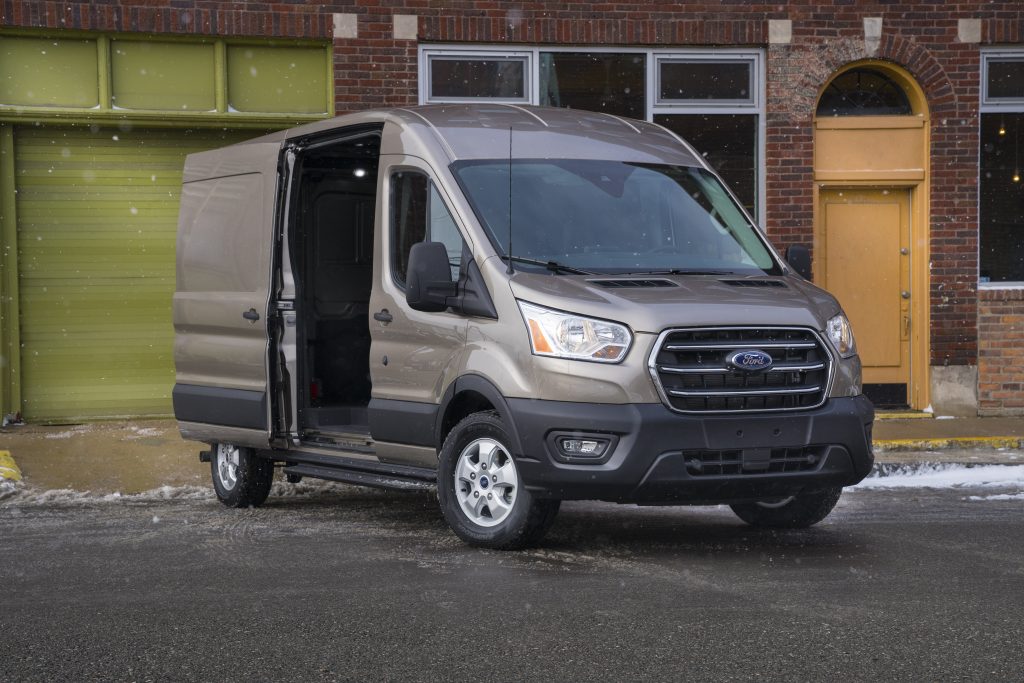
Large commercial vans have been enjoying a surge in popularity. They are not just working vans anymore, they are van life vessels and passenger vans as well. They are a great choice for large families and many of them are built into epic overlanders. But how do you choose between the 2021 Transit and the 2021 Sprinter? Here are 5 reasons the Ford Transit is better than the Mercedes Sprinter.

Lower maintenance cost

Because these Ford parts are so widely available they are cheaper to buy if your Ford Transit begins having any trouble. In the event that your Transit needs repairs out there on the road, this is a huge benefit. When you want to save your money for fuel and fun, cheap parts are a big win.

Maintenance cost between the Ford Transit and the Mercedes Sprinter is a no brainer. Fords are obviously going to be cheaper to maintain. Additionally, it is almost always going to be easier to find a Ford service center than Mercedes.

Smoother ride

In this review by Car and Driver, the Ford Transit is far superior in terms of suspension. The Transit is by far the smoother ride over the Mercedes Sprinter. And when you think about how many hours will be spent actually riding in a vehicle like this, an easy ride is important.

Parts are easier to source

Ford parts are undoubtedly easy to source. They are widely available due to the volume of Ford trucks in circulation throughout the US. Where parts are more readily available, they are cheaper and more simple to find.

Especially for a vehicle you buy to tour around the country, this is an important selling point. A van that will be definitively easier to repair due to simply sourced parts is going to give its riders less of a headache out on that cross country adventure. Mercedes parts are not only going to be more difficult to find, but also more expensive.

New available factory 4×4 option

New for the 2020 Ford Transit is the factory 4×4 build. Until now, this has been a massive deciding factor for people who find themselves choosing between the Mercedes Sprinter and the Ford Transit. The Mercedes Sprinter has offered a factory 4×4 option since 2015. But, with Ford’s addition of a factory 4×4 option for the transit the decision between the two vans just got a lot more

Tallest interior height

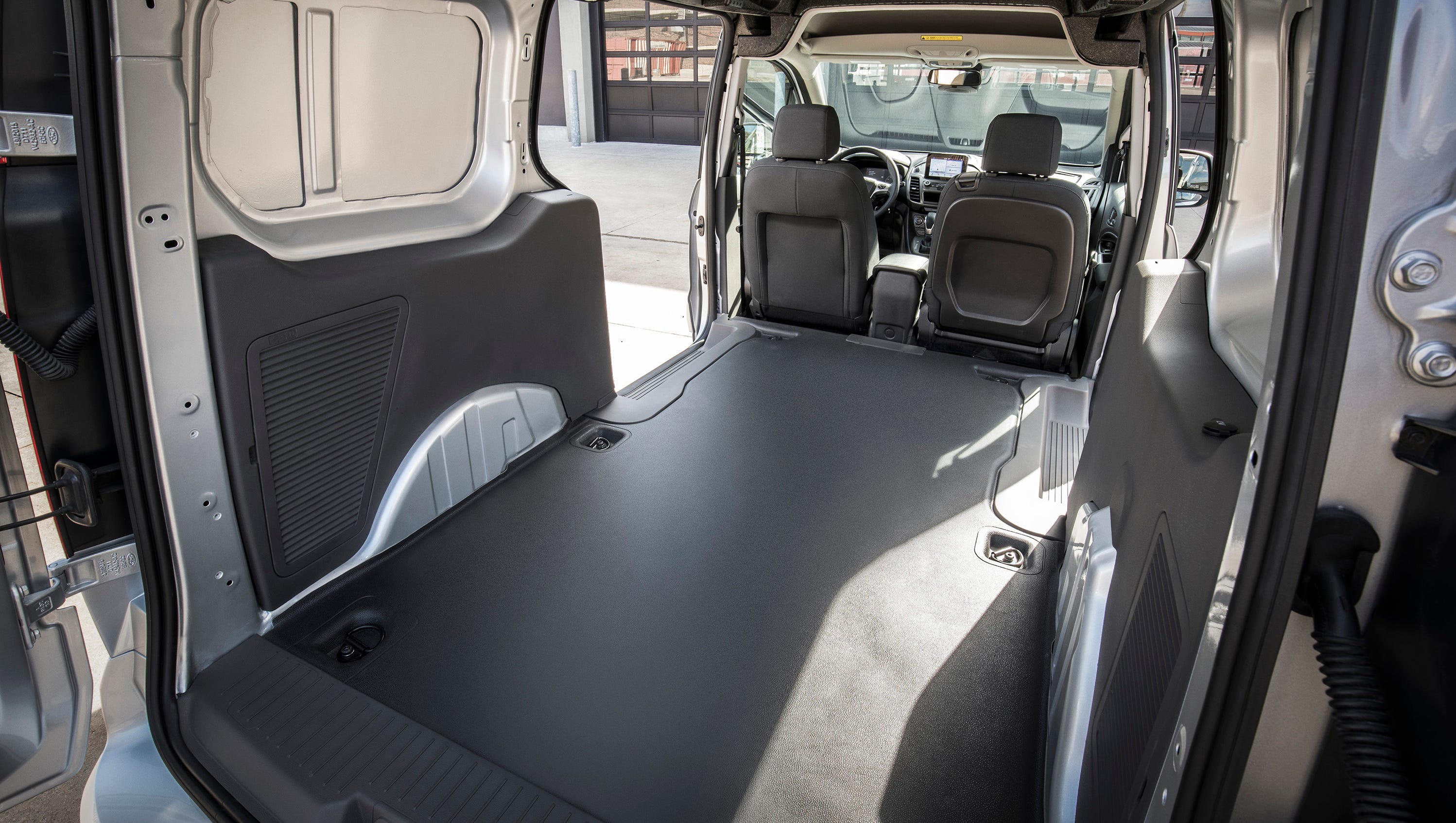
Between the two, the Ford transit has a taller interior height. For overland builds and for work van cargo space, this is another big factor to keep in mind when choosing a new van. The Transit offers 4 extra inches of cargo

The Ford Transit has 6’8″ of cargo height. The Mercedes Sprinter has 6’4″ of cargo height, which might be a big deal for your specific needs, depending on what they are. If you need the tallest interior height available, go with the Ford Transit.

Ford Transit vs. Mercedes Sprinter

Between the two, the Ford has some important features over on the Mercedes. These are all important factors when choosing a van. Especially when you know you’ll be in it for hours on end.

Posted in cargo van

5 Reasons you need a Cargo Van for your Business

street
5 Reasons you need a Cargo Van for your Business

The well-versed brands in the market have embarked with a variety of passenger and cargo vans. Business, whether big or small need to transfer their fright, cargo and passengers from one place to another. Cargo vans are the best option for this. There are a lot of brands today who have introduced cargo vans that hit the notch with their own kind of cargo volume and an attractive interior.

The well-versed brands in the market have embarked with a variety of passenger and cargo vans. Business, whether big or small need to transfer their fright, cargo and passengers from one place to another. Cargo vans are the best option for this. There are a lot of brands today who have introduced the cargo vans that hit the notch with their own kind of cargo volume and an attractive interior. Big cargo vans can carry a large number of passengers, have a lot of capacity for frieght and volume and can also cut costs compared to small vans. Cargo vans such as Sprinter van are suitable for business. The features of cargo vans that will you’re your businesses are discussed below.

Fuel Saving Capability

Like any other vehicle brand, cargo vans always care about fuel saving and extra mileage. These vans carry 2-stage turbo diesel engine that makes them the most progressive and convenient vans on the go. All you get is the torque and durability that comes in one compact package with an impressive powertrain that offers transmission with up to 18% greater fuel efficiency. These cargo vans, in short, have all the capability to boost up power efficiency in the best way.

Luxurious Interior

Today’s cargo vans have never failed to lower the expectations of its users. The cargo vans are best for business purposes because they have the best-in-Class payload with a cargo volume having a capacity of up to 3000 pounds to satisfy your business needs. The best feature that cargo vans offer is their spacious interior with a standing height of up to 76 inches and can accommodate from 2 to 12 passengers with the deluxe seating arrangement which fits best to incorporate passengers. Cargo vans also have features of an optional multifunction steering wheel with a bold gearshift lever. There is also convenient dashboard storage to make users hoard things conveniently on the go.

BlueEfficiency and the Brand

The word BlueEFFICIENCY has been used for featuring vans for all of its cargo fuel-saving and emission-reducing efforts. This means that the cargo Van has the components that meet the emission standards using the 2-stage turbo 4-cylinder diesel engines best designed to satisfy business needs.

Safety and the design

Since cargo vans are specifically designed to meet business purposes, it incorporates Antilock brakes, traction control and the backup security camera that makes it more safe and convenient in design. The electronic stability control and Tire-pressure monitor enables these kinds to be differentiated from others and offer security with high-tech electronic compliance. The cross wind, blind spot, and high beam assists are some of the additional features of the cargo van on offer.

There are multiple brands in the market that are known to promote the industry and the economy in the business sector by introducing cargo vans. Their vehicle range offers product choices to suit specific fleet needs from sprinter vans to 2 passenger cars, offering a lot of variation. Such vehicles always take the safety and up-to-date vision extremely seriously to sustain in the market. Since the mobility varies in different regions and according to road types, a lot of research is being carried out to make multiple passenger vans more flexible and easy to go on long trips.

Posted in wheelchair van

How Has Covid-19 Affected the Wheelchair Vans Industry?

covid19 wheelchair vans
How Has Covid-19 Affected the Wheelchair Vans Industry?

We are facing an unprecedented time, not only in our country but throughout the world. And, there is still a lot that the medical community is learning about SARS-CoV-2, the novel coronavirus that causes COVID-19, but in the meantime the entire nation is still getting adjusted to what is being referred to as the new normal. And as we all adjust to this new normal, we know that you may have some questions about the wheelchair vans industry and how we are adjusting alongside other businesses. For this reason, we put together a resource of the commonly asked questions we have received in the past few weeks to address how Covid-19 has affected the wheelchair vans industry.

Has the Virus Changed the Way Wheelchair Vans are Sold?

During this unprecedented time, businesses around the globe have had to change the way they get their products into the hands of consumers. That is no different for the wheelchair van industry. In recent weeks, wheelchair vans dealers and manufacturers that normally sell to their customers in-person at brick and mortar locations have had to switch gears to contactless sales primarily through their website, phone calls and emails.

Has the Chrysler Manufacturing Shutdown Affected Wheelchair Van Conversions?

It is true that Chrysler ceased manufacturing vehicles at all of their United States facilities in March of 2020 due to the Coronavirus pandemic. And while we cannot speak for all wheelchair van manufacturers, the shutdown did not cause our team at Rollx Vans to cease vehicle conversion for our customers. We have remained open and have been converting our in-stock vehicle inventory for both existing and new customers throughout Chrysler’s shutdown. In our experience, only customers choosing specific vehicle packages on brand new Chrysler vans that we do not currently have in our in-stock inventory have experienced any sort of delay with ordering their conversion van.

Now that Chrysler has reopened their facilities, we know that they will get back to full production levels as soon as it is safe for their teams to do so. In the meantime, we are working very closely with our customers to ensure they are aware of any delays that may need to take place with a vehicle they are looking to order.

Posted in cargo van, Commercial Van

WORK VAN STORAGE & ORGANIZATION IDEAS

Nissan Commerical Vans
WORK VAN STORAGE & ORGANIZATION IDEAS

As a business owner, your time is valuable. You may not be able to add hours to the day; but with some preparation today, you can save time – and potentially money – in the future. You can start with your vehicle. By taking advantage of these work van shelving ideas, you and your employees may be able to work more efficiently.

You might need to set aside some time to plan out how you’ll implement these cargo van storage ideas. If you own or manage a fleet of vehicles, you can develop work van organization ideas that you can deploy across all your trucks, which may further increase efficiency.

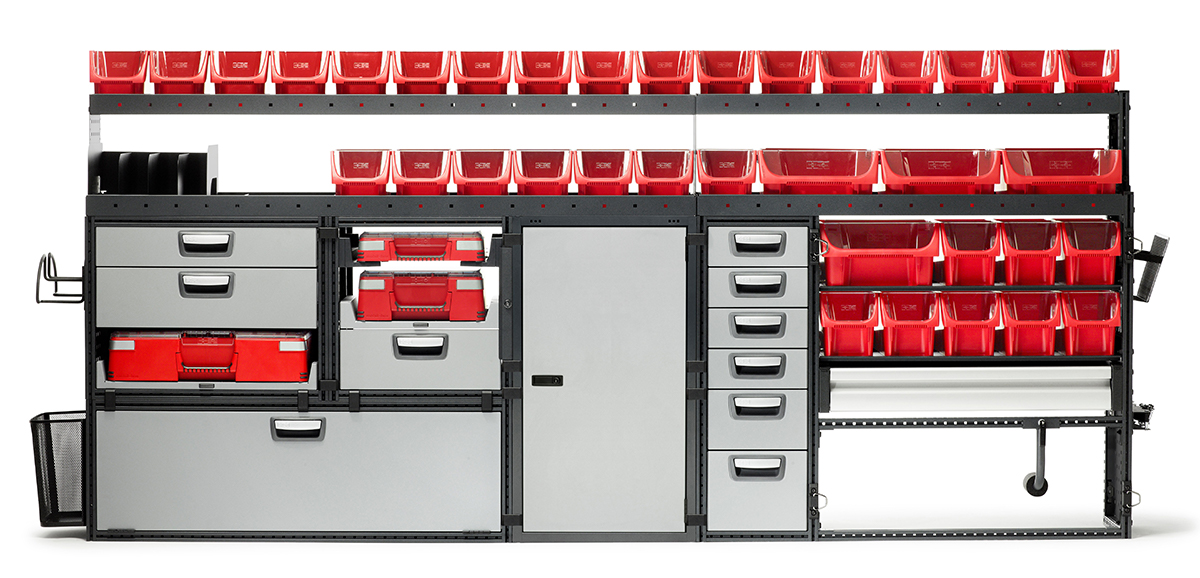
VAN SHELVING IDEAS

These handy pieces can help with van racking by giving you a blank slate to install a custom shelving system. The wall panels can also help keep your cargo area free from sheet metal dents and scratches.

Get easy access to whatever tools or equipment you need with an in-vehicle drawer storage system for your NV Cargo or NV® Passenger. These setups have the added benefit of weatherproof construction to help keep your gear safe and dry. To further simplify organization, use drawer dividers and labels to keep parts and tools together by size and type.

VAN STORAGE IDEAS

With long days on the road, you need a workspace that is as comfortable as it is smart. The NV Cargo and NV Passenger are available with a locking center console with room for a laptop and hanging files and innovative under-seat storage  that can accommodate loose items. Use the center console to create a filing system so you can keep receipts, invoices and other important papers organized. NV200 includes six standard wall-mounted cargo tie-down points and is available with six more mounted to the floor.  Up front, the NV Cargo, NV Passenger and NV200 feature a front-passenger seat that folds flat to create a work desk.  The NV200’s available composite cargo mat provides an anti-skid, stain-resistant surface. It also acts as a heat and noise insulator, which can make the interior more comfortable and quieter on the road.

VAN RACKING IDEAS

While every business is different, equipping your van with a racking system can help keep your gear tidy and maximize available space. Some van racking ideas for carpenters include the use of drawer units to hold screws and storage boxes to stow power tools. Some van racking ideas for plumbers can include the installation of pipe carriers to help prevent them from rolling around. You might also consider specialized storage compartments for unusually shaped tools.  Among van racking ideas for electricians are modular shelving units with tray dividers and floor boxes for things that might need extra security. 

To help realize your van shelving ideas, Nissan Aftermarket vendors can offer custom solutions  that can help with van racking, including custom, adjustable shelving systems, ladder racks, partitions and more. To help you build out your vehicle for the unique needs of your business, we offer qualifying customers an Upfit Allowance of up to $1,000 through the nationwide network of NTEA member companies.

Posted in cargo van, Van Ladder Racks

WOOD VS METAL VAN RACKING

WOOD VS METAL VAN RACKING

Choosing van racking for a commercial van is an important decision. From shifting loads to scratches, dents and leaks, an unencumbered cargo is likely to leave your vehicle in a sticky, unpleasant and dangerous mess. Racking out your vehicle correctly will help to not only keep it smart and safe but also pleasant and productive for your business.

It’s important to consider what will be carried in the vehicle to ascertain the ideal racking solution for you. Answering questions about frequency of use, load weight, size and fragility will help to determine the type of racking best fit for your organisation’s purpose. One consideration for operators when deciding to implement a racking system is what is the best material to use, with options ranging from wood to metal racking.

A WEIGHTY ISSUE

The first stop for some operators is to opt for homemade wooden racking solutions. Indeed, simple plywood floors and wooden racks can offer an easy and low-cost solution. If all you need is to carry a few tools for fitting delivered consumer durables, for example, then any number of kits exist, most of which can be fitted within a day.

However, it’s important to remember that wood has its limitations. While it may seem to protect the interior of the van, it needs to be laboriously treated to prevent the absorption of fluids. Perhaps the most important limitation of wood is its weight. Wood is heavy and a wood racking solution will eat into a vehicle’s payload. The payload of a van is its gross weight. It is the total weight it may legally be in terms of its own mass, passengers and cargo. Adhering to a van’s payload is essential if it is to travel safely and within the law. If you load a van above its maximum permitted axle weight, a penalty fee may be imposed.

Deciding what framework to choose for the interior of your van can be problematic, as many units can add considerable weight to your vehicle. A premium alternative to wood is high-strength steel. Metal, modular racking systems offer an easy to install and much lighter alternative to wood. The same style of racking system made from metal will weigh half that of wood.

Incorporating lightweight and advanced metal racking can generate hefty savings. By reducing the weight of the vehicle’s racking, operators are able to maintain the vehicle’s payload by increasing the weight in other areas. Namely, in cargo or equipment. Being able to carry more at any one time will enable more deliveries or fewer trips per day. Thus, impacting positively on operational efficiency and ultimately, on costs.  

Furthermore, heavy vehicle racking can also add to increased fuel consumption which can have a negative impact on cost effectiveness, particularly for fleet operators. Lower fuel consumption not only generates cost savings, it also impacts positively on an organisation’s carbon footprint.

A SAFETY CONSIDERATION

Van racking and storage is not just about payloads and profit margins. Badly loaded vehicles can be the difference between life and death. There can be a range of items in the back of any van. Simply because tools are in boxes, it doesn’t mean that they are safely stowed. Even the most benign item can become lethal in the event of a crash.

With duty of care an ongoing concern, van drivers and fleet managers need to be aware of the dangers. Similarly, employee liability insurance means that a lot of larger operators will only fit racking systems that have proven performance in crash tests.

Poorly designed racking systems will not support the typical loads that occur in a crash. In fact, the racking can become projectile itself. While a wood racking system may feel quite sturdy when braking or driving around corners, problems can occur in the event of a crash. Wooden racking disintegrates in an accident and while many people assume the bulkhead will protect them, equipment will simply punch straight through it.

Any racking, regardless of material, should not be reused in the event of an accident. However, it’s important to remember that while metal racking will bend, a much greater force is required to break it than its wood counterpart.

A RETURN ON YOUR RACKING INVESTMENT

While wood might be a cheaper option for racking, metal solutions are ultimately more cost efficient in the long term. Wood tends to be a fit-and-forget system solution with a limited life span. It doesn’t tend to transfer easily between vehicles. Therefore, if you change vehicles, you’ll need to refit racking.

A modular, metal racking system however, is widely seen as a more versatile solution. Infinitely safer, metal systems are also designed to last much longer, giving a greater return on investment.

Similarly, metal racking systems also offer enhanced functionality. Wood is much thicker than metal, which generates problems when trying to create streamlined storage and racking solutions. A well-designed metal racking system will make the most of the available space. In the best-case scenario, it may even enable you to downsize your vehicle.

From security boxes for power tools to cabinets for spares, metal racking systems can incorporate a range of functionalities. They offer longevity, versatility and can be transferred between vehicles. From a resale perspective, they will also add value to the vehicle in which they are installed.

Posted in Commercial Van

Van Shelving Increases Storage Space in Your Cargo Van

2019 Ford Transit Connect Cargo Van: What's in the new model
Van Shelving Increases Storage Space in Your Cargo Van

There are many upfits for cargo vans that can help contractors and other small businesses become more productive. One commercial van upfit that should not be overlooked is shelving. It keeps the interior of the van organized, which increases efficiency regardless of the field your business is in. It also maximizes space inside the van, which reduces the need to continually re-stock and contributes toward keeping workers productive throughout the day. 

These benefits make van shelving a necessity for workers in trades that always carry various tools, equipment, and cargo, such as plumbers, carpenters, electricians, painters, and others. Here are some of the ways you can use van shelving to improve the efficiency of your commercial van.

Use Steel Shelving

Steel shelving is sturdy, durable, and long-lasting. You can also cut the cost of all-steel shelving by installing steel frames and plywood shelves.

Install Corner Shelving

Contractors that carry large pieces of wood, sheeting, and other material need plenty of space. But where can they fit the shelves for their tools? That’s where corner shelving comes in. This is literally shelving that goes in the corner. It can be installed on the floor but placing it near the ceiling will increase valuable floor space.

Add Drawers, Crates, and Bins

Shelves work well with drawers, crates, and bins. Shelves are great for larger tools and equipment, but drawers will keep smaller items organized. Crates and bins can also keep similar items together and keep them from moving inside the van.

Consider Closed Backs

Some shelving includes a closed back. This keeps sharp and heavy tools from striking and damaging the van interior.

Also Consider Locking Doors

Shelving systems can also be installed with closed doors. This also helps secure your cargo if a driver ever needs to take a sharp turn or stop suddenly. Installing locking doors also helps keep items safe from thieves while the van doors are open.

Install Hooks

Sometimes you have so many tools you wonder where everything will fit. Try installing hooks above shelving, so you can hang larger items and store smaller items on the shelves.

Use Van Shelving to Become More Productive Every Day

Why struggle with lost items, frustrated customers, and wasted time when you can make one simple change to your cargo van that will have a positive impact on your bottom line? Van shelving, when used effectively, can increase space, organization, and productivity. It allows workers to always have the right item on hand, which saves time for the worker and increases customer satisfaction. There are several types of shelving to use, including steel and corner shelving, and features that can be added, such as drawers, crates, bins, closed backs, doors, and hooks.  Any of these can improve your day-to-day productivity. 

Posted in wheelchair van

From Manufacturing to Delivery, Why You Should Buy Your Wheelchair Van Direct

Top 5 Reasons Wheelchair Users Buy Full Size Wheelchair Vans
From Manufacturing to Delivery, Why You Should Buy Your Wheelchair Van Direct

When vehicles were first introduced to the general consumer market, someone looking to buy a car only had one option for how to get behind the wheel. They worked directly with the manufacturer’s salesman. Fast forward a few decades, there is no shortage of ways to buy a vehicle. Buying a vehicle could mean browsing the used listings and buying directly from the previous owner. Or it could mean going to a sales lot with dozens of makes, models and manufacturers.

For wheelchair users, the wheelchair van buying market does not look much different. Wheelchair users have a variety of options to choose from when browsing for a used or new wheelchair van. But just because a variety of options exist, it does not mean those options are always the right fit for every wheelchair user. And while we may be biased, we think buying directly from the manufacturer has a lot of benefits for wheelchair users and their families. In fact, we have the customer reviews to back that up. In this post, we will go over the benefits of buying a wheelchair van direct.

Better Product Knowledge

While it is true that many sales people know the makes, models and trim packages available for the vehicles they sell inside and out, when you are dealing with a product that is customized from the ground up, it can be difficult to have all the answers. That is, unless you are working with the manufacturer directly.

When you are working directly with the company that is customizing your wheelchair van, the team you are working with knows exactly what can or cannot be done to the vehicle, because they are the ones that are building it. They will be able to show you completed vehicles, and talk you through full details when it comes to customization requests that might be outside of the norm for a dealer. For example, did you know that the Rollx Vans team converted vehicles that were right-hand drive for a dealer in the United Kingdom? While that customization isn’t reinventing the wheel by any means, it may be out of the norm for some dealers.

More Customization Options

Speaking of customizations, when you work with a vehicle manufacturer, you are bound to have more customization options than the one-size-fits-most solution that many dealers have on their lots. Common wheelchair van customization options in our industry include seating arrangements, ramp or lift type, the option for a raised roof with a full-size van, transfer seats, steering options, tie down and securement devices, and more. But it doesn’t stop there. If you are looking for something specific, reach out to a wheelchair van manufacturer (like our team at Rollx Vans), if it is something that can be done, chances are we have probably already done it and can get you more details and a quote.

No Third Party Mark-Up

While we cannot speak for all wheelchair van manufacturers, we can speak for our own bottom line. We bring new and used wheelchair van conversions to our customers without a third-party dealership markup or any hidden fees. That is why we display the prices of every one of our wheelchair vans right on the website. We want our customers to know exactly what they are getting into before they even pick up the phone.

Additionally, we do not pay our sales team a commission on any of the features you choose to add or choose not to add to it. Because of this, our sales team will never recommend something for your vehicle that you do not actually need. Their only goal is to help you get behind the wheel and get to a more independent future, not to drive up the price so they can line their own pocket.

Better After-sales Support

Buying a vehicle that has been converted for wheelchair accessibility is a different process than buying a regular vehicle off a sales lot. What wheelchair users should be able to expect is better after-sales support from the company they purchase from. At Rollx Vans, our after-sales support includes an industry best warranty (7 years or 100,000 miles for all structural modifications), 24/7 mobility roadside assistance, a team of technicians available all around the country that come right to our customer’s driveways when they need to have their vehicle looked at, and more. Our team strives to show our customers that we will continue to work for them long after they have signed on the dotted line.

Delivering the Final Product

Wheelchair users should expect their final wheelchair van to be everything it was promised to be and more. And they should also expect a smooth and seamless delivery process.

Posted in cargo van

Cargo Van vs. Cube Van

The Best Cargo Vans for Small Businesses in 2021 | Digital Trends
Cargo Van vs. Cube Van

You’ll have plenty of options when picking out a commercial van, but one of the most important choices you’ll need to make is between cargo van vs. cube van. It helps to have all the relevant information laid out in front of you before making a decision. To make things simple and stress-free for Northern Chicago shoppers, here’s a quick overview covering the difference between cargo vans and cube vans.

What Are Cargo Vans & Why Should I Use One?

A cargo van is a one-piece vehicle; the cargo area and passenger area are one. This means the cargo area can be conveniently accessed from inside the vehicle. You’ll typically find them fitted with a sliding side door and rear doors for the loading and unloading of cargo. Most don’t have windows in the rear cargo area, and many use a cargo guard to separate the passenger area from the interior cargo area. Cargo van benefits include:

  • Smaller Size: This makes them easier to park in tight spaces and maneuver through crowded Milwaukee streets.
  • Direct Access: In a cargo van, you can reach back and pick out a tool or item from the cargo area while in the passenger section.
  • Familiar Handling: If you’re more used to driving a sedan between Racine than handling a commercial vehicle, the cargo van’s traditional handling should appeal.

What Are Cube Vans & Why Should I Use One?

Unlike cargo vans, cube vans use a box-like cargo area that sits on the frame — that’s why they’re sometimes called box trucks or box vans. The cargo area is inaccessible from the interior, and the sides of the cargo area are straight. Most feature roll-up doors at the back. Cube van benefits include:

  • Greater Capacity: Since their sides are flat, cube vans can accommodate more cargo, especially stacked boxes.
  • Ideal for Bulky Items: Rolling rear doors make it easier to load and unload heavy or bulky items.
  • Advertising Space: Flat sides provide a great space for advertising.
Posted in wheelchair van

Do’s and Don’ts: Handicap Vans for Sale By Owner

Triple S Mobility - Wheelchair Accessible Van, Handicap Van
Do’s and Don’ts: Handicap Vans for Sale By Owner

Purchasing a vehicle is a big investment for anyone. Luckily, there are many different ways that buyers can find a vehicle to purchase. They can buy a brand new vehicle or a previously owned vehicle through a dealer, or they can purchase directly from a previous owner looking to sell their own vehicle. For wheelchair users, we would argue that they have even more options to consider.

Wheelchair users can buy new or reconditioned wheelchair vans directly from a conversion manufacturer, they can purchase through a wheelchair vans dealer, and sometimes they can even find a previously owned wheelchair van for sale through a standard car sales lot. Wheelchair users can also buy a new or previously owned standard van and have a conversion added to it, or they can buy a previously owned wheelchair van that is for sale by the owner.

With so many options available to wheelchair users, it can be difficult to know which option is best. In this post we will talk a little more in depth about the do’s and don’ts for buying a handicap van that is for sale by the owner. We will cover some of the benefits to this method of purchase and also some of the disadvantages, so you can have as much information as possible before buying a van directly from the previous owner.

The Benefits of Buying from the Owner

The single biggest benefit is often the lower price. Private sellers likely do not sell vehicles every day, so they may not be skilled at negotiations and you may be able to talk them into a lower price than what they had originally listed the vehicle for. Second to that, is that owners are generally in a hurry to sell the vehicle, so it can be a relatively quick process. When it comes to buying a wheelchair van, buying direct from the owner can usually save a wheelchair user quite a bit of money at the time of the purchase.

What Should You Do When Buying from the Owner?

While getting a new-to-you wheelchair van for a much lower cost is the best scenario, there are still many items to take into consideration when buying directly from the vehicle’s owner. Here are our recommendations for what to do if you buy a wheelchair van from the previous owner.

Do’s:

  • Bring a mechanic to inspect the vehicle (if at all possible). They will be able to identify any big issues the vehicle may have that you may not be aware of.
  • Check for a lien against the vehicle. This will need to be taken care of by the seller prior to the finalization of the transaction.
  • Check for a salvage title on the vehicle. A salvage title on the vehicle could mean that there are underlying issues from the previous damage that may or may not have been corrected properly. It’s always best to avoid the purchase of a vehicle with a salvage title whenever possible.
  • Ensure the selling party is the owner of said vehicle. The vehicle title will have the name of the rightful owner of the vehicle.
  • Take possession of the title immediately. It’s important to retain the title, even while it is being transferred into your name.

The Disadvantages of Buying from the Owner

The biggest disadvantages to buying directly from the previous vehicle owner all have to do with the condition of the vehicle. While the vehicle may look and sound like it is running in perfect condition, there could be issues with the vehicle that are hidden, that the seller may or may not be aware of. Because you are buying from an owner directly, there would be no warranties or guarantees, and the condition of the vehicle purchase would likely always be as-is with no improvements, mechanical checks or changes. This can be risky, as you would then be responsible for anything that could go wrong with the vehicle directly after purchasing.

Additionally, financing the vehicle may not be possible if you do not qualify for a personal car loan through your bank or another third party loan servicer. If you are okay with the risks and decide to purchase directly from a previous owner, here are a few recommendations on what not to do.

Don’ts:

  • Spend your entire budget on the vehicle. It’s best to reserve some of your funds for unexpected repairs the vehicle may need right away.
  • Don’t make payment without receiving the title. Again, this is an important step for you to obtain full ownership of the vehicle.
  • Wait until you find the vehicle to get financing. Private sellers often want to move the vehicle quickly and get the cash in their pocket. It’s important to line up your financing (if needed) in advance of finding the vehicle, so you can move quickly.
Posted in Uncategorized

How to Buy a Wheelchair Van Without Leaving Your Home

Wheelchair Vans How to Choose the Best
How to Buy a Wheelchair Van Without Leaving Your Home

Buying a vehicle online these days is literally as easy as the click of a button. With the spread of the Coronavirus last year, many more traditional car sales dealers turned to online sales, making it more of an industry standard than it ever was before. For wheelchair users, this allows them access to a wider variety of dealers across the country, so they can get exactly what they need from their wheelchair van.

But, just because a wheelchair vans dealer is selling online, it does not necessarily mean the entire process will take place online. In this post, we will cover our standard sales process from browsing online through delivery at home, so you and your loved ones know how easy it can be to buy a handicap van without ever leaving your home.

Browse Inventory Online

Most car dealerships and even wheelchair van dealers across the United States have some or all of their inventory online. This is a great place to start when looking for a new or used wheelchair van. Researching inventory online gives you a chance to see what makes and models exist in the marketplace, what some of your conversion options might be, and even what the process looks like for working with a dealer.

While no two dealer websites will ever be the exact same, we recommend looking for dealers that share full images (detailing the inside and outside of the vehicle), a description for each vehicle, and pricing details. This level of transparency with potential customers is important when finding a great dealer, so you can be sure there are no hidden issues with the vehicle and no hidden costs when it comes time to sign on the dotted line.

Chat with a Sales Representative

While shopping online is a great starting point, speaking with a sales representative from a few different dealers will help you to narrow down what you are looking for and which company you want to work with. Most dealers will connect you with a sales representative when you contact them either by phone or via email when you submit the contact form through their website.

When speaking to the sales representative, you will want to get any and all questions that you have answered. You will also want to make sure they talk you through their entire sales, conversion, financing and delivery processes to ensure you know what to expect from the process, including how much contact you are required to have in person with their team. We also recommend going beyond the initial process and ask the sales representative about the policies for service after your van has been delivered. It is important to get a clear picture of what you will be getting from the company, especially if you are doing all of your communication with them over the phone or through email.

Customize Your Wheelchair Van: Conversion Features

Once you have selected your dealer and have worked with a sales representative to choose the make and model of your new or used wheelchair accessible vehicle, it is time to select your conversion options. Some dealers will have only a few set packages for you to choose from, while wheelchair vans manufacturers will have a range of customization options available.

At Rollx Vans, you can expect that your experienced sales representative will provide an entire range of options for customization from ramp or lift type to steering options and hand controls, and transfer seats to tie down options. We also provide a range of flexible seating options, so your van works for you and your unique family and/or caretakers.

Signing on the Dotted Line

No purchase is complete without signing on the dotted line. When you have finalized your conversion options, your sales representative will cover financing options and warranties with you, and go over your final sales contract. This will look similar to buying from a traditional car dealer, but this can all be completed from the comfort and safety of your own home.

Request an At Home Delivery

Many wheelchair van companies, especially those that sell vans nationwide, will have an at home delivery option. Often this means that a technician will bring your completed van right to your driveway, hand you the keys and show you how to access and operate the features of your new vehicle.