Going on a camping trip on the weekend or hitting for a week-long caravanning tour, awnings are a must to carry. Apart from attaching to your camper and making a temporary dwelling, awnings are used for an altogether different motive also- commercial purpose. Commercial awnings are quite different from caravanning awnings and make a good commercial, let us see how:
Promotion
You have a store and you are considering different options for signage. What could be better than an awning for it? You could get an awning printed with your store name and logo. The protruding awning always gives a greater visibility. Business awnings come in different shapes and sizes and you could get a 3-sided awning on which you get your store name on all the three sides.
Shelter
It is what awnings are meant for. But not only awnings give shelter on camping trips they are of great commercial utility also.If you have a cafe or a bakery or simply a restaurant and you want to add a couple of tables outside, get an awning attached to the frontage. In case it is raining out or is misty, people would find shelter in your awning and they would read your window signs up close.
Catchy
Another great aspect of an awning is- it is catchy. It is difficult to focus on all shops while driving on a street but an awning in the street catches your eyes faster than anything else. And that helps your store get identified.
Another great aspect of an awning is- it is catchy. It is difficult to focus on all shops while driving on a street but an awning in the street catches your eyes faster than anything else. And that helps your store get identified.
Lighted Awnings
Your store runs till 10 in the night and no business can afford not to glow in the dark. Just like other signages, commercial awnings could also be lighted up. Lighting up an awning could save you the cost of an exclusive backlit board.
Clean Space
Van awning helps in keeping the sheltered space of your business premise from getting wet from rains or clean from a snowfall. That way it also protects the facade of your store which might get damaged otherwise.
Saves Power Cost
A commercial awning helps in keeping your business place insulated. If you have awnings installed across your store facade like on windows and doors, it will keep the inside cool which would eventually save your cost on cooling the place. An awning would save your products on display and interior from getting sun-damaged. Getting used awnings for your business could save your cost further.
Solar panel systems aren’t just for houses or commercial properties – they can be a great resource for on-the-go electricity users as well. In this article, learn about how RV solar systemworks for a camper work if they’re right for you, and what some of the top options available are.
The basics of an RV solar panel setup
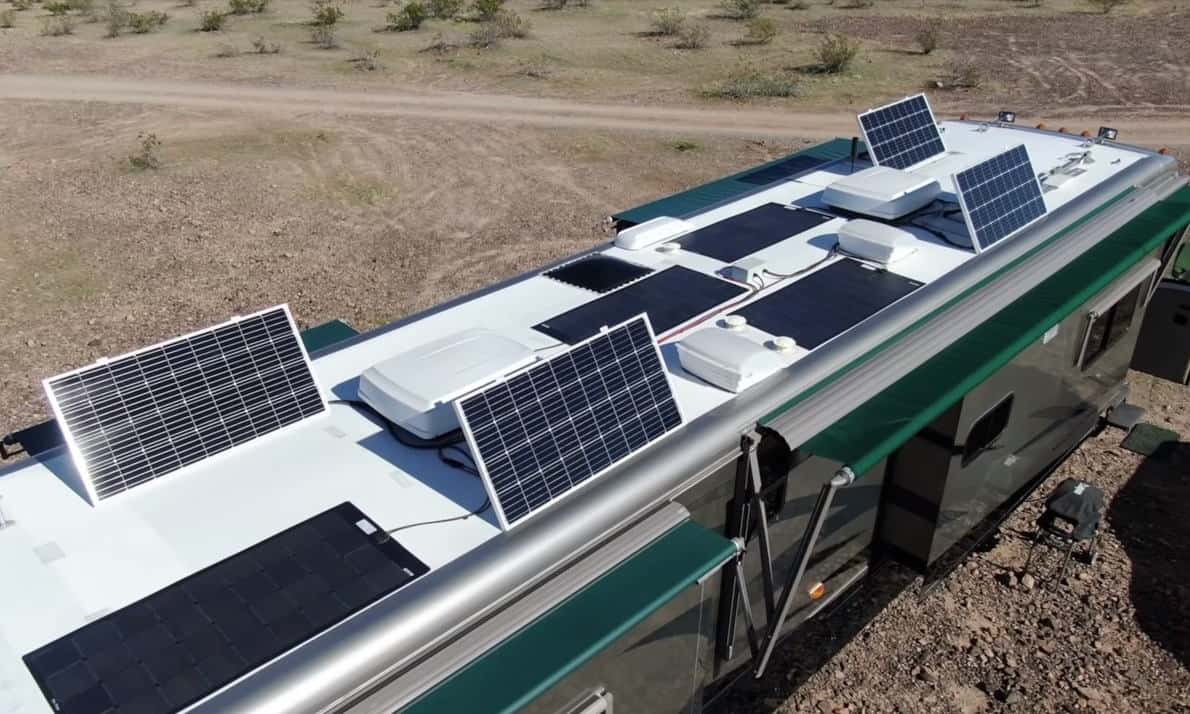
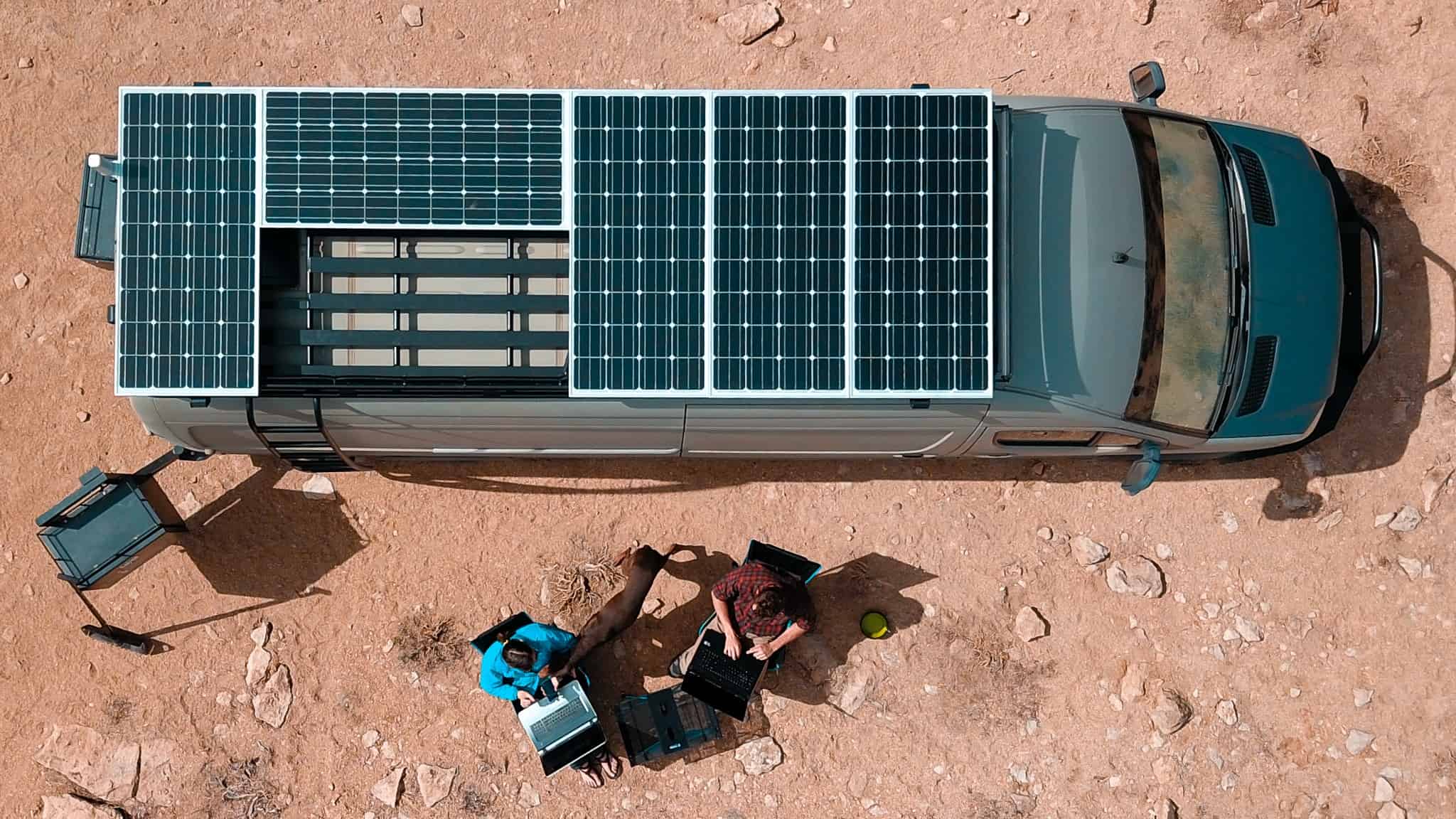
RV or motorhome solar panels work in the same way a residential solar installation operates: solar panels capture sunlight and convert it into electricity, and you can use that solar electricity to power appliances. You can buy specialized portable solar panels designed to be easy to set up and take down for RVs, as well as small or flexible panels that are designed to be mounted on an RV roof.
If you spend time camping and traveling in an RV, a solar panel setup can be a cost-effective, environmentally friendly, and convenient way to use electricity on the go. Solar panel systems generally require little to no maintenance and provide a dependable source of electricity when the sun is shining. For RV owners who mostly stick to campgrounds with electrical hookups, however, RV solar panels likely won’t provide enough of an extra benefit to rationalize spending on them.
How do solar panels work for campers, RVs, and motorhomes?
In order to generate and use solar power for your RV or camper, you’ll need a setup complete with the following components:
Solar panels
A charge controller to prevent overcharging your storage system
Solar batteries to store energy (common options are lead acid or lithium-ion)
An inverter to convert DC electricity to AC electricity (occasionally pre-built into the solar battery component)
You can buy all of these components separately, but there are some motorhome solar panel kits available to purchase that include most components.
You’ll also need proper wires and cables to hook all of your components together, as well as racking and mounting equipment for your panels – these parts will be included with your solar panel or battery system purchase.
Modern day RVers also have a similar desire for independent, reliable and maintenance free power. They also want their power to be clean, quiet, and free of the vibration and pollution associated with petrochemical fired generators. Today’s solar powered systems meet that criteria.
BENEFITS OF SOLAR ELECTRIC BATTERY CHARGING
Clean, Quiet, & Easy to use
-Solar panels consume no fuel and give off no waste. -There are no moving parts, which means no mechanical noise. -Simply place the solar panel in the sun and you generate electricity!
Solar Power Maximizes Battery Life.
Solar panels generate pure D.C. electricity when exposed to sunlight. This is exactly what your batteries want. By saturating your batteries with these electrons in a slow and steady manner on a daily basis, you prevent your batteries from repetitive deep discharges which will shorten the lifespan of lead-acid batteries. In fact, a properly designed solar battery charging system can easily double the useful life of your lead-acid batteries! (Lithium batteries, on the other hand work a little differently and aren’t worn out by deep discharges in the way that lead-acid batteries are.)
Electrical Independence
With a properly sized system and the appropriate components, you will be able to park where you want, and be free from the concerns of finding shore power or running your generator. Go to the desert, go to the mountains, go to the beaches, go anywhere the sun shines and declare your electrical independence!
Low Maintenance
Since van solar panels consume no fuel and have no moving parts to wear out, there are no air, oil, or fuel filters to change. Simply keep the surface of the panels clean.
It’s Safe and Reliable
RVs typically operate at 12 volts and less than 30 amps. As a result, there is very little chance of being electrocuted or starting electrical fires. If a system is installed using proper wire sizes and fuses, it is inherently safe.
5 Benefits of Using Solar Power in Your Camper Van
When it comes to camper vans, having electricity is critical for many reasons. Your fridge, lights, heater, and ability to charge laptops and other devices all rely upon a dependable source of electricity. Without electricity, having a camper van just isn’t all that cool!
For the most part, camper van electrical systems share one thing in common: they run off of 12-volt batteries, similar to car batteries but with the ability to complete several hundred cycles of charging and discharging. Still, different vans use different methods to charge these auxiliary batteries, which in turn power your van. That’s where solar panels come in. Solar panels for vans have several major benefits when it comes to their use in camper van electrical systems.
1. Cost-free
Perhaps the greatest benefit of using solar panels on your camper van is their “fit-and-forget” nature. Once installed, solar panels require no maintenance or input to work effectively. Simply wire the panels and secure them to the roof of your van, and you will have a reliable source of power for many years to come, wherever the sun shines.
The same cannot be said for some other sources of charging, including generators. Generators not only require the purchase of gasoline to run, but they also will inevitably need some maintenance down the line. The only form of upkeep you need to undergo with your solar panels is cleaning them intermittently to ensure maximum output. This is achieved easily with the addition of a ladder to your camper van.
2. Clean Energy
One major benefit of utilizing solar power in your camper van is the sustainable nature of this power source. Unlike gasoline-powered generators and grid electricity which comes largely from coal-fired power plants, solar power is a completely clean and renewable energy.
If you are using your Sprinter van conversion like most people do, to access the beautiful outdoor spaces you love, then you probably understand the importance of relying on clean energy sources to protect our planet. The amount of electricity used by a camper van is not huge in the grand scheme of things, but every little bit counts. Plus, adding solar panels to your camper van puts money in the green energy industry, which, in turn, helps it to grow.
3. Off-Grid Capabilities
If you want to take your camper van off-grid, solar power is a must. Nothing beats the freedom of being able to camp wherever you want, regardless of whether hookups are available. Solar panels allow you to rely entirely on the sun’s rays to keep your food cold, your devices charged, and your lights on!
If you are concerned about running out of power during cloudy weather, this is rarely an issue. Solar panels are still capable of harvesting some of the sun’s energy, even in cloudy or partially shaded conditions. And, if you have enough battery storage, you should be able to last for a number of days without charging the batteries at all. Just a few hours of full sun is enough to fully charge most camper van battery banks.
4. Sleek and Space-Saving
Another great thing about solar panels is their mounting location on your van. In order to maximize sunlight exposure, you’ll want to mount your panels on the roof of your van. This frees up precious space inside of your rig that might otherwise be used by a generator.
Most solar panels are an inch thick or less. Their low profile means that you probably won’t even be able to see them from the ground. And, given the large size of Sprinter van rooftops, you’ll still have plenty of room for gear and accessories up there.
5. Durability
You might be concerned about how long a piece of glass will last on the roof of your van. Rest assured, however, that solar panels are up to the task. The life expectancy of solar panels is 25 to 30 years. After this amount of time, they don’t stop producing electricity – but they lose enough efficiency to bring them below industry standards. It’s likely that your solar panels will outlast the Sprinter van itself.
Solar panels are not just durable, they are rugged as well. Most panels are built to withstand decades of harsh sun, wind, rain, snow, and even hail. In fact, high-quality solar panels are specifically tested to ensure that they can withstand moderate to large sized hail. As long as they are installed securely by your professional camper van outfitter, the panels will have no trouble withstanding the high wind speeds of the highway.
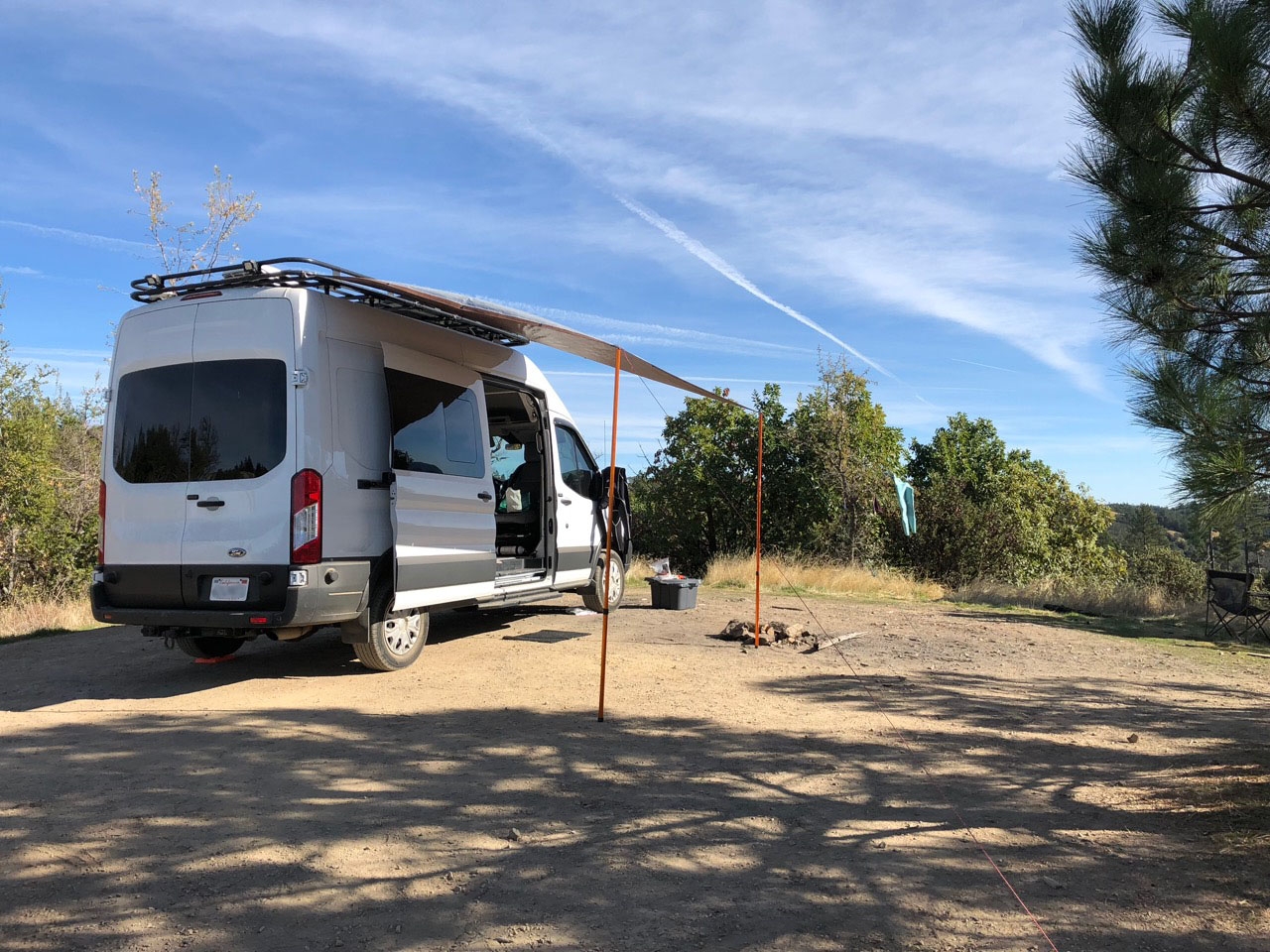
RV awnings are an excellent investment, providing shade and increased functionality of your RV. But before buying and installing an awning, it’s important to understand the features of the different types available.
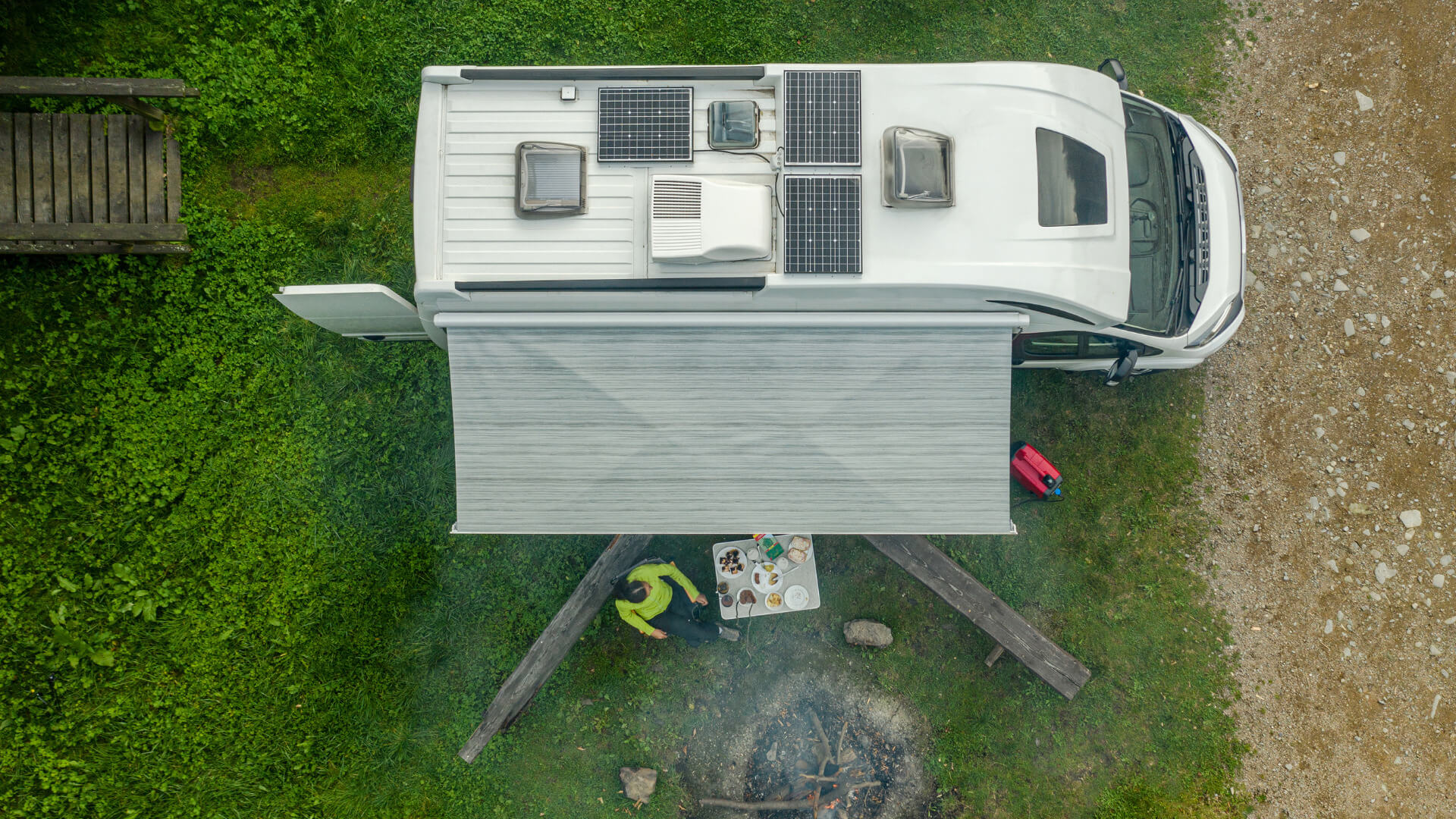
An RV awning increases your RV’s usefulness and versatility, allowing you to use it for multiple purposes. Here are some reasons why you should buy and install an RV awning.
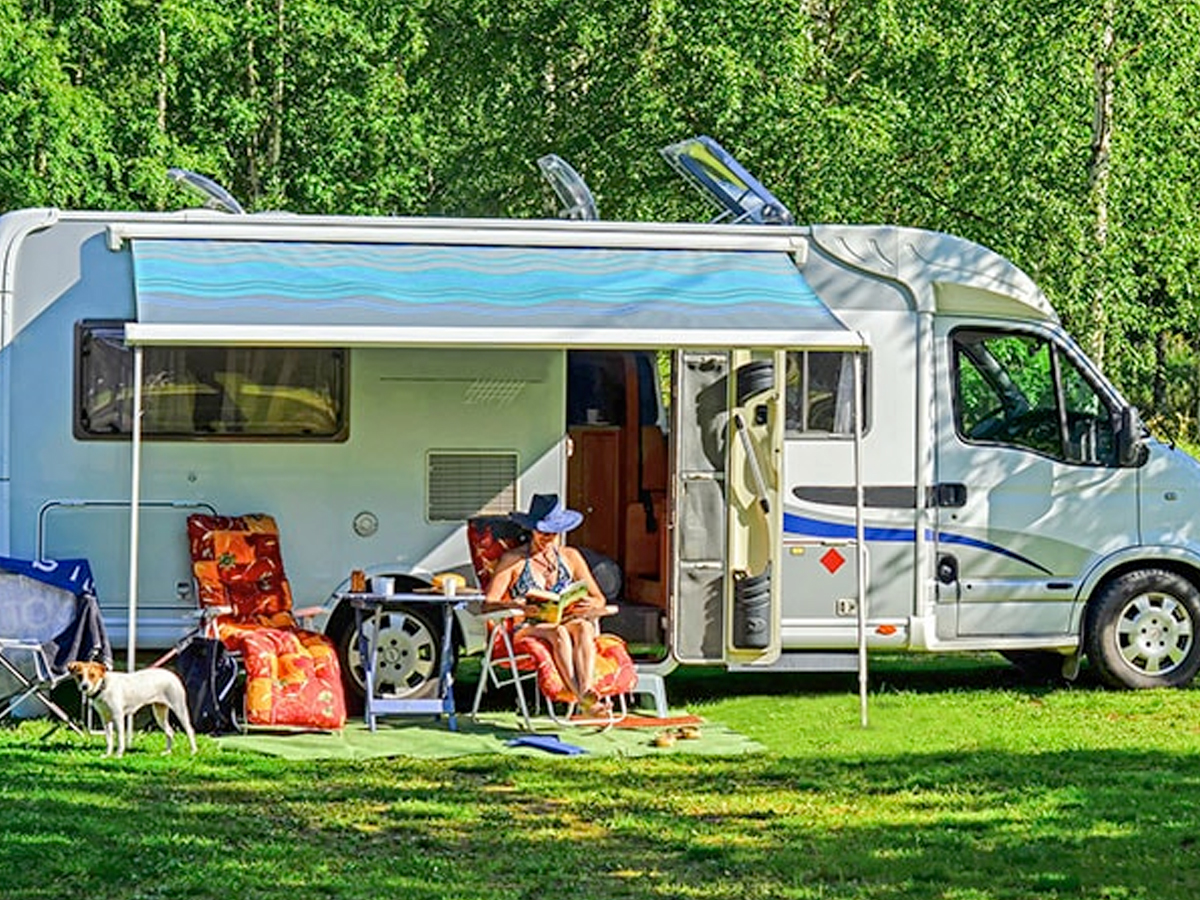
➢ It provides shade in the hot summer days. When the weather is too hot, spending time inside the RV can be extremely uncomfortable, but sitting out in the direct sunlight might not be the best alternative. The awning provides some shade, so you can read, relax, or prepare a BBQ dinner without being too hot.
➢ Even if you’re fond of the sun, spending too much in the sun without protection will leave your skin subject to the harmful ultraviolet rays. Ultraviolet rays can cause skin damage and also increase the risk of skin cancer.
➢ If you’re spending time inside your RV, the awning can also protect you from the annoying sun rays when you’re trying to relax or sleep. Moreover, the sun can cause the fading of your carpets and furniture, so the awning will provide the needed shade.
➢ An awning can also keep the rain away from the interior of your RV. The rain will slide away from your windows, so you can spend some peaceful time inside, without having everything getting wet or having to lock your windows.
➢ With some modifications, the awning can add an extra outdoor room. If it has walls, this outdoor sun room will be bug-free, so you can chill outside without having to deal with nasty mosquito bites.
Who says you can’t RV in the winter? RV fulltimers know that the colder months can be just as enjoyable for camping, as long as you put some prep work in. In fact, winter is a wonderful time to explore national parks, spot wildlife, and enjoy outdoor activities like skiing and snowshoeing, while also benefiting from less crowded camping areas.
Here’s our guide for staying warm, cozy, and safe while RV camping this winter.
Note: This is not an all-inclusive list for preparing your RV for winter. Consult your RV manufacturer’s owner’s manual for more information.
Insulate, Insulate, Insulate
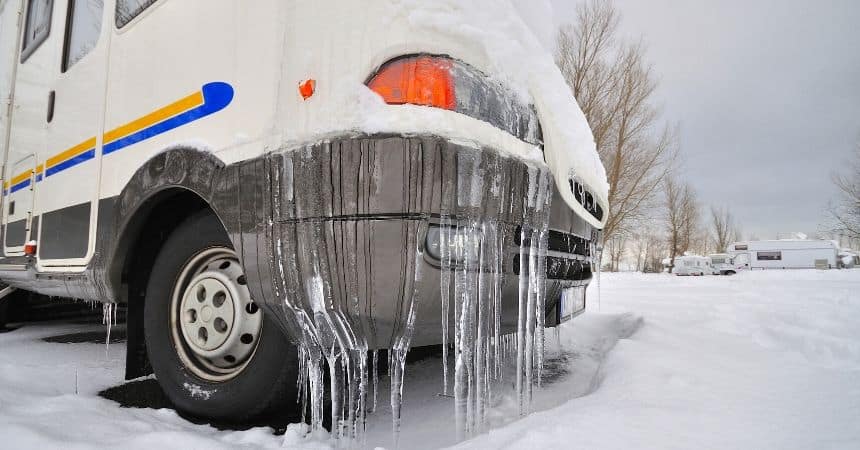
Everyone knows that pipes can burst inside a home in freezing weather. The same is true for RV plumbing. Insulation is absolutely key to keeping your RV running well, especially if you’re staying somewhere with sub-zero temps.
Skirting is essential. Even if your vehicle comes with a thermal package, you still need to skirt the bottom of your RV or travel trailer. Pipes, sewer lines, holding tanks, and more live underneath and cold moving air has the potential to cause serious damage. Luckily, owners have options when it comes to skirting. Many people like to use foam insulation, while others prefer vinyl, canvass, plastic sheeting, or even hay bales. In a situation where you can’t find decent skirting? Packed snow will do in a pinch.
Line your cabinets. Lining Reflectix or another foil insulation on the inside of your outer wall cabinets will help keep the cold out as well. Just be sure to watch for condensation and consider running a dehumidifier to avoid mold growth. You can also place a product like DampRid if you notice moisture forming.
If you notice any cold air drafts coming from underneath a cabinet or appliance, use painter’s tape as a temporary fix.
Protect your windows. Bubble wrap is a cheap and popular choice for insulating RV windows. Use a spray bottle or rag with water and a little dish soap and wet the window prior to sticking the bubble wrap on to secure it in place.
Make sure to check caulking, weather stripping, and window seals and fix any problem areas before the weather gets too chilly. Using a thick blackout curtain will also help keep the cold out.
Create a Warm & Cozy Space
Of course your RV needs to stay warm over the winter, but so do you! Spend some time collecting these items before temps drop and you’ll thank yourself over the coming months.
Have an extra heat source. Don’t want to keep your furnace running all the time? Space heaters are helpful for keeping your RV toasty warm. Both electric and propane heaters can effectively heat your RV, depending on preferences and needs. Propane heaters work well for those who don’t have electricity or want to conserve power. If you’re able to use electricity, an electric heater “fireplace” will add ambiance to your space.
Use your oven. While you may want to conserve propane by not utilizing your oven, the benefit is that the oven will naturally give off heat. Plus, who doesn’t want to end a chilly day with a hot meal or a warm cookie?
Stay cozy. It may go without saying, but extra blankets are a huge must if you’re spending the winter in your RV. Something you may not have thought of? Laying heavy throw rugs on the floor will keep your feet warm while you’re walking around, and provide insulation at the same time. Carpet tiles from a flooring store also do the trick.
A heated mattress pad or heated blanket will go a long way to ensuring everyone sleeps comfortably. And make sure to keep a couple of sleeping bags rated for zero-degree temps on hand in case of emergency.
Outfit yourself. If you’re from a place where the temperature never drops below 32 degrees, you may not be prepared when it comes to winter clothing and gear. Insulate your body with base layers that are made with moisture-wicking material and be sure to choose a waterproof winter coat. Keep your feet warm with thick, moisture control socks and snow boots. Pick up a package of hand and feet warmers and consider wearing them inside of gloves and socks.
If you plan on heading out for a hike, remember that the sun goes down early in the wintertime. A headlamp and battery-powered lantern will keep you safe on the trail, plus the lantern can be used back at your campsite.
Prepare a Safety Kit
Here are a few more items that will help you stay safe during the harsh winter months. Once again, this list is not all-encompassing but may include gear you hadn’t thought to bring along.
Headlamp and lantern:
If you plan on heading out for a hike, remember that the sun goes down early in the wintertime. A headlamp and battery-powered lantern will keep you safe on the trail, plus the lantern can be used back at your campsite.
Blow dryer:
The hot air from a hairdryer will certainly feel welcome when you’re soaking wet from the shower, but it could also come in handy if your pipes or hoses freeze.
Shovel:
Winter storms can blow in from out of nowhere. Don’t find yourself unprepared; bring along a heavy-duty snow shovel.
Goggles:
Goggles will protect your eyes from harsh winds while snowboarding, skiing, snowshoeing, or if you happen to get caught outside in a snowstorm.
Batteries:
You never know when your device may need batteries. They come in handy for headlamps, lanterns, fire and carbon monoxide detectors, and more.
Bottled water:
If you choose to drain your fresh water tank completely over the window, bottled water is a must for brushing your teeth and cooking.
Heated water hose:
Save yourself the pain of applying heat tape to your regular hose and swap it for a freeze-proof hose.
Want to know more about awnings for vans then it is best to seek help from the experts.
Benefits of an RV Awning: Enjoy the Great Outdoors
An RV is perhaps the most versatile vehicle you will encounter on the road. It serves as a hotel room, kitchen, bedroom, and family room—just to name a few of the features. Additionally, RVs are incredibly spacious; according to Camper Grid, “Most of the class A motorhome have lengths that range from 21 feet up to 45 feet.” While this makes for a lavish indoor space, there is one area that many camper enthusiasts ignore—the expansive front yard. However, thanks to the many benefits of an RV awning, more RV owners are utilizing their RV’s outdoor space.
Choose Your Ideal Materials
Before you consider the mechanics, you’ll need to choose an awning material. Awning materials vary, but acrylic and vinyl are the most common. Acrylic is the more breathable of the two materials and can handle the harsh elements. However, acrylic is water-resistant, not waterproof. Acrylic will repel water and dry quickly, but during heavier rains, your RV awning may leak.
Vinyl, on the other hand, has similar durability and is waterproof. However, vinyl does not handle air circulation as well as acrylic. These awnings are versatile and come in an array of colors and designs—your new vinyl awning will look amazing; however, be sure to keep an eye out for minor fading. No matter which material you go with, if you find your awning needs some TLC, it is easy to replace the fabric.
Find the Perfect Type of Awning
It’s important to consider your personal needs when deciding on the type of RV awning you need. No matter which option you go with, each awning will allow you to enjoy all the space around your RV. For a permanent solution, a fixed awning is a perfect choice. Fixed awnings, once installed, provide constant shade whenever you want to spend time outside. You’ll just have to be extra careful while on the road.
For those who want something a little more high-tech, try a retractable awning. With one push of a button, you’ll be able to extend or retract your awning. This way, you can establish shade when you want and tuck it away once you’re ready to hit the road. Similarly, a sliding awning works the same as a retractable van awning, it just requires some manual effort.
Take Your Awning to a New Level
To truly reap the benefits of an RV awning, you’ll want to create an outside room. An awning forms a partially enclosed space that attaches to your RV. As such, you can immerse yourself in the outdoors while still using modern luxuries, including patio furniture, a grill, and protective netting to keep out bugs and dust. Your RV awning will be perfect for late-night hangouts with friends and family.
RV camping offers incredible adventures no matter the season. If you’re an avid longtime RV’er or have just purchased your recreational vehicle, you’re sure to find a few extra add-ons can make your experience that much more enjoyable. One component you won’t regret investing in is an RV awning. These are essentially sun shades that attach to the side of your RV.
If you choose the right one, an awning can become an outdoor room for you and your family to enjoy no matter the weather. Here’s what you should know about the types of RV awnings you have to choose from.
THE BENEFITS OF RV AWNINGS
An awning is an excellent addition to any RV. The right one can provide many different benefits, increasing the versatility and usefulness of your RV and making your camping adventure all the more fun. Some of these advantages include:
Keeping you cool on hot summer days Protecting you from the harmful effects of ultraviolet rays Preventing the sun from shining into your RV, thus keeping temperatures cooler and preventing carpets and furniture from fading Adding an outdoor room that can be virtually bug-free Protecting you from rain while sitting outside
TYPES OF RV AWNINGS
You have a huge variety of RV awnings to choose from, all of which are made from different kinds of material and with different functionalities. Before investing in an awning, you should decide what kind you want, as each has its own benefits and drawbacks. After all, the more aware you are, the more equipped you’ll feel to make the best decision for your RV.
Here are different types of RV awnings you will probably encounter, based on the materials and mechanisms that make them work.
ACRYLIC AWNINGS
The most common materials awnings are made from are acrylic and vinyl. Acrylic RV awnings have distinct advantages, including:
Good air circulation and breathability Ability to handle sun, rain, ice, snow, winds, dust and dirt and pesky bugs Repels water on the surface Dries quickly
VINYL AWNINGS
The other most common material used for RV awnings is vinyl, which has many benefits:
Scratch- and fade-resistant Road grime, pollution and UV rays can’t penetrate the material Waterproof
FIXED AWNINGS
Fixed RV awnings are permanently installed above your RV’s doors and windows. They’re useful because they offer a continual covering that protects against sun and rain. They do, however, present some disadvantages:
Can easily fall off while driving Little flexibility when you wish to change the awnings position
SLIDE OUT AWNINGS
Slide out awnings are ones that roll out when you desire to sit in some shade. Most are manual, although some include mechanical means that make it easier to pull out your awning when you want to. These tend to be the most budget-friendly option because they’re generally made of canvas. They’re also easy to take care of. The main drawback is that water tends to pool on the roof of the slide out awning.
Thanks to rapid technological advancements, installing solar panels on a campervan, is now more than ever, an excellent way of generating additional power.
There is also the green credentials. Many of us want to decrease our use of fossil fuels (both through the national grid and/or fuel-powered generator).
By installing a solar power system into your campervan, you can harness the power of the sun and store it in your leisure battery. This energy can then be used when you turn on an appliance and/or gadget.
How Does A Solar Power System Work In A Campervan?
1. Solar Panel. The primary purpose of a solar panel is to generate electricity. This is achieved by turning particles of sunlight into electricity. The primary purpose of a solar panel is to generate electricity. This is achieved by turning particles of sunlight into electricity.
2. Wiring. The primary purpose of the wiring is to enable the transfer of electricity created from the solar panel to additional devices and power storage components. To connect a cable to a solar panel correctly, you use an MC-4 connection terminal.
3. Charge Controller. The primary purpose of a solar charge controller is to regulate the incoming voltage/current from your solar panel. This device helps prevent any potential issues that may damage your solar charge system.
4. Leisure Battery. The primary purpose of a leisure battery is to efficiently store electricity created by a solar power system. This electricity can then be used later on.
How Does A Solar Panel Work?
A solar panel works by capturing the energy coming from the sun and turning it into electricity that can then be used for your campervan.
Photons from the sun collide with solar cells inside a solar panel. A typical 14.72-volt solar panel has 32 solar cells.
The photons knock the electrons loose from their atoms inside each of the solar cells.
Conductors attached to both the positive and negative sides of each solar cell forms an electrical circuit.
When the sun is shining, electrons start to flow through the circuit, creating electricity.
Recreational vehicles (RVs) are the best thing that ever happened to guys who like camping every now and then. More especially guys who enjoy going to parks and station for some time and want to feel like they are still at home. RVs are made for comfort when parked well and jacks used to stop movements, you will not miss your comfortable home bed.
This comfort will however not be there if you do not have a reliable, steady supply of power with you. Being in the park is scary, adding darkness will be like a horror movie scene and no one would want their camp to turn this scary. RV solar power is your way out. This will assure you of light
throughout the day and during the night then you will charge again. This will continue and you will be just fine. RV solar power has a number of advantages over the other available options like a fuel powered generator. So let’s look at the facts and the advantages of the renewable energy power.
1. Ease of traveling/ freedom.
The solar system will work wherever you are even when on the motion. You will therefore not need to station so that you can charge batteries. Having RV renewable energy power will allow you to move around and venture new places. You will not be tied to popular boring RV parks for electric cables.
2. Cost-effectiveness
RV solar power is not expensive to run. Actually, it will only cost you the initial cost of buying and installing the parts (solar panel, conductors, charge controller, batteries, power inverter, and the likes). After that, the input needed is sunlight, which is available every day for free.
3. Renewable source of energy
Solar power is the best example of a renewable energy source. It works by converting sunlight to electricity which can be used in the RV for various functions like lighting and refrigeration. Times for using nonrenewable sources of energy are over. Energy sources like fossil fuel will not be in use in the near future so we need to go the renewable energy power.
4. Very light parts
RVers are always having a challenge with space. RVs are not as big as our homes though we want to carry all we need as we go out camping. Every vehicle has a weight limit so saving on weight is the best thing that can happen to an RVer. RV solar power parts are very light compared to other options and therefore this serves an RVer well.
5. Little maintenance
You will never move the RV solar system where you install it. The system does not have moving parts and therefore no breakages that can call for repairs. This means that your power system will serve you for a long time while still intact.
6. Friendly to the environment
The renewable energy power is one of the best discoveries by man. When installed on your RV, it will operate with almost no emissions to the environment. Many people who like camping are very sensitive to the environment and would not wish to see anything destroying it.
7. Operates in silence
A solar panel will receive sunlight, convert it to electric power, store in a battery and then the battery supplies you with power. All this process is silent and therefore you will not make noise to your neighbors or yourself.
Conclusion
RV solar system is the best thing that you will add to your RVer life. You will have perfected the already good experience and it will give you the freedom to venture more in life. As highlighted above, renewable energy power is not only friendly to you but also the environment.



 Commercial Van Solutions