From expanding your fleet to simply replacing unrepairable trucks, there are many motivations that may lead you to consider buying a commercial vehicle.
Those glossy new trucks are immediately appealing to anyone. However, for some customers, new isn’t always the most practical choice, which is why used commercial vehicles also perform so strongly on our site.
What makes purchasing a used truck or van such a smart decision for so many? In this article, lets review the primary benefits of buying used commercial van:
1. Frugal
It may be the most obvious incentive, but it’s true that acquiring used trucks is significantly cheaper up-front than purchasing a new vehicle. A truck or van typically experiences its biggest drop in value in its first 12 months. This means you can often find great resale deals on commercial vehicles that are older than one year.
Additionally, depreciation is much slower after the initial first year decrease. So, if you buy a used truck and later sell it yourself, you may not have to part with it for too much less than you paid, putting good money back into your pocket (in addition to whatever profits the vehicle helped you earn).
Yes, buying a brand new commercial vehicle can be a long-term investment, but for some companies, especially new and growing businesses, saving on immediate costs can be the most important concern, helping them quickly expand their fleet, land more jobs, and make more money.
Extra Note: You can find great deals buying previously rented trucks from dealerships, as they typically like to fill their rental fleet with recent models, meaning you can get a vehicle that’s not too old from a seller who will have taken good care of it.
2. Familiar
Used trucks typically have a dependable life-cycle and performance capabilities that should be familiar to you and your drivers. Particularly if you can acquire the commercial vehicle’s telematics (digital data on engine hours, idle time, fuel economy, alerts, etc.) or records of maintenance, you can approximate how well you can expect the truck or van to work and for how many more years.
Being able to confidently rely on a used vehicle helps you to precisely plan and execute your routes and jobs, and ultimately help make your fleet more productive. Sometimes, technological and operational learning curves with new trucks may actually hinder work, along with driver concerns about even slightly dinging the new commercial vehicle. However, you can always get right to work with familiar, previously used trucks and vans.
Extra Note:Reputable dealers should be able to provide you with greater certainty when purchasing used vehicles, and you are more able to hold them accountable if they don’t deliver on what they promised you were getting with a purchased truck.
3. Flexible
Used vehicles give your company flexibility, since used trucks are readily available in a wide range of options. When purchasing new commercial vehicles, you are restricted to recent models and potentially lengthy production lead times.
With used trucks or vans, you can shop for any model produced in the past few years or even older if a vehicle has been well maintained. Additionally, you have flexibility in repairing older trucks, as brand-name parts are typically widely available from shops and individual sellers. If the commercial vehicle isn’t too much older, you can acquire parts directly from the manufacturer.
Extra Note:Affordable used trucks and vans can also be helpful to have on hand as simple backup vehicles, providing additional flexibility if an unexpected breakdown happens during an important job with a tight deadline.
4. Friendly for the environment
Members of Gen Y and Gen Z, who increasingly make up a greater share of the workforce, care about how the industry affects the environment. As such, sustainability is an emerging benefit of used vehicles.
At first, it sounds illogical that older, less fuel-efficient trucks could be called eco-friendly, however the acquisition of used commercial vehicles decreases the demand for newer trucks and vans.
Conclusion
Whether you have an immediate need for a commercial vehicle, or simply wish to plan ahead for your company’s future, it’s a good idea to know the many benefits of purchasing used trucks and vans. From affordable costs and broad availability to familiarity and eco-friendliness, used vehicles can be the perfect choice for your life and livelihood.
Roadways are a crucial means of transport in America. They provide people and sprinter commercial van to commute a wide range of locations and help them to reach their destination without any hiccups. Road transport is the process of transporting goods or people from one destination to the other via roads.
Road transportation is still the most heavily used mode of freight delivery service. Even though marine, air or rail transport would be largely used means of solution for bigger size freight services for long distances, road transport will be dominating the freight delivery service across America for a long time.
With the evolution of the transport industry and the growth of many freight delivery service companies in the world, it would be very much unclear for the person in need of transport facilities in deciding which mode of transport would best suit their requirements. Hence it is important to understand the distance, the volume of delivery goods and speed of service for deciding on which model to prefer.
Road transport is the most used of all the transport services available in the industry with the best freight delivery service. If you even use air/water/train transport for transporting goods from one country to another, you must use road transport for delivering them to their precise destination.
Advantages of road transport:
Less Capital Expense:
There are many advantages to road transport services when compared to other modes of transport. When you look at the capital required for road transport, it is very less than the other means of transport like air, water or rail. Even the charge for constructing, maintaining and operating roads is very less than that of railways and air transport.
Door to Door Service:
The unmatched benefit of road transport is that it gives door to door service for all the freight deliveries. Road transport is the only extensive system that gives transportation to the final destination. When you compare this to a rail or air transport where you need to make a delivery to the transportation terminal and get into the rail or plane after completion of several security checks. Later after reaching another terminal you have to take another mode of road transport to reach your place of destination. Also, these transportation terminals are usually not inaccessible areas as compared to road transport. With road transport, you can just load the items from your place, drive and unload it right at your required destination.
Service in Remote Areas:
Road transport is best applicable for transporting goods to and from remote areas that are not connected by other means like rail, air or water transports. The trade-off for goods between cities and small villages happens majorly via road transport.
Flexibility:
Road transport possesses has a huge benefit from other modes of transport, that is the flexibility which it provides. The routes and timings can be altered easily and quickly according to individual needs without much problem.
Suitable for Short Distance:
Road transport provides a faster and less costly means of transporting goods over short distances. Other modes of transport like water, air or rail may incur delays in transit of goods with loading and reloading required in multiple locations. In road transport than it can be loaded directly into a single vehicle and later transported directly to the final destination.
Lesser Risk of Damage in Transit:
As the multiple instances of loading and reloading are negated, there would be very little chance of harm to the transported goods. Hence road transport is best suited for transporting delicate goods that have more possibility of being damaged during numerous stages of loading and unloading.
Packing charges saved:
The procedure of packing the goods in road transport is very minimal while compared to other means of transport, where they would need to ensure safety for multiple loading and unloading process.
Rapid Speed:
If you need to transport goods with short notice, then road transport is much preferred that rail or water transport. With the other transports, it requires extra time to book the goods and taking their delivery.
Less total cost:
With road transport, you will not only need only less investment to start with but the capital for operating and maintenance is relatively less. When you consider all the costs of multiple loading and unloading, packaging, etc. the overall cost of road transport will be less.
Initiating own road service.
Another benefit of road transport is that if you have frequent delivery of your products or any other business-related items, then you can start your road services by your private vehicles, according to your capital investments. This will help to deliver the products without any delay regularly. Road transports also have provisions to use any type of vehicle like private cars, public buses, sharing vehicles, two-wheelers, etc. This will meet the needs of different kinds of services.
Connecting other Modes of Transport:
Even if air or rail transports may be used for long-distance transports, the end destinations in both the starting and end phase require the use of road transport. It acts as a connecting link to other modes of transport.
My boyfriend Aaron and I have lived the “vanlife” lifestyle by traveling in our converted school commercial van for nearly two years now. In that time we have learned what is truly necessary and important to have with us on the road. We have made several adjustments over the years, purging things we don’t use and adding new items as the need arises.
I’ve put together a list of what we consider the most critical items, both for actual survival and for enjoyment and comfort — equally important in my opinion!
Here’s our list of 25 items you’ll need for vanlife:
1. Camp Stove
We have cooked one, two, or even three meals a day on our Coleman camp stove, nearly every single day that we’ve been on the road. We do not have an oven in our bus (something I covet but that we simply didn’t have room for) but we get along just fine with our two-burner camp stove.
It is quite efficient with propane and still works just as well today as it did the day we got it over two years ago, and there is nothing quite so satisfying as a hot meal on a cold day.
2. Refrigerator or Cooler
Having cold storage for food opens up a ton more menu options. If you are going to be traveling in a van for any length of time or outright living it, it is crucial to be able to have fresh fruit and vegetables, safely store leftover cooked food, and keep your beer cold (okay, maybe cold beer isn’t crucial but it’s definitely more enjoyable!).
We have a chest freezer from Home Depot that we converted into a fridge with a Johnson Controls thermostat. It works great and was a small fraction of the cost of marine, truck, or Dometic-type refrigerators.
3. Non-Stick or Cast Iron Frying Pan
The main criteria when choosing what food to prepare includes…
How many pots/pans are necessary?
How much propane will it use?
How easy the cleanup will be?
With non-stick or cast iron pans, you can usually get away with simply wiping out the pan immediately after use (especially if you aren’t cooking anything pathogen-y, like eggs or meat), which saves cleanup time as well as precious water, which, particularly in a van, is usually limited in quantity.
4. Non-Breakable Plates, Bowls, and Cups
We started out with several ceramic soup bowls, and have shattered or cracked a couple of them by bouncing over potholes or along gnarly dirt roads. Now we use Corelle plates, plastic bowls, and aluminum cups which are all quite hardy and easy to clean. Walmart and Target sell some of our favorite extremely cheap reusable plastic dishware.
5. Dish Washing Spray Bottle
This is a helpful tip we learned from a friend: purchase a cheap spray bottle, give it a hefty squirt of whatever soap you use to clean dishes, and fill it the rest of the way with water. This saves water when you go to wash dishes, because instead of running your water to wet each dish individually, you can simply spritz it with the soap spray, scrub, and rinse.
6. Water Bottles and Jugs
We always have several water bottles in the bus, for going on adventures as well as just to remind ourselves to drink water daily. They are also handy in case you run into a weird-tasting water source, because you can use that water for washing and cooking and fill your drinking bottles and jugs from a filtered source, like a gas station soda fountain or at a Starbucks.
We also occasionally purchase water from stores when there are not fill stations available nearby, so we just take our 7-gallon Aquatainer into the store, fill it, and haul it back to the bus in a shopping cart, where we can then fill our main fresh water tank.
7. Water Filter
As I mentioned, sometimes you run into questionable or strange-tasting water. It’s always a good idea to have an in-line water filter for when you are filling your fresh water tank or jug, so you can ensure that all of the water entering your plumbing system is clean and particle-free.
It would be quite difficult to remove our fresh water tank and flush our whole system, so we are extra careful with the quality of our water before it even reaches the tank.
8. Blankets
We mostly try to stay in places where the weather is mild, but occasionally it is unavoidable to be in a super cold place, especially at night. We have several blankets in the bus so we can layer according to how cold it is and they range in weight from a thin beach blanket to heavy fleece blankets to an incredibly warm down blanket from Costco (highly recommend).
Blankets are also useful if you want to stargaze or sit at a campfire on a cold night.
9. Warm and Waterproof Clothing
Despite our best efforts to chase mild weather, there are still times when we can’t avoid the cold. We have been in Tucson in the winter where one day it was 70 degrees and the next day it was snowing! To that end, we have insulated and waterproof jackets, rain pants, winter hats, gloves, and waterproof boots just in case.
Waterproof clothing is especially important if you run into the unfortunate scenario of breaking down in a cold and wet location, and your only option is to go out in the elements to make repairs or assess the damage.
10. Reflectix
This flexible insulation is incredibly helpful for keeping your van a comfortable temperature whether it’s hot or cold outside, and it provides privacy. It’s easy to cut down to size, so we have Reflectix pieces for our driver door window and the rear windows that are not tinted, as well as a windshield screen made out of similar material.
We use small pieces of Velcro to hold it in place or slide it behind our curtains for extra insulation. It makes an immense difference in temperature when the sun is low in the sky and beating in through the windows.
11. Toilet (Or At Least Toilet Paper) and Hand Sanitizer
Some people do not have any kind of toilet facility in their vans, and while I applaud them for their boldness, a toilet was a critical element for us in our build. We have the Nature’s Head composting toilet which has been so worth the expense.
We spend a significant amount of time boondocking where there are no amenities or stealth camping in cities where you often need to be a paying customer in order to use the bathrooms and there frequently are no options at all available in the middle of the night.
While you certainly can just go outside if you are not camped in a city (following Leave No Trace principles of course), that did not appeal to me on a daily basis, so we opted to build in a bathroom. Other options include making your own composting toilet (much cheaper), having an emergency-only toilet, or using bottles and bags.
At the very least, you should always have your own supply of toilet paper and hand sanitizer (public restrooms can’t always be trusted to have these “luxuries”).
12. Important Documents
You never know when a friend might suggest an impromptu trip to Baja or into Canada, so it’s a good idea to always have your passport with you. Other important items to have include your insurance cards, ID, a voided check, a piece of mail with your name and whatever address you are using while on the road, and, if applicable, visas and other travel documents.
This way, you will be covered in nearly any situation that could arise.
It is slightly nerve-wracking to have all of your documents in a vehicle where they could potentially be stolen or lost in a crash, so leave copies of important items with family members or friends, and find a good hiding place in your van for these documents, so they aren’t readily available if someone happens to break in.
13. Cleaning Supplies
In such a small space, dust, sand, dirt, mud, and debris can accumulate quickly, especially if the weather is windy or wet and you enter and exit your van multiple times. If you have a pet, your van will get dirtier even faster.
We do most of our cleaning with a simple dustpan and broom plus Clorox wipes, which can be used to sanitize our kitchen counter, clean dirt and marks off our walls, and “mop” the floor. Conveniently, it only takes about 10 minutes to deep clean the whole bus!
14. Basic First Aid Supplies
Going to a doctor while traveling is expensive and stressful, so we keep a good stock of first aid supplies in the bus to treat minor injuries and illnesses. Important things to include in your first aid kit are bandaids, gauze, an ice pack, tweezers, antiseptic ointment, and so on.
We also always carry cold and flu medicine, ibuprofen, arnica gel for bruises and sore muscles, and various other natural remedies and supplements.
15. Fire Extinguisher and Smoke Detector
These are self-explanatory, but especially critical if you are cooking in or around your vehicle. I’ve also heard stories of people’s engines catching on fire, electrical wiring sparking, and other terrifying scenarios where these two items saved lives and vans.
16. Shower Go-Bag
We only have an outdoor shower and 20 gallons of water, so we take the vast majority of our showers at gyms, friends’ and family’s houses, or community centers. As such, we both keep shower bags ready to go, so we don’t have to elongate the process by packing up our things each time. My shower bag includes a towel, body wash, a shower poof, shampoo, conditioner, a razor, lotion, and flipflops.
17. Backpacks
I think we have a total of something like 7 backpacks in the bus which is borderline absurd, but they all serve specific functions. Uses include carrying laptops and other work gear into coffee shops, hauling home groceries when we don’t want to drive the bus, hydration packs for hiking, carrying towels and beers to hot springs, getting our climbing gear to the crag, etc. etc.
18. Portable Charger
We have solar panels and a battery bank in our bus so we can charge our devices whenever we need to, but we still find ourselves using a portable charger quite often, especially if we are away from the bus all day, or if we have several cloudy days in a row and are running low on power.
If you don’t have solar power in your van, these portable chargers are even more of a necessity so that you can charge your devices without having to stop at a Starbucks or other establishment.
19. Cell Phone Holder
We use our cell phones to navigate on a near-daily basis, so having a phone holder on the dash is super convenient and allows us to comply with hands-free laws. We did not have one of these for the first few months on the road, so I would be sitting on the couch, hollering directions at Aaron as he drove — not ideal.
20. Navigation and Camping Apps
Like the rest of the modern world, we primarily use Google Maps to find our way around and bookmark killer campsites. However, if you have spotty or no cell service, good luck trying to get Google Maps to load.
For these instances, we also have Maps.me which is another free app, but one that allows you to download detailed maps for offline navigation. You can choose to download only certain areas or states, or the entire world if you really want to.
For finding free campsites, we use apps like Campedium and iOverlander and the freecampsites.net website. These resources all offer important data about each of the sites listed such as whether there are any amenities available or vehicle length limitations, and they have reviews from campers who have stayed there in the past.
You might have started a new business, perhaps your business is expanding & you need a new van, or you just want to replace an old one. Whatever your situation, choosing the right vehicle for your requirements is important.
You need the right van with the correct equipment for now & the future. So how do you make your mind up? Take a look at this handy guide to help you through the decision-making process
How will you be using your van?
Think About Payloads
Considering your daily business needs will help you decide what size van will suit you best. If you’re transporting supplies from your local merchant to site, you need to consider the size, weight & volume of your typical load to decide on the ideal payload for your van.
What is a van payload?
Payload is the maximum load a van can safely carry as specified by the manufacturer.
Here are some typical weights & sizes to help give you an idea:
A bag of dry sand -1330kg per cubic metre
A Euro pallet -1200mm x 800mm
Baled hay – Up to 225kg per cubic metre
A bag of cement – 25kg or 50kg
A sheet of MDF – 2440mm x 1220mm x 15mm weighs 30-37kg
A bag of potatoes – 50kg
A tin of 5L paint – 7kg
An overloaded vehicle could land you a fine & more, so it’s vital to consider the size, weight & types of cargo before you choose your van.
What Is Load Space & Why Is It Important?
Once you know the weights you’ll be transporting, you also need to calculate how much load space you’ll need. Load space is the available space inside a van that is designed to carry a load & is usually provided in litres or square metres.
If you know you’ll need to transport small tools or parts then a medium or small van might suit you, while if you know you need to transport several Euro pallets you might require a larger vehicle.
Think about how the load will be accessed. If you have a heavy load you may need access to the cargo area with a fork-lift truck. Access to the side of the van may also be important if you work in towns.
Finally, consider any special requirements the load may have. For example, a catering business may require temperature control.
How Many Seats Do You Need?
Calculate the maximum number of passengers you will carry. You may need a row of seats in the vehicle if your business involves teams, or if you are going to be using the van during the evenings & weekends with the family.
Think about driver comfort too. Most vans are pretty comfy these days, but if you spend all day in the van then it may be worth investing in a higher trim level for a little extra comfort.
Easy Access
Are there any access restrictions to consider where you will be working? For example, if there will be narrow streets or height restrictions then city vans with dual sliding doors that allow for curbside loading would be a good choice.
Type Of Journey
It’s also important to consider what types of journeys you’ll need to make. Short trips around urban areas put different demands on a van than long motorway trips.
Where will the load be carried?
How often will the van be at full capacity?
How frequently will you be using it?
Remember to think outside the box when you are considering how you will use your van. If you only carry large loads occasionally you might want to consider getting a smaller, more economical vehicle & hiring a bigger van as & when. Equally, a small van might be great value now, but think about your business needs in another year. Will a smaller vehicle still be suitable then?
What Are The Different Types Of Vans?
If you haven’t leased a van before then chances are you won’t know your panel van from your crew van & can only guess at the benefits of a car-derived van! Don’t worry, you are not alone. Take a look at our jargon-busting info below:
Panel Vans
Panel vans are the most popular & versatile van type on our roads. With a wide range of body styles they provide a good balance between load carrying ability & ease of driving.
Panel vans are used by many trades including electricians, plumbers & are popular with delivery firms.
Medium Panel Vans
The Ford Transit Custom is the nation’s favourite medium panel van along with the Mercedes Vito, VW Transporter & Vauxhall Vivaro.
Large Panel Vans
Larger vans such as the Mercedes Sprinter, Ford Transit, VW Crafter & Citroen Relay offer a range of larger payloads & vaster load space options.
Small Panel Vans
Small panel vans are ideal for sole traders or light delivery trades, & include the Ford Transit Connect, Vauxhall Combo Cargo & Citroen Berlingo.
Car-Derived Or Compact Vans
A van built on the platform of a car, with the rear seats removed to create loadspace. It is often used for light deliveries or by self- employed tradesmen who don’t need to carry too many heavy tools.
The most popular car-derived compact vans include the Ford Fiesta Sport Van.
Small Or Light vans
Carrying more than a car-derived van, the small van is easier to maneuver, generally more fuel efficient & easier to drive than a panel van. Small vans are favoured by trades with low load requirements & are favoured in a wide range of trades such as by plumbers, photographers & florists.
Popular small vans include the Citroen Berlingo, Ford Transit Connect & Volkswagen Caddy.
Crew Vans
Crew vans offer an extra row of seating behind the front seats for additional crew carrying capacity. They are usually a modified panel van & are also known as a double cab. The additional passenger capacity makes them ideal for businesses such as road gangs/scaffolders.
A wide range of vans offer crew options including the Renault Trafic & the Ford Transit Custom Minibus.
Specialist Vehicles
Some businesses require specialist commercial vehicles to cope with day-to-day operations. Our van range includes the following specialist body types:
Luton Vans: Popular with removal firms, Lutons are a box type body extending over the top of the cab for extra load space.
Refrigerated Vans: Refrigeration elements keep the contents of the van cool. Often used by catering firms or florists.
Curtain-side Vans: The van’s sides are made from canvas to facilitate easy loading. Great if access to the entire side of the vehicle is needed.
Tippers: A hydraulic ram pushes the front load area up. Useful for carrying heavy materials like aggregates which need delivery direct to site. Not to be confused with chassis cab vans or a conversion van.
Drop-sides: An open top with shallow sides that drop down for easy access. Often used in building/horticulture where bulky items need transporting.
How Do I Choose Van Size?
Now you know what type of van suits you best, you’ll need to consider what length & heights are best. Make a list of all the tools & equipment you carry, including for those bigger jobs where you have to transport more kit. This will help you determine the dimensions & load bearing capacity you need in your new van.
What Is A Van Wheelbase?
The distance between the front & rear axles has a big impact on the length & therefore the capacity of a van.
There are three options:
Short wheelbase
Medium wheelbase
Long wheelbase
The length of wheelbase will determine how much storage capacity you have & affect your van’s manoeuvrability.
On the Vanarama website the length of a wheelbase will be denoted by ‘L’ on van descriptions. For example, an L3 Ford Transit Van will be the tallest option available.
Don’t forget to consider extra equipment when you choose your wheelbase. If you need grabs, hoists or a tail lift for example, the wheelbase must be able to accommodate these.
Choosing The Right Van Height
Van manufacturers offer three different roof heights; low, medium & high. These & the different wheelbases are not always a standard size. So always double check sizing if you are comparing different vans.
Much like the lengths, the heights of a body type will be denoted by ‘H’ on van descriptions. For example, an L3H4 Ford Transit Van will be the longest & tallest option available.
Usually anything above an H2 is considered a high top van & should offer enough space to stand if necessary inside the load space.
The best body type will normally be the smallest one to do the job as this will be the most fuel efficient. Before selecting a low, medium or high roof there are some things to consider:
How much will your van need to carry?
Is it likely to run empty or light?
Are the loads high-volume/low-weight or vice versa?
Will you need specialist loading/unloading capabilities?
Are there any height or length limitations where you will use the van?
Wheels & Tyres
Few manufacturers will specify a tyre preference when customers order a new van, but there is usually an option to upgrade to alloy wheels. Alloys can also play a small part in your van better representing your business & making a strong first impression.
Cabin Comforts
Van cabins have improved a lot over the last 10 years. When you choose your van, make sure the cabin includes all the features you need to make driving & working in it a more comfortable experience – if it doesn’t, consider upgrading to a higher trim level.
The highest trim level of most panel, small & compact vans offer luxury features such as heated seats, infotainment systems, cruise control, climate control & music options like Apple Carplay or Android Auto.
Don’t Forget Running Costs
For any commercial van, running costs are a key consideration. When choosing your new van it’s important to take into account:
We have been researching, viewing and testing sprinter commercial van for the last two months and it’s been a rollercoaster of an ordeal.
So we’ve put together some tips on finding the right van and verifying that it is “the one” for you, as many vans will be flawed, from excessive rust to a hidden and dark history.
1. Front wheel vs. rear wheel drive
To begin your journey you’ll need to decide on the base of the van you want to convert. There are many makes out there, but the majority will either be based on rear wheel or front wheel drive. There are of course also four wheel drive options, but these are rare and expensive.
Front Wheel Drive Vans
Some FWD vans include Fiat Ducato, Peugeot Boxer, Citroen Relay and Renault Master. Let’s take a look at the pros and cons:
Pros
Higher internal height and width in cargo bay
Better fuel economy
Greater under floor space for water tanks etc
Cheaper purchase costs
Cons
Less grip in hazardous conditions
Less power under load
Shorter overall body lengths
Higher maintenance costs
Rear Wheel Drive Vans
Some RWD vans include Mercedes Sprinter, Volkswagen Crafter, Ford Transit and Iveco Daily. Again, the pros and cons:
Pros
Better grip
Generally longer internal load areas
Cheaper to maintain (most of the time)
More power – generally RWD vehicles have larger engine options
Cons
Less internal height due to a higher standard floor height
Higher loading/entry height
Worse fuel economy
Higher initial cost
If you look at many specialist motorhome builders they will use FWD vans more often than RWD ones.
With that being said, we opted for a Mercedes Sprinter because I’m a really tall human being at 6’ 5” and wanted to have a full length bed parallel to the van. Also we loved the feel of the Mercedes and the enhanced build quality, even if there might be higher maintenance and initial costs from a “premium” van.
2. Checking for rust
Rusting vans are something to absolutely avoid, and looking around the outside panels of the van is not enough. You need to fully examine the van’s structure. Start your search at the back of the van and check the suspension on both the supports and joins. These should be fully intact and show no flaking. You’ll need to learn the difference between surface and structural rust.
I’ve marked two examples in the picture above.
Then move up to the wheel arches, and then get right under the centre of the van to the drive shaft and the exhaust. If at any point you see any major degradation from rust you should avoid the van.
On the inside of the van, check for rust around the ceiling joins in the cargo bay. It’s really rare not to find any signs of rust at all, especially on vans older than 3-4 years, but it’s important to understand where rust can occur and to judge its severity.
Rust is really hard to treat. If body panels are rusted you can get replacements, but if drive shafts, suspension or exhausts are rusted it’s a much more difficult and expensive job getting them replaced.
3. Checking for mechanical issues
Always always always conduct a road test. I spoke to a couple of van dealers who said they didn’t do road tests. Without testing the van, you have very little leverage in negotiations, so you really need to get behind the wheel! On your road tests you need to check the following:
Turbo charger – do this by accelerating hard uphill and listening to the engine carefully. You should hear no loud whistling/whining or knocking sounds.
Brakes – perform an emergency stop, checking that the van does not veer to the left or right.
Engine test – You can grab an OBD engine testing tool on amazon for $16 which can check all diesel engines for warning codes as long as the van is younger than 2006. This is a must for everyone to own.
Clutch – Sometimes hard to fully understand on a short road test, you should have plenty of give on the clutch when fully depressed and a short biting range preferably near the top of the release. If you’re buying an automatic van this is obviously irrelevant!
4. Lease or Private Van
Many vans are bought by lease companies who lease them to courier companies who use them for 1-3 years before taking them back in and selling them on.
Lease vans generally are not very well looked after. The drivers will push them to their limits. At this point, you need to be very thorough in your search. You need to make sure you know the history of the van, so any lease van with no service history is almost always a no go!
You’re going to get the best deals on lease vans, but could get unlucky. We’ve gone for a 2-year- old ex-lease with service history every 3000 miles so (touch wood) it should do just fine.
5. Colours
Changing the colour of your van after buying it is a costly exercise. A full re-spray is $4000+, whereas a wrap is around $1500-2000. So if you buy a van in a colour you hate, be wary that to change it you’ll need to spend a lot.
White vans make up 87% of listings on Autotrader, so sellers may charge a premium for a silver/black/blue etc but it may actually be more cost effective to buy up front in the colour you want!
6. Extras
If, like us, you’re buying a 7m long wheelbase panel van there are some critical optional extras, such as parking sensors and/or a reversing camera. I don’t know how we’d cope without a reversing camera.
Another extra to consider is air conditioning, as aftermarket air con costs a lot of money ($1500+), and if you’re going to be travelling to hot climates often, getting a van with inbuilt air con is vital for comfort on the road.
7. Age
It goes without saying that newer vans have more modern conveniences. It really is worth noting the difference between the models you’re considering by year.
For instance in 2014, Mercedes Sprinters went through some big changes. They had a completely new design with a new aggressive front end, as well as major changes to the anticorrosive coatings that come as standard on mechanical parts. Crosswind and hillstart assist were also added to make tricky driving conditions that little bit easier.
Editors note: On the other hand, buying an older van with fewer sensors and a simpler engine means any maintenance and repairs can be done by anyone who is mechanically minded.This is something to consider if you’re driving into isolated places especially.
8. Patience
A good rule of thumb is to not buy the first van you see. Don’t buy a van that has any major rust or dodgy history. Ultimately the time you put into your research up front and combing through ads over several weeks will ensure you get the most trustworthy and suitable van for your buck.
The hours spent hunting the classifieds will be worth it, I promise! Best of luck on your van hunt, and feel free to get in touch if you need any pointers!
So here’s my story and a lesson for van owners; last Tuesday, I was transporting some supplies when I heard a loud boom followed by the sound of tins rolling around in the back of my van. This could only mean one thing – I had not secured the van load properly.
According to the Highways Agency, around 22,000 road impact incidents in the UK are caused due to objects falling off vehicles.
Add to this, the fact that businesses can take legal action on grounds of stolen goods and/or damaged assets is reason enough for you to be concerned about the safety of your cargo.
Here are a few ways you can secure your van load, eliminate the risk of damaged goods and maintain personal as well as public safety.
Plan Ahead
Last-minute preparations and rushing through-loading could lead to accidents and cargo damage.
This is why planning in advance and knowing the nature of your cargo is a good idea. In short, this information can help you prepare for your journey and arrange for the tools and security equipment you would require while loading, transportation and unloading.
You can ask yourself the following questions to plan ahead:
What is the state of the cargo? Solid or liquid?
Is the vehicle appropriate for this kind of cargo?
Is the cargo non-slip or can it topple forward or backwards?
Is my load securing equipment in immaculate condition?
Asking these basic questions can give you an idea of the equipment – or arrangements – you need in order to avoid an incident.
Line The Floor
Add a layer of wood, especially plywood, if your van doesn’t already have a floor lining. This provides a flat base for non-slip goods to sit on and adds a sturdy layer between the cargo and the van.
As an added bonus, you will be able to easily unload the cargo by sliding it off the van instead of having to pick it up.
Follow The Large Items First Rule
Ever packed a suitcase? Loading a van is the same, with perhaps a little more tact.
Start off by fixing bigger cartons, materials and items and then add the smaller articles around them.
Large items can be used to build a makeshift structure for smaller items; since the former are also usually heavier, packing them first can eliminate the risk of them rolling around and damaging the goods inside.
Similarly, keep the heavier loads at the bottom and the lighter loads at the top. This helps reduce the chances of heavier items falling on smaller packages and causing damage to the cargo.
You can also use a cargo bar, cargo net or a ratchet strap to stop heavier objects from sliding and rolling around while you’re driving. Fragile items, such as mirrors and chinaware, should be closer to the bottom of the van to avoid breakage in case of unexpected bumps.
Balance The Load
Make sure a load of your van is centred and as close to the structure as possible. The skeleton of the vehicle gives support to the cargo kept along the walls, especially heavier cargo.
Placing heavier goods on one side of the vehicle (on the right side for example) could increase the chance of it toppling over if you make a sharp turn.
This is why it is important to space out your load and store heavier packages of more or less the same weight on both sides.
Check The Weight Ratings On Your Van
Anchor points in the van can be used to hook straps in and secure objects. Make sure the gross weight (GVW) of your vehicle is enough for the goods you’re transporting – this will also help you avoid heavy penalties due to an overloaded van.
Tether items to the van in the direction of travel; if you secure the goods perpendicular, it will put extra strain on the straps to hold the contents back.
Check the quality and condition of your security straps and nets regularly – remember, even a small hole or tear could decrease its strength significantly.
Drive Carefully
Vans make up 16% of all motor vehicles in the UK which means that owners need to be even more careful while they’re on the road.
Carrying a van loaded with goods comes with its own set of driving protocols, especially since sudden movements, sharp turns or last-minute braking could damage the material you’re carrying.
Similarly, smaller items may roll over if you take a sharp turn or hit the brake pedal at the last minute. For your and the cargo’s safety, it’s better to pick a low traffic route to your destination so that you can drive slowly and carefully to the unloading point.
Lock Up Properly
Did you know a van is broken into every 23 minutes? These statistics show that it’s extremely important to use proper locks and upgraded security.
With van thefts on the rise, it might be a good idea to not leave a loaded van unattended. This may sound obvious, but make sure all the doors are locked and the windows are shut even if you’re going to grab a snack from the shop across the road.
For added security, you can opt for CatLoc – a security device installed around the vehicle’s diesel particulate filter (DPF) or catalytic converter to prevent vehicle theft or cargo tampering. With this device, any attempt to break into the vehicle will activate the alarm and notify the authorities of possible theft.
If you’re looking for cheaper security options, you can also invest in steering wheel locks, hand brake locks, lockable fuel caps and wheel nuts.
These are some of the ways you can ensure the safety of your cargo van and eliminate the risk of theft, property damage or tampering.
Van running costs are a key consideration for most businesses when they’re choosing a new commercial van. By understanding the total costs involved you can then justify the expenditure to your business.
Initial Cost
This can vary hugely depending upon both the cost of your van & how you choose to fund your vehicle. If you decide to buy a van outright you’ll need plenty of cash readily available.
If you choose to lease a van, your up-front costs will usually be lower & the more you put down at the start, the lower your monthly rentals will be.
Fuel Consumption
Depending on the number of miles you cover, fuel is one of the biggest costs for any business. Choosing the right fuel type can save you serious money in the long term.
Fuel consumption will be the key running cost, so check out the quoted pence per mile figure with the manufacturer. Think about what sort of driving you will do & what will be in your van.
When a van is fully loaded the unit cost of transporting your load is lower meaning improved fuel economy. It can be really beneficial to consider how you will plan your journeys to improve fuel economy.
Diesel vs Petrol vs Electric
Diesel, which delivers a higher miles per gallon yield than petrol, is still the most popular fuel choice for commercial vehicles. With tax breaks being offered by the Government for driving eco-friendly vehicles, however, more people are considering alternative fuel types.
Electric vans are ideal for shorter journeys with running costs starting at just 4p per mile. These also have the advantage of being exempt from the London Congestion Charge, Toxicity Charge & are suitable for Low Emissions Zones.
Insuring Your Van
Insurance costs will differ greatly depending on the value & nature of your van & its load. Investigate whether it’s worth investing in additional security measures to help secure your van & its load. This might help bring your premium down. Vanarama offers competitive van insurance coverage, just ask your account manager when you call us for more information.
Vehicle Excise Duty/ Road Tax
VED van tax (sometimes called “Road Tax”) is usually charged annually with each vehicle type falling into a tax band. This tax band is dependent on the registration date of the van as well as the engine size. When you lease a vehicle, VED Tax is included in your monthly rentals.
Transmission: Automatic vs Manual Vans
Your choice of transmission is largely a personal, rather than economic choice. Automatic vehicles are often a little more expensive than manual ones, but can also be more fuel-efficient. An Automatic gearbox will often prove its worth in convenience alone. Vanarama offers a wide range of automatic vans, including the compact & popular Ford Transit Connect.
Servicing & Maintenance
A well-maintained van is more likely to comply with the BVRLA’s “fair wear & tear” guidelines that a funder will use to judge the condition at the end of you lease. This will save you a lot of money at the end of your contract.
Servicing, on average, costs around £125 a pop, but won’t include any new parts or repairs required. While regular servicing may sound like an additional cost, it will save you money in the long run.
To help you do that, Vanarama offers Service Plus, an all-in-one maintenance package that includes:
Routine servicing & maintenance
Standard usage tyre replacement
MOTs if required
And additional cover for wearables
Disposal
The final aspect to consider is what happens when you need to replace your vehicle.
If you’ve taken a Contract Hire agreement, the van is returned to the funder at the end of your contract. Contract Hire allows you to avoid the maintenance costs that usually come with buying a used van.
The market for sprinter commercial van is in a constant state of growth, as made evident by the rising number of new van registrations that went up 5.4% in May 2019 – making it a consecutive fifth month of growth.
Furthermore, the rapid growth in e-commerce businesses has given rise to 24,040 courier related businesses and a massive revenue of £23 billion a year – leading to rising demand in reliable commercial vehicles, including vans.
Vehicles are the prime concern for many businesses today as they transport equipment, workers, and business-related cargo to-and-fro all day long. They are in dire need of reliable and heavy-duty vans, to carry out their business activities without any issues.
We’ve compiled a list of five best vans that’ll hit the market in 2020 – analyse them side by side and make an informed purchase that fulfils your company’s needs.
Volkswagen Transporter T6.1 Facelift
An upgraded version of T6, this model has an improved 2.0 litre TDI turbocharged diesel engine that can be outfitted with different motors, all conforming to the anticipated emission regulations, making this one of the most environmentally friendly vans on our list.
The power output ranges from 90hp to 199hp, of which the 199hp variable comes with two turbochargers unlike the rest of the range which has a single turbocharger.
Looks-wise, what captures our attention first is the front end grille s for air intake necessary for its cooling requirements. On the inside, you’ll find car-like comfort with the integrated 9.2inch touchscreen infotainment system.
The van also has a built-in communication system powered by an e-SIM card to perform multiple online services on the go.
You can utilise the space under passenger bench to fit longer parcels which increases the max cargo length to 2,800 mm in short-wheelbase and 3,300 mm in long-wheelbase transporters providing a payload of almost of 1.2 tonnes.
The electric versions of this van are more cost-effective and ideal for commercial purposes.
It’s expected to hit the dealerships till March 2020.
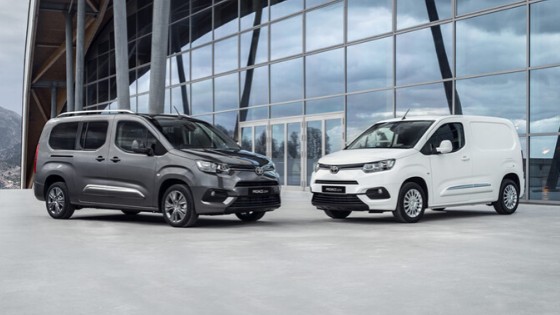
Toyota Proace City
Revealed in 2019, Toyota Proace City won’t be released in the U.K. market till 2020.
It’s based on the Citroen Berlingo, Vauxhall Combo Cargo and Peugeot Partner – which makes for a successful launch as the trio are known to be the best amongst small vans.
Toyota lets the buyer choose from a 1.5-litre diesel engine or a 1.2-litre petrol engine, both providing 75hp to 130hp horsepower.
These vans are extremely fuel-efficient, giving up to 65.7 miles per gallon.
Additionally, the two wheelbases maximise the length of the load up to 1,817 mm and 2,167 mm and load volume up to 3.3 cubic m and 3.9 cubic m, respectively. However, the smart cargo version lets items up to the length of 3,090mm (for short wheelbase) and 3,440mm (for long wheelbase) slide in easily. This provides a load volume of up to 3.8 cubic m and 4.3 cubic m, accordingly.
Relating to the payload, it comes in 2 types – standard 2.0t which has a payload of 660kg up to 680kg and heavy-duty 2.4t which can take a payload of up to 1.0 ton.
Moreover, it possesses a towing capacity of 1,500 kg making for a power-packed small commercial van.
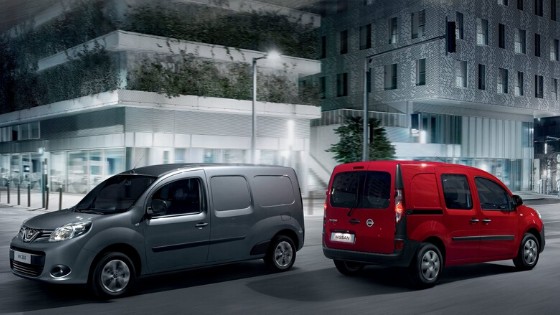
Nissan NV250
Nissan has been dedicated to providing the U.K. market with the best small vans since the 90s – the new NV250 is a great van that promises a lot.
The K9K 1.5-litre unit powers the Renault-design model -it’ll be sold in three separate horsepower options – 80hp with 210Nm, 95hp with 230Nm, and 110hp with 260Nm.
It is also possible to choose amongst long wheelbase and short wheelbase options that provide a max length of 2,115mm and 1,731mm, respectively, with a load-through facility that increases it further, up to 2.87m (long wheelbase) and 2.5m (short wheelbase).
The payload capacity falls a bit short as compared to its competitors, from 650 kilos to 850 kilos in short wheelbase and 800 kilos to 850 kilos in long-wheelbase – but then again that makes it an ideal choice in the small van segment.
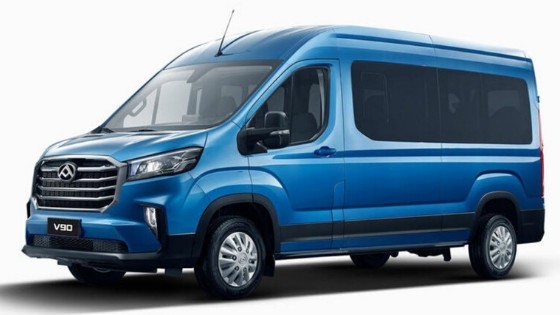
LDV V90 2020
With a stylish interior design furnished with the latest technologies, this model also comes with remote-controlled locks and ignition, cruise control adaptable to your current terrain, and a 9-inch touch display integrated with Android Auto, DAB Radio and Apple Carplay.
It has a newly designed 2.0-litre engine unit which holds power to produce 400NM and 177hp with a torque that delivers 1,500 rpm.
The V90 is available in both rear and front-wheel drive with an electric version, which will deliver 200 miles to a gallon – most likely to be launched by the end of 2020.
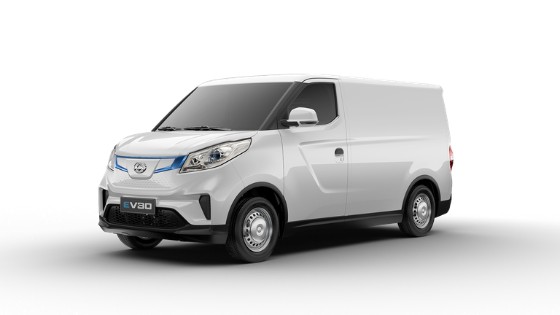
LDV EV30 UK
Increasing the payload without compromising on the driveability is a top priority for engineers. The LDV EV30 accomplishes both these aims thanks to an aluminium body which not only reduces the weight of the vehicle but also increases its payload.
The 85kW motor will be offered with two sets of batteries – 35kW/h, which gives you about 127 miles and 55kW/h which offers about 200 miles on the NEDC cycle.
Moreover, its power steering is electrically assisted, which gives it an effortless and smooth drive.
While traditional handbrakes are common in vans, this model comes with an electronic parking brake which provides extra room in the cabin, allowing for a third seat.
Orders for LDV EV30 will be opening in January 2020, whereas, manufacturing will commence in March 2020 with the initial deliveries for the U.K. starting from April 2020.
In Conclusion
The vehicles you use say a lot about your company; its professionalism and its standards – add to that fact that drivers appreciate a smooth and reliable drive that makes them feel safe on the roads.
Buying a commercial van is no easy task with so many options to select from, but our selection aims to make it as stress-free as possible.
So when it’s time to upgrade or add to your existing fleet, make sure you choose wisely and consider from the options laid out for you above!
There’s a lot of focus on using the Internet and technology to start a business these days. But it isn’t the only way to scratch out a living. If you own a cargo van – or come across one cheap – there are an enormous array of businesses you can start pretty much right away. With a little investment and a lot of creativity, you could be earning real money from your van for the foreseeable future. Let’s take a look at some ideas.
Rent it out
Vans are needed in a variety of situations by many different people. But they don’t want to buy one – hiring for a day or two at a time is all people need. House clearing, moving home, transporting equipment to special events – people need vans all the time. So why not consider renting it out? You can pull in a substantial amount of cash – and eke out a little more by providing a ‘man – or woman – and van’ service. If you have never thought of your van as a money-making opportunity, it’s time to think again.
Adapt it
You can modify your van for almost anything. Take a look around for some van storage solutions and kit it out to your needs. If you have a trade, it’s the perfect place to keep your tools and equipment. You can install specialist storage and deliver flowers to people on behalf of local or national flower shops. Have any culinary skills? You could even fix it up to start a mobile catering business – as long as you get your food licenses, first.
Advertise on it
If you don’t have time to spare to start a business, why not advertise for a local small business? They give you a nice little fee, and you drive around with their logo and company description on your van. It means no work for you, and you can expect extra income every month for doing nothing.
Carry things in it
Any business dealing in products needs a method to deliver their goods. So why not take advantage by turning your van into a courier service? You’ll need to educate yourself about the basics of logistics to make sure it pays. But the truth is that many consumers and businesses are left completely frustrated by the big couriers, who often disappoint. If you can provide better customer service than the major players, you will soon pick up a good name for yourself.
Collect things in it
Here’s something you can start almost right away. First of all, apply for a scrap metal license. Create a few thousand flyers and post them through every door in your town or city, offering to clear any scrap metal. Offer your service for free. In every town and city, there are hundreds of people who have scrap metal or old domestic appliances that are taking up room. All they need is a way of getting rid of it. You arrange a collection time, fill up your van, and take it to your local scrap metal yard. Everything you have in the back of your van will be easy profit, minus your fuel costs.
Over half of new car sales in the UK are funded by a business of some type, as opposed to being bought privately, so despite tax changes making them seem less advantageous for some employees, business purchases have a significant bearing on the new car and gruau van market. There are several factors to consider over and above a vehicle’s basic everyday suitability when it comes to choosing.
Company car funding
A key decision is how you might fund a vehicle. There are various options ranging from buying outright with cash, hire purchase and various forms of tax efficient leasing such as business contract hire. Indeed, leasing can be tailored to suit your ideal monthly budget and include costs such as maintenance and replacements to provide fixed costs, making it easier to keep track financially.
Leasing offers other tax benefits depending on your company set up; in some cases 100 per cent of the VAT can be claimed back if the vehicle is used solely for business. Other payments are sometimes tax deductible so it literally pays to investigate your funding options thoroughly.
Benefit in Kind (BIK) tax
The tax man sees the company car as a perk and it’s classed as a Benefit in Kind and is therefore liable for tax. The car’s CO2 emissions and retail price, expressed as a P11D value, are taken into account to arrive at the BIK figure. The P11D value is basically the price of the car but less non-taxable costs, such as the first year’s road tax.
There are currently no less than 25 BIK bands based on CO2 emissions with the more polluting models attracting BIK taxation at a higher percentage of their retail price.
Therefore, lower emission models will cost less in taxation. Be aware diesel vehicles attract a 3 per cent surcharge over petrol vehicles with the same emissions; consequently, you’d have to assess whether you do enough miles for the usually better fuel economy of diesel over petrol to outweigh the higher BIK costs.
In searching for the ultimate in emissions-based tax saving you may look at electric vehicles but be careful. While they previously didn’t attract BIK tax, they’re now taxed at 7 per cent with the figure set to increase each year.
Other costs
Fuel – an obvious one of course, but properly considering whether to plump for diesel or petrol (if not an all electric model) does have a significant bearing on costs.
Some business users fall into the trap of basing their thinking purely on economy, but bear in mind the tax implications above and whether enough miles are covered to make diesel worthwhile.
Insurance – choosing a vehicle that isn’t too expensive to insure can make a big difference to costs, especially if you’re running several cars all requiring insurance renewals each year. A good comparison website can help you compare costs of different models and insurers.
Vehicle usage
In the end of course, the vehicle has to do the job you’re buying it for whether it’s a delivery van, motorway express for high mileage employees, or a compact and economical office runabout. The wide choice of new cars and other vehicles mean it should be possible to run something that makes the most sense financially and does the job you need of it.







 Commercial Van Solutions