Posted in Ideas & Tips

Three Tips for Choosing a Refrigerated Van

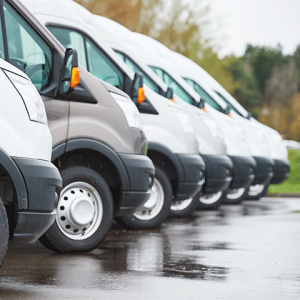
Driving refrigerated vans to an event can be the best way to make sure that cool products remain at the optimal temperature. But choosing the right van for the occasion can be challenging. There are specific elements that must be reviewed before picking up that ideal vehicle. In this latest post, our experts explain more on the process with their three tips for choosing a refrigerated van.

Ensure the Vans Go Under Regular Maintenance

Before working with a rental company and choosing a refrigerated van, it’s important that you find out how much maintenance the company completes on their vehicles. Are they able to ensure that your refrigerated van is maintained regularly and won’t break down on the road? What kind of assurances can they provide on the performance of the vehicle?

This is particularly important when renting a refrigerated van compared with renting other vehicles, as refrigerated vans must be assured to retain a specific temperature throughout the journey. Any issue with a small component in the vehicle can ruin the transported goods.

Consider the Size of the Vehicle

When it comes to choosing a refrigerated van for your event needs, bigger isn’t always better. If you’re transporting goods that must be tightly packed, such as medical supplies and food items, then a smaller van can help you to keep the goods in optimal condition.

Before making a decision on a vehicle, make sure you have time to review the sizing of the interior of the vehicle before you rent. You might also consider visiting the facility and discussing vehicle sizing with a specialist. Oftentimes, companies have a number of sizing options designed to meet the demands of all renters.

Book Well in Advance

A common mistake many event planners make is waiting until the last minute to book transportation. While it makes sense to wait until you’re sure that other elements are in place, such as the venue and the attendees, you should ensure that special transportation requirements are met well before the event takes place.

Vehicles such as refrigerated vans are in high demand throughout the region. Renters across Ireland are seeking out these vehicles for both event needs and the commercial transportation requirements. Making sure the vehicle is secured before the event can help streamline the planning process going forward.

Posted in Ideas & Tips

Where Has the Refrigerated Vehicle Come From?

Until recent years the ability of transporting frozen foods was extremely difficult, this was all down to the stringent legalities concerning food distribution. Large trailers attached to Lorries were the main source for such deliveries of frozen foods and goods by road, which were mainly utilized by the corporate shopping chains.

This has now changed due to the manufacture of the refrigerator van and freezer equipped vehicles. The demand was so great for such requirements that the likes of Vehicles have become recognized as one of the leading suppliers of refrigerated vans within the UK. This is alongside providing a whole team of conversion specialists who will adapt and convert your existing vehicle, so it can transport frozen foods.

This in turn has seen significant increase in within the food and catering industries. It has given local firms a whole new lease of life by giving them the ability to diversify their businesses and offer additional catering services. Weddings, parties and corporate events are just some of the sectors that are now booming from the creation of the refrigerated vehicles.

This will continually increase within the UK as we seek out new restaurants and caterers to satisfy our appetite for takeaway foods. One thing is definite and that is the freezer equipped vehicles are here to stay and will continue to be an invaluable tool within our society.

This will continually increase within the UK as we seek out new restaurants and caterers to satisfy our appetite for takeaway foods. One thing is definite and that is the freezer equipped vehicles are here to stay and will continue to be an invaluable tool within our society.

Posted in Ideas & Tips

5 Space-Saving Shelving Ideas To Consider

The use of Commercial vehicles is growing eight times faster than other parts of the auto industry because they’re so useful and versatile.

If you’re reading this, you want to get the most out of your van, and we’re here to help. Read on for some shelving ideas that will help you make the most out of your van space.

1. Adjustable Shelving

Adjustable shelving can make the most out of your van space without locking you into one single solution.

With adjustable shelving, you can change the size of your shelves easily, making your van space versatile and able to work with a variety of things you may need to store.

2. Locking Drawers

If you have equipment that you need to keep a little more secure than what other shelving solutions may afford, locking drawers may be the solution for you.

Locking drawers are great for keeping items safe and locked away, so if you need your cargo van to safely store items, consider locking drawers.

3. Paintbrush Rack

If you’re in an industry where paintbrushes need to be safely and cleanly transported, a magnetized paintbrush rack may be just the thing you need to make the most out of your gruau van.

Magnetized paintbrush racks can easily store your brushes in a way that optimizes the space of your van.

4. Ladder Racks

If the inside of your van is getting too crowded, consider having a ladder rack installed. A ladder rack will free up space inside by allowing you to store big bulky items, like a ladder, on the outside.

5. Custom Shelving

If none of these van shelving ideas seem quite right for you, then consider putting together a custom shelving solution.

There are countless combinations you can put together inside and outside your van to create the perfect solution for your space and storage needs.

We guarantee there is a combination of options out there that will fit the exact needs you’re looking for.

Posted in Commercial Van, Ideas & Tips

5 Essentials for Safety and Comfort When Driving a Work Van

If you’re new driving a commercial vehicle, here are a few essential items to keep in mind. A work van is usually larger and more substantial than a passenger car and is used for different purposes.

1. The Driver’s Seat in a Work Van

Driver in a van seat

Being comfortable in the driver’s seat is very important. You don’t want to deal with backaches and drowsiness while driving. A seat that is not adjusted properly can cause several problems such as stress and strain on your neck, legs, and arms.

The first thing is to adjust the seat forward or backward so you are able to fully press gas and brake pedals. (You may be sharing the driver’s seat with other drivers.) Adjust the rear and side-view mirrors so you are can see vehicles coming up on you from the side or from behind.

As a tip: Seat covers are a good option for protecting seats from spills and stains. There are washable options that can be easily removed and put into the washing machine. They also provide insulation from hot seats in the summer.

2. Work Van: Controls and Features

This is might be a “no-brainer,” but familiarize yourself with the dashboard functions. It helps to know where the indicators, headlights, hazards, and wipers are. Finding where the controls are and familiarizing yourself with the features will enable you to drive more confidently.

An in-dash navigation system that provides turn-by-turn directions makes it easier to keep your eyes on the road rather than on a map or printed directions. Consider a separate GPS unit if a nav system isn’t available in the truck you’re looking to purchase.

Headlights are an important safety component on your van. They are not only critical to driving in the dark but can be used to improve visibility in poor weather conditions. Be sure you are aware of headlight control placement and what the different settings do. It is also important to know where your hazard lights are.

3. Dimensions of the Work Van

When driving, keep in mind the van’s dimensions. Some things to keep in mind while on the road.

  • How tall is the working van?
  • Is the van long-wheelbase or just the standard?
  • Are there height restrictions in the areas you cover?
  • What is the weight?
  • How wide is your van?

Knowing the height and width of your work van will be beneficial if you come upon a height clearance limitation, or need to drive through a narrow alley or roadway.

4. Payload or Additional Weight

Space management and vehicle-load plays a significant role in driving. As a van driver, you need to stay within the weight limits when you’re driving so you don’t overload it. With the model number, you can confirm this online or with the owner’s manual. Pay attention to your van’s cargo, tire weight limits, tire pressure, and alignment.

Weight also plays a significant role because vans are made to transport goods or people, while cars are made for the average family. When driving your van be sure to brake sooner and be on the lookout for cars.

To ensure items do not move around and become damaged, keep the heavy items on the lower level and secure them with tie downs or bungee cords. This will also keep moving items from destabilizing your van.

5. Tall Ladder Racks on Vans

Van Ladder racks are a key item for getting the job done. The height of ladder racks needs to be taken into account before driving a work van. Make sure ladders and ladder racks are securely fastened before each trip. Check to see if the ladder is hanging out too far past the length or width of your van.

When driving it doesn’t hurt to take into consideration the height of your van. Make sure to stay clear of objects like trees and branches that way you mitigate your risk of damaging your ladder rack.

A final tip… The final driving tip is to make a difference in road safety. Be friendly, patient and practice patience when driving. Be aware of other drivers on the road. Avoid aggressive and inattentive driving tendencies. Keeping courteous driving behaviors in mind can make you not only a professional driver but a safe one as well.

Posted in Commercial Van, Ideas & Tips

Secure Transport Vans – The Medical Transport Solution

Newly legal in both recreational and medicinal capacities throughout several states, cannabis has become an extremely profitable venture for many across the country. However, it’s not without its challenges. Because the sale and possession of cannabis aren’t federally legal, there are complications that could arise – one of which is secure transport. Secure transport vans are a natural choice for professionals in this industry because they provide protection not only for the product but also protect the large sums of cash that often accompany it. 

So, what van should you purchase for your cannabis business? We’ll go over several different options and offer some key tips on how to make your work van work for you while adhering to state regulations.

The Logistics & Laws of Cannabis Transport

There are plenty of rules and regulations for cannabis transport, all of which are essential to keep in mind when purchasing a secure commercial van. First and foremost, you cannot transport this product over state lines. Crossing state lines while in possession of cannabis will likely involve legal proceedings and may result in a felony and revocation of cannabis business licenses. Additionally, in the majority of states where it is legal, you will need to obtain a motor carrier permit from your local DMV. Because this is such a new industry, additional regulations are constantly being added, so be sure you stay up to date.

The Van

Under normal circumstances, the ideal vehicle for transporting such a sensitive product accompanied by large amounts of cash would be an armored car. However, armored cars typically weigh well over 10,000 lbs and require registration as a commercial vehicle with the DOT (Department of Transportation). As cannabis is not yet federally legal, it is impossible to obtain a commercial driver’s license for the transport of cannabis. Choosing a vehicle that’s secure enough to protect desirable products without infringing on these laws can be a little tricky.

To navigate involved regulations and procedures, the industry has turned to nondescript secure transport vans. These vans are smaller, provide comparable security benefits, offer better gas mileage, and have more customization options than armored cars. Secure transport vans also serve as a versatile answer to the need for temperature control, organizational features, bullet-proof glass, and digital monitoring, all of which can be added to your van to create a safe and efficient way to transport cannabis and cash.

What to Look For

The most important thing to keep in mind is the weight of the van. You need something large and sturdy enough to securely move the product, but it can’t be so large that you need a special license to operate it. It’s for this exact reason that the cannabis industry has fallen in love with vans like the Ford Transit.

Not only is this style of the van the perfect base for serious customization, but they’re also well-known for their reliability, durability, low maintenance costs, and respectable gas mileage. Because they weigh under 5 tons, they fly under the federal radar. These vans are offered in several different wheelbase lengths, with the 130” regular wheelbase option reigning as the popular choice for industry professionals. The 130” wheelbase, while considered “petite” with respect to similar models, meets industry needs in both weight and organizational requirements. Perfect for traversing long stretches of country roads, yet compact enough to confidently maneuver through crowded city streets, the smaller wheelbase delivers a sense of security in any matter of transportation.

And, as a bonus, this style of van is a welcoming base for the aftermarket security and climate-control options you’ll most certainly need. For these reasons, the Ford Transit, Mercedes-Benz Sprinter, and Ram Promaster are all ideal foundations for a secure cannabis transport van.

Aftermarket Upgrades 

When considering the vast and ever-changing market requirements barring simple operation in this industry, there is no reasonable way to avoid aftermarket upgrades. Because these vans weren’t necessarily designed with secure transport in mind, you’ll need to make some security upgrades in addition to organizational upfits. 

Security

Securing the cargo space should be your first and most important step in optimizing your secure transport van. You’ll need a steel, aluminum, or thermoformed partition between the driver and the cargo area to prevent product access through the front doors of the van. Limiting the number of entry points in a secure transport vehicle decreases the opportunity for compromised products in both theft and environmental regards.

This option from  KargoMaster is an optimal choice because the perforations in the partition allow the driver to view the cargo area without granting access. You’ll also need to up the security on your back doors. We recommend more secure, aftermarket locks like this one from  Cargo Van Locks. It’s durable and tamper-proof, and the locking system can be synced to your car remote to lock from the exterior. 

Organization

Because the transport of cannabis is an intricate and fiercely regulated process, you’ll want to maximize efficiency and get the most out of every delivery. A large part of this process involves keeping your stock organized and transporting as much product as possible. Van shelving ideas is the ideal choice in utilizing all available cargo space while keeping your product organized. Shelves take advantage of vertical storage space and make the loading and unloading process quicker and easier. Consider one of these options from  Adrian Steel. Their upfits are extremely durable and feature adjustable shelves to customize your storage for different needs and volumes.

However, cannabis is not the only thing that these secure transport vans will be carrying. Cannabis companies deal exclusively in cash, which means they’re also carrying a small fortune with them wherever they go. To further secure your van, and the precious cargo within, install a safe in your cargo space. You can always opt for something like a lockable box, but for the highest levels of security, we like this set from  Truck Vault. The safe installs directly onto the floor, allowing you to capitalize on the space above it. Coupled with the extra security locks and features, a safe will ensure only authorized users can access valuables inside.

Temperature Control & Tracking

One of the unique challenges that accompany cannabis transport is maintaining product integrity. Unlike most goods, which you simply need to protect from physical damage, cannabis quality suffers greatly when transported in unfavorable climate conditions. Installing a temperature control system for the typically neglected cargo space can help avoid a lapse in quality. And, although environmental modifications aren’t necessary for secure transport, they are required by the majority of states where cannabis is legal. These options from  Delivery Concepts can be adapted to fit several different van models without requiring additional fuel sources. 

Like temperature control, most states require GPS tracking or digital monitoring for any vehicle transporting cannabis. Digital monitoring and GPS allow business owners to keep an eye on where their deliveries are at any given time. Linxup is one of many fleet tracking options available.

Consider a Conversion

Building a secure transport van from scratch isn’t the only option for those in this lucrative industry. Companies like California-based  Nor Cal Vans, remove all of the stress from the process and design vans specifically for secure cannabis transport. Nor Cal Vans leverage their thirty years of expertise in van conversions to provide a surprisingly affordable solution to the complicated problem of cannabis transport. Nor Cal can either start from scratch on a completely new vehicle or overhaul your existing vans. Standard features include a variety of essential upgrades like a cargo partition, steel cage, and LED interior lighting.

Additional options like a drop safe, a vehicle alarm system with GPS, and refrigeration are available. Nor Cal and other conversion businesses can transform any standard cargo van into a high-tech, secure transport vehicle.

The Perfect Cannabis Transport Van for You

Depending on your state’s regulations, the frequency and volume of your deliveries, and the number of vehicles in your fleet, the perfect secure transport van will look different to everyone. For those just beginning, a compact Ford Transit Connect with the necessary security upgrades and GPS tracking is a good place to start. On the other hand, if you have the funds, a larger van, like the Mercedes-Benz Sprinter, with additional shelving, a safe, temperature control, and enhanced standard options can help maximize efficiency and appear more professional. You can go all out and create what is essentially a smaller armored car or just stick to the basics. Either way, taking steps to securely transport cannabis is an important process.

Posted in Commercial Van, Ideas & Tips, Uncategorized

Top van racking ideas

So it’s a new year and a new you. And for those of you who’ve started a new year’s resolution to tidy the van or get a little more organised, you might have thought about giving your van a facelift by getting some racking for the transit. Well, as van insurance experts we’ve scaled the web far and wide to find you the best ideas for van racking and get you on your way to completing that new year’s resolution.

Wooden van racking ideas

This van racking is in a Vauxhall Vivaro and has really utilised the flooring well to be able to store equipment that’s really long. This would be the perfect van racking for someone who’s storing equipment like van ladder racks, spirit levels, pipes and hoses.

This is a great idea to keep your saws and will cut (no pun intended) through your time spent looking for them in half!

This is a great idea for your regularly used consumables, and this way you can check you’re stock levels with ease!

Fancy a mobile workshop? This van racking even has flooring! It’s managed to implement wire reels and a circular saw, as well as plenty of storage for long wooden panels at the bottom. This is a joiners dream!

Need easy access to some essentials? This is a great way to do it if you have a door at the back too.

Metal van racking ideas

This is a great utiliser of space. It has a roll for paper, a tank with dispenser and plenty of room for cargo in the middle with fitted safety nets to secure the load. Maybe the tank could be used to store a much-needed brew in the morning!

This one has really utilised the space, and of course, after a long hard day working, the golf clubs will inevitably take centre stage to hit the course after work. There’s even a brolly thrown in to cope with the classic British weather.

Null

This is a great way of getting easy access to liquids by utilising the doors!

Null

It’s always good to leave a bit of blank space to be prepared for those miscellaneous objects you come across from time to time. This van has provided drawers and underneath it, a large space for those objects you don’t come across every day.

Why install van racking?

There’s nothing worse than turning a sharp corner and hearing your beloved cargo crash against the panels. Without van racking, you’re often playing Russian roulette with which bit of equipment will be smashing against the panel next. The right van racking can help prevent dents, scratches and help you access your cargo with ease, not only saving you time, but saving you money.

Null

Wood or metal van racking?

Before making your decision, you might want to consider everything that’ll be carried in the transit to ensure that you get the most suitable van racking for your business. You probably have a good idea already in your mind, but this is the time to consider absolutely everything. Mapping out what you’ll carry on an average day and multiplying this by 365 will give you an insight into what you’ll carry year to year. The last thing you want is to have van racking that’s unable to take hold of your supplies. The key questions you’ll need to ask yourself is how frequently you’ll be using individual pieces of equipment, the weight of your load, the size of it and how fragile the equipment might be.

Wood racking

Wood racking is by far the cheaper solution and is a really good option for those of you who just have a small number of tools that need racking away, it’s also argued that the interior of the van is protected much more with wood than with metal. As you’d expect, trades like joinery and carpentry may be more suited to this with the majority of its load being compromised of wood consumables. The downside to wood racking is that wood can be quite heavy and that additional weight can cost you in terms of fuel. You’ll also want to think twice if you regularly carry liquids too as unless you regularly treat the shelving, the water will cause the wood to expand or rot.

Metal racking

Metal racking is more lightweight in comparison to wood depending on which type of metal to use. As you would expect, aluminium will be a lot more lightweight than steel shelving but if you have big bulky equipment you might favour the latter. If you’re going to be storing liquids in your van, its advised that you go for a material such as galvanized steel. Trades that have large heavy equipment will be more suited to metal racking. Metal racking is, however, more expensive than wood racking and unless you’re an expert metal worker, you may need to get this installed by a professional. You can often buy metal van racking sets straight out of the box from many retailers.

Get more information about van ladder racks, just drop your comments in the comment section.

Posted in Ideas & Tips

Safe Van Driving Tips

Getting behind the wheel of a van is different than driving a car because it’s bigger, heavier and is normally carrying extra weight from cargo.

There are some similarities that can be applied across both vehicles. You should always do basic checks before every journey including water, oil and windscreen washer levels as well as tyre tread depth and condition.

Typically, van drivers are on the road for longer than their car driving counterparts which increases their risk of being involved in an accident.

We’ve put together a list of helpful tips to make every journey in a van safer.

ADOPT A COMFORTABLE DRIVING POSITION

There are some key differences between driving a car and a van; one of them is the driving position. In a van, you’re much higher giving you a better view of the road ahead.

In contrast, most vans don’t have a rear view mirror – either there is a full steel bulkhead separating the passenger and cargo areas or it’s a panel van without windows – so there are less ways to see behind you.

A comfortable driving position is important to avoid getting aches and pains from long-distance trips. A correct driving position also means adjusting your large door mirrors to optimise your field of vision to see as much of the road behind you as possible.

GET FAMILIAR WITH THE CONTROLS

Whenever you get behind the wheel of a new vehicle, you should familiarise yourself with the indicators, lights, hazard warnings and wipers.

Did you know that you can travel the length of two double decker buses in just a few seconds at 30mph? So, taking your eyes off the road to find the lights could easily lead to an accident.

In a van, the gearstick is normally located on the dashboard, adjacent to the steering wheel, which is an unfamiliar position for people used to driving a car.

Some vans also come with a sixth gear for added fuel efficiency, so it’s important to check this before you set off rather than discovering it 50 miles into your journey.

KNOW THE DIMENSIONS

It’s obvious that a van is usually taller and longer than a car, but that imposes certain restrictions on where you can drive and park it.

For example, some car parks, especially underground ones, have height limits that you might not be able to fit under, so you should know the van’s dimensions before you attempt to get into one.

Also be aware of bridges, tunnels, overhanging trees and width-restricted lanes and roads.

PLAN A ROUTE AND LEAVE EXTRA TIME

Often you’ll be using a van for your business or moving items from one place to another. As such, you could be driving on unfamiliar roads or have a schedule to stick to.

To avoid rushing, getting stressed and increasing your blood pressure – all things that lead to impaired decision making – try to plan a route that avoids travelling in congested areas at peak times.

When you plan a route, you’ll have an estimated time that it should take you to reach your destination. It’s advisable to always leave some extra time to account for any delays that you might encounter.

LOAD YOUR CARGO PROPERLY

A properly loaded van makes a huge difference to the way the vehicle handles on the road and the safety of the driver and other road users.

Ideally, the load should be as low as possible and in the centre of the wheelbase to spread the weight evenly. Tall items especially, should be tied down if you can’t tether the whole load.

Moving items can destabilise the van and damage other goods that you’re carrying.

Investing in the right commercial van will help keep your cargo safe and avoid wasting your profits.

SECURE THE CARGO DOORS

Once you’ve got the load in, you don’t want it to go anywhere before it’s reached its final destination. Make sure you lock the rear and side doors before you set off.

In 2008, an 80-year-old pedestrian was hit by the unsecured door of a van and suffered fatal injuries. The driver was charged with dangerous driving and received a court sentence.

Ensuring all the doors to your van are locked is also good practice to avoid being targeted by opportunistic thieves.

KNOW THE SPEED LIMIT

Vans have a different speed limit to cars and you need to be aware of these to drive safely and legally.

A national speed limit sign on a single carriageway means 50mph for a van. The same sign on a dual carriageway means 60mph for a van. Both are 10mph slower than for cars.

INCREASE BRAKING DISTANCES

The heavier your payload, and the larger your van, the more time and distance you’ll need to come to a complete stop. By increasing your braking distances you give yourself more time to react, and a greater chance of avoiding an accident.

As with any vehicle, you should take particular care in wet or icy conditions. Heavy winds can also impact taller vans which are more susceptible to toppling over.

Posted in Ideas & Tips

How the Carbon Tax affects your refrigerant pricing!

Under the Australian Governments “Clean Energy Future Plan” synthetic greenhouse gases, like the HFC based refrigerants commonly used in transport refrigeration units, now attract a Carbon price per tonne calculated on their individual Global Warming Potential (GWP).

The GWP assigned per kilo to R404a refrigerant is 3260kg. This means that 1kg of R404a equates to 3.26 metric tonnes of carbon.

When this is applied to the current carbon tax price of $23.00 per tonne it means that every 1kg of R404a refrigerant attracts $74.98 carbon tax.

Example: 3.26 x $23 = $74.98

This new tax goes on top of the existing import levy and the cost price per kilo of refrigerant.

Due to the growing costs surrounding the supply and storage of refrigerants there has been a significant price increase to the most common refrigerants used in the refrigerated transport sector.

This increase will not affect your normal unit servicing cost as there is no refrigerant lost during these services. This increase will only affect breakdowns or repairs which involve refrigerant loss. Due to this it now becomes essential to put into place a preventative maintenance program on your fleet to reduce the risk of a small gas leak spiralling out of control & costing you a full charge of refrigerant.

The Government’s purpose through this tax is to give the industry a price driven incentive to reduce harmful HFC refrigerant leaking into the atmosphere.

Companies has built a reputation for providing their customers with added value and cost savings through our products and parts, through the great services we offer and the thorough fleet management programs we provide. Following this trend and with the increased refrigerant pricing in mind we have under-taken some comprehensive research into the main causes and the key indicators of refrigeration leaks in a transport refrigeration system.

Prevention is better than Cure!

What we discovered is that customers who remain on schedule with their regular servicing and those who have adopted our programmed fleet checks were 228% less likely to develop a gas related issue which cost them a full charge of refrigerant than those who only initiated repairs when something went wrong. When refrigerant was used in customers who regularly maintain their fleet it was mostly in much smaller quantities due to early detection.

The significant increase in refrigerant price should create the need for fleet owners and managers to re-consider how they maintain and operate their refrigerated vehicles so that they can limit their exposure to the expense of refrigerant loss.

We have adopted an innovative approach to reduce refrigerant leaks in their customer’s fleets; we have trained our technicians at identifying the key indicators of refrigerant loss through our programmed fleet inspections, we use only quality products like our Manuli Refrigeration hose and fittings and we run a comprehensive scheduled fleet maintenance program proven to reduce breakdowns and gas related leaks which will significantly reduce maintenance costs.

We have a strong commitment to preserving the environment. All our trained technicians are fully licensed to handle refrigerants and understand the environmental impact associated with the release of HFC’s. We take refrigerant leaks seriously which is evident when we perform fleet checks and repairs on refrigerated delivery vehicles.

Today, it is extremely important to align yourselves with a refrigeration service provider like Thermal Mark who has implemented a program designed to reduce your breakdowns, lower your vehicle down-time and reduce your leak rates.

Understanding the basics of refrigerated trucks can one of the long way in knowing the options available in the trucking services. To know more details please contact us.

Posted in Ideas & Tips

What are the different types of car warranties available?

We know this site is about vans, but you can’t always take your van to the supermarket, or maybe the parents, or a family day out. Sometimes you need a car.

And like a van, you need to make sure the car will stay on the road and not let you down.

And that’s where car warranties come in.

If you’re buying a new or used car you will be presented with a range of different warranty types. It can be confusing when you’ve not read up on the differences between them and there is a risk that you will end up either taking out an expensive warranty you didn’t need or ending up with a warranty that doesn’t provide enough cover. To make things clearer, we’ve rounded up the three main types of car warranty and explained the difference between each below.

Manufacturer warranty

Every new car comes with a manufacturer’s warranty. Usually these will last between three and seven years, covering most types of fault except for wear and tear. This is because most new cars shouldn’t break down or suffer faults in their first few years and if they do, the manufacturer is willing to accept some level of responsibility.

Often there will be a set of rules that need to be followed for the warranty to remain valid, such as making sure the car is serviced on time and at a reputable dealer. In the policy you should also check:

  • The limit per claim
  • If an excess is required
  • Servicing schedule
  • Limits for annual or total mileage
  • Full cost of repair or just parts/labour

Once the new car warranty is up you can get an extended manufacturer warranty if desired. For example, a Hyundai warranty lasts for five years. It’s only when this has run out that you will need to think about taking out another type of warranty.

Used car warranties

The first thing to check when buying a second-hand car is whether the existing warranty is still included. If the car is less than three years old or has a long manufacturer warranty, then it might be, and you only need to check that it hasn’t gone over the mileage or any other limits.

When considering a used car warranty, it’s worth comparing how much it will cost in total against the price of any potential repairs that might need to be made. Your average repair bill may be less than this, but it depends if you want to risk driving without a warranty or not? It will provide peace of mind if your car needs to go to the garage. A used car warranty will sometimes be included as standard when buying through a reputable dealer, or an optional extra.

Extended warranty

Every extended warranty will be different but the best ones cover against mechanical and electrical damage for the engine, transmission, steering and suspension. It’s worth browsing those available and deciding whether it’s best to buy through the manufacturer or an independent seller depending on what you want.

Most extended warranties will only last for about 12 months, though it’s possible to find some that cover anywhere from one month to five years. This makes it simple to renew every year with the insurance. Plus, you can get extended warranties to cover aspects such as your tyres and car battery, that won’t be included in most regular policies.

Now you hopefully have a better understanding of the main types of car and refrigerated van warranties available and can choose the best option for you.

Posted in Ideas & Tips

Van racking storage space-saving tips for all work vans

IF you’ve ever spent valuable time searching through the back of a Citroen Berlingo for a two-gang back box or rifling among stacks of plastic pipes for a right-angle connector in a Renault Traffic this may well be the article for you.

If you’ve ever stabbed yourself on a gripper-rod reaching for a carpet stretcher in the back of a Mercedes Sprinter, or discovered your safety goggles broken under a pile of timber in a Ford Transit then you might just be thinking about organising your tools and materials in a more systematic way and looking for some van racking storage space-saving tips.

It may be that you have rigged up some storage solutions already, perhaps by installing a modular toolbox into the back of a Volkswagen Transporter to keep your mechanic’s tools and parts in order, or by rigging up hooks to store gardening or power tools on the inside walls of your Vauxhall Vivaro, but perhaps now you are looking to streamline your operation even more effectively and looking for a fully professional storage solution for your fully professional business.

After all, not only does a purpose-built racking and storage system make your life easier, it sends a clear signal to customers that you are serious about your business, and that instills confidence. Another important issue may well be security, and we will take a look at some ways of helping to keep your tools safe when in the vehicle.

How can internal van racking save time and money?

Whether it’s cabinets, van boxes, or racking accessories, the increase in usable space that can be achieved with purpose-built van storage will mean you can carry more and still keep everything in order.

Keeping components, tools, and materials properly sorted, with a place for everything and everything in its place means that you can spend less time searching for the right tool for the job and more time actually doing the job.

Regardless of your particular trade or profession you will almost certainly have tools which you want to have to hand when you need them. In some cases they may be delicate or easily damaged, which means you don’t want them loose in the back of the van mixed up with materials or site waste. In addition, you will want to know that your tools are secure, both on-site, and when parked up.

While the ultimate security for keeping your tools safe overnight is to remove them from the vehicle that may not always be practical. A secure van box will add a level of deterrent and protection for your tools, should the van itself be broken into. When on site, van boxes will keep your tools safe from being ‘borrowed’ by other contractors while they are not in use.

Racking and storage

Racking and storage can be provided for your specific van make and model in a wide range of configurations and customised with a range of racking accessories to your particular trade requirements. Whether you need to store an assortment of pipes for plumbing, or timber sizes for carpentry there is a setup that is just right for you.

Similarly, you may well have an assortment of spare parts, and or fixings which need to be kept in order. Having the right storage drawers in appropriate sizes built to fit your specific requirements and your make and model of van, whether it’s spare parts in a Peugeot, or bolts and washers in a Mercedes, the range of storage drawers can be tailored to your particular van’s make and model.

However, perhaps the greatest cost saving of all which can be achieved by using internal van storage systems is the ability to use a smaller van to do the same job. By making best use of the space available it may be possible to go from a long wheelbase to a short, or even switch to a smaller van format and still get the job done with potential fuel savings alone running into thousands per year.

How to maximize space in all work vans

So let’s look at some van shelving or racking storage space-saving tips.

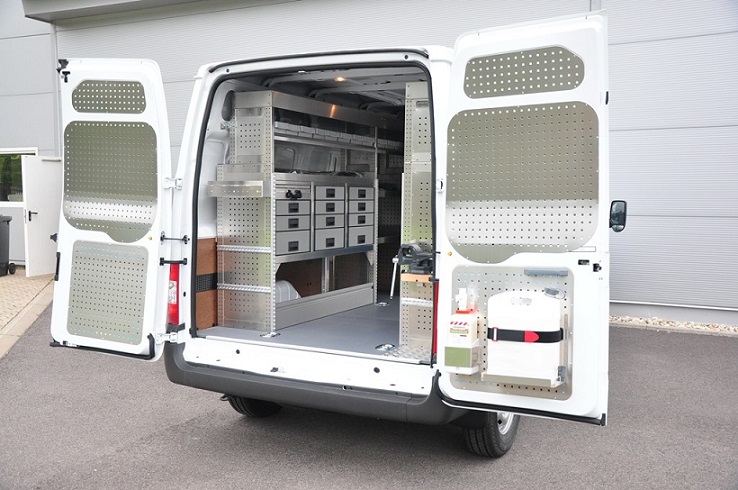
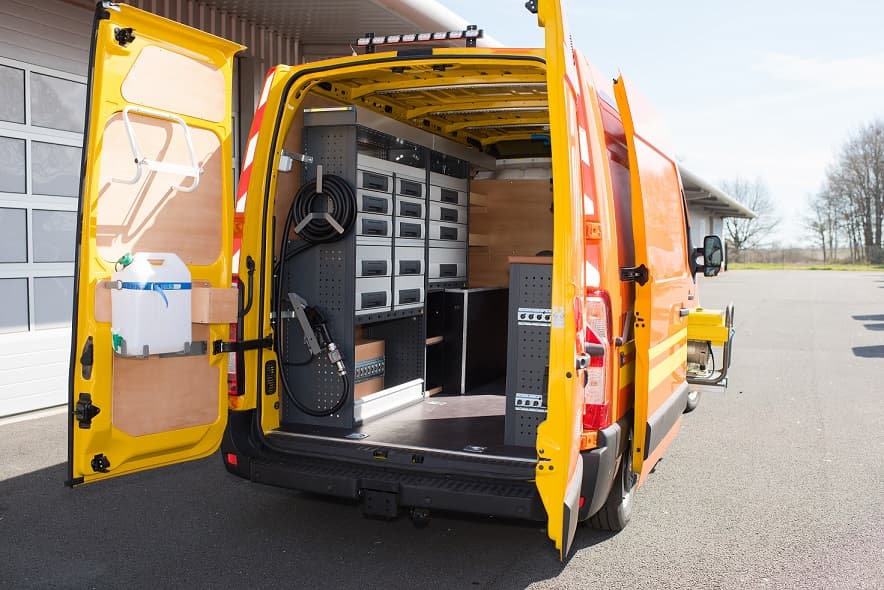
If we’re starting from an empty van, then it’s just a matter of deciding which components to install. With a huge range of aluminium or beech ply racking and storage in a choice of configurations including deep tray or angled shelves, drawers and more, and with a selection of accessories including hooks rubber matting, and holders for specific items such as spray bottles, sealing guns, hoses, etc. you may need to make a list of the equipment and materials that you regularly expect to carry.

Don’t forget cabinets or van boxes for your most precious tools or delicate kit. Of course, if you are starting with a van that is already filled with your equipment in a disorganised heap then the first job is to clear everything out and take an inventory of what you actually use. This may well take some time but will save you vastly more time in the future. Whether you install cabinets or van boxes or bays of racking, and which van racking accessories you need, will depend very much on the nature of your trade.

If you use a very wide range of small components, then you will probably be looking for a large number of small drawers. Alternatively you may simply need one or more strong and secure van boxes for power tools while the rest of the van space will be used for transporting materials such as timber. It may help to plan and draw a sketch of how you want to lay things out.

At this stage you may have to make the biggest decision of all, and that is whether a new storage system means you can work with a smaller van. If so, you will have made the biggest potential saving of all! One important consideration is making sure the items you use most frequently are the most easily to hand. Once you have everything installed it’s just a case of putting everything back in the new storage and discovering the delights of being able to go to the back of the van and get whatever bit you need without the tedious rummaging.