Posted in cargo van, Commercial Van, Ideas & Tips, News & Updates

Choosing A Van Ladder Rack for Your High Roof Cargo Van

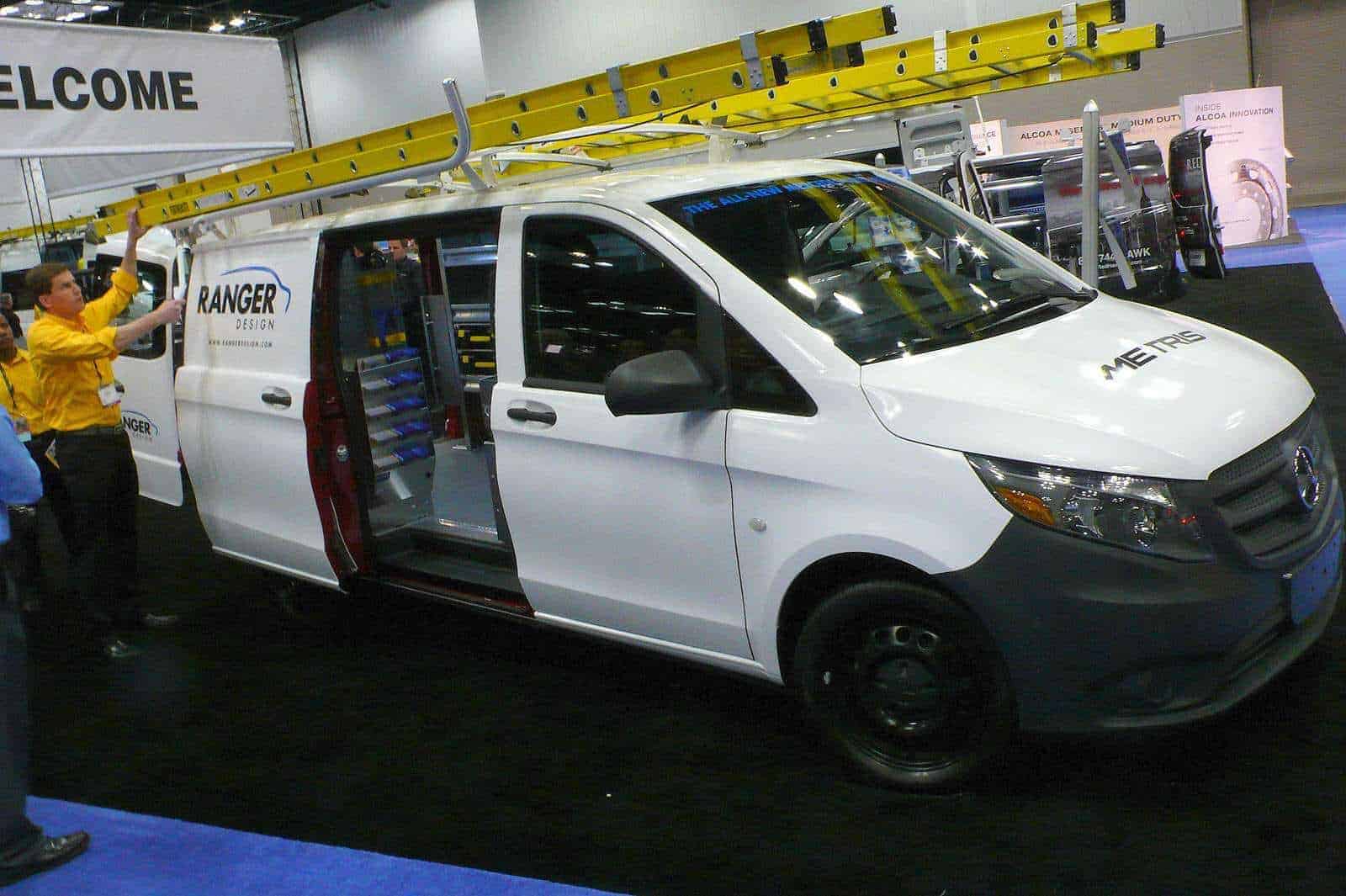
The Safest Ladder Rack for the Job

Two important business investments that most tradesman make is their vehicle and a van ladder racks to go with it. They need to ensure their choice of equipment performs well, is durable and will save them both time and money.

Today more tradesmen are turning to high roof cargo vans as the smart choice for their business. With increased standing headroom and more cargo space, a high roof makes sense. The challenge then becomes how to load a ladder onto the roof without damaging the ladder, the van or getting injured in the process.

With this in mind, here are some reasons tradesmen consider drop-down racks for their high roof vans:

Reduced Risk of Injury: By lowering to a level that is easy to load and secure a ladder, the risk of injury to the back, shoulders or neck of the operator is greatly reduced.

Reduced Damage: Ladders are expensive. However this style of ladder rack protects your investment by ensuring the ladders are loaded and unloaded without damage.

Increased Cargo Capacity: Stowing the ladder on top of the van frees up valuable interior space. More room is gained for cargo and equipment.

Greater Productivity: Loading and unloading a drop-down ladder rack is a fast process. Tradesmen do not have to fumble around to get the ladder on and off their van numerous times a day. Instead, they spend more time on the job, increasing billable hours.

Introducing the Ranger Design Max Rack

At Ranger Design we listened to tradesmen with high roof vans and we learned their ladder rack needs. With this information, we were able to develop the industry leading Max Rack drop-down ladder rack. It offers all of the benefits that are highlighted above, while leading the competition with these advanced features:

Faster: The Max Rack lowers the ladder down from the top of the vehicle in one simple motion. It drops down exceptionally low, eliminating the need to reach above head level for the ladder.

Safer: It is not necessary to stand below the Max Rack as it lowers making it a safe option. The drop-down feature also eliminates risk of back or neck strain and muscle injury. For extra safety against theft, the ladder can be padlocked to the rack at the end of the day.

Tougher: All Ranger Design products are proven to be tough and our Max Rack is no exception. Made of rust-proof aluminum with a durable powder coated finish, the Max Rack is put through a series of rigorous cycle tests to ensure its durability in the real world.

Quieter: The aerodynamic build of the Max Rack also ensures there is minimal wind noise and drag from the ladder rack when driving.

Posted in cargo van, Commercial Van, Ideas & Tips, News & Updates, Van Ladder Racks

Suggestions for Truck Drivers to Obey in Winter

Accidents that happened over the years linking commercial vans bestow you a different set of issues than normal automobile accidents. Specialized truck accident lawyers handle these types of cases.

In this article, we have accumulated some expert advice for the drivers, especially semi-truck drivers, on how to handle during snowfall and prevent a fatality.

In a harsh stormy winter, using your intelligence is the best tool. If you go out, make sure to carry an emergency kit, some warm blankets, and rations in the truck.

1. Breath slowly and stay calm:

When you are driving, don’t panic during an emergency. People tend to overreact, which is wrong. Breathe slowly, remain calm, and maintain your focus.

2. Take actions smoothly:

It will help if you control your actions. Sudden braking, hard acceleration, and sharp curves decrease traction. To maintain a constant speed, be gentle with steering, go easy on brakes, and keep a safe distance between the truck and other vehicles on the same road.

3. Use Signals:

For changing lanes, here’s a trucker’s rule of thumb:

  • For dry or rainy weather: 3 (three) blinks
  • For winter weather 4 (four) or (5) five blinks

After giving signals, move at a slow speed.

If you are driving your truck slower than the traffic around you, then turn on your four-way hazards. It will let other drivers know that your vehicle is going slower than theirs and help prevent any kind of pileup.

Also, drive fast as per your capacity, and if you are out of practice on snow and ice-laden road, slow down your truck.

4Cold weather driving risk:

On the snowy, wet roads, when the temperatures are between 22 and 35 degrees, you will be facing the highest risk of losing traction, rather than a colder temperature like 10 to 20 degrees or less. For example, let’s take two ice cubes, then place one in a glass of water, and the other one into the deep freezer for 30 mins. After that, try picking the cube that was in the glass of water. You will notice that it to be slippery. Now, bring the other ice cube from the freezer. You will see that the cube is sticking to your fingers a bit.

The same thing applies here. The ice is almost sticky in the extreme cold. However, as slower and heavier traffic generates more heat, the surface ice gets melted and becomes slippery, decreasing the traction.

Appoint a lawyer:

If a truck wreck has injured anyone from your family or someone you know, you must approach a local truck accident lawyer who specializes in dealing with such cases. You have legal rights to get compensated for your injuries and loss. But, unfortunately, truck companies and their owners are super rich, and they will try every possible and in some cases, illegal ways to stop you from filing a case against them. They will try not to pay you a large amount of money that you deserve.

Again, the truck accident, in most cases, involves more than one party to be blamed. It can make an ordinary citizen get confused about whom to protest against. As the victim is already going through a lot of traumas due to the catastrophe, it may not be possible for the individual to fight against the big troop of guilt party. Hence, it is crucial to get a truck wreck attorney as soon as possible.

Many law firms are eager to help clients without any fee as they believe that without winning the lawsuit, there is no point in taking money from a person who has already suffered a lot. Besides, the lawyers are acquainted with all the related aspects that are required to win a case.

If you are still in doubt, do a little research online. You will get several law firms’ websites. Study them. Get their contact details. Call them. Have an initial discussion. Tell your problems. If you are admitted to a hospital, let your relatives or friends do the needful. It would be best if you did not tolerate any nonsense that has happened to you due to a negligent truck driver. Also, truck drivers have their own set of laws. 

Posted in cargo van, Commercial Van, Ideas & Tips, Multifunction Power Systems, News & Updates

Know the different types of forklift trucks and choose the right one for your operation

Forklift trucks have been here for a little under a century and today, it finds usage in every warehouse operation in different corners of the world. The first forklifts were developed owing to manpower shortage caused by the First World War.

In the early 1920s, the design of forklift evolved from a tractor to a machine that boasts vertical lifting mast. Development of forklift advanced with the advent of the Second World War. It played a significant role in armies throughout the world during the Second World War.

After the Second World War, the development of forklift gained momentum. The battery-driven forklifts made its appearance in the 1950s. The specialized forklifts like Narrow Aisle Reach truck also came into being during this time. In the 1960s and 1970s, improvements in electronic control were undertaken. This helped forklifts to acquire more versatility. The companies also started considering warehouse efficiency.

Today, we can power forklift using a number of options like diesel, gasoline, compressed natural gas, and liquid propane gas.

Classifications of Forklift

There are different types of forklift trucks. Let’s check out on them

  • Counterbalance Forklift Trucks

This is one of the most common types of forklift trucks and most people think of it as soon as forklift trucks are mentioned. The forks protrude from the machine’s front. The truck is possible to be driven to the exact location of the load. No reach facility is thus necessary here. These are diesel, gas, or electric powered.

  • 3 Wheel Counterbalance Forklift Trucks

This is similar to the counterbalance forklifts. It just includes a single drive wheel. These are perfect to use in applications where space is limited. This truck ensures maximum productivity.

  • Reach Trucks

These trucks are designed chiefly for warehouse operation.

They are perfect to operate in the narrow aisle warehousing spaces. They come with 2 outer legs that help in distributing the load of the weight. The drive wheel is located under the seat of the operator. The driver sits sideways while operating the machine.

Some manufacturers design these trucks with a tilting cab mechanism. This ensures a more comfortable viewing position for the operator.

  • Hand Pallet Trucks

These trucks are designed to move palletized loads; they are simple to operate.

A huge variety of hand pallet trucks is available.

  • Euro pallet compliant
  • Standard pallet compliant
  • Foldable
  • Low profile
  • Wide fork spread
  • All-terrain
  • Stainless steel construct
  • Narrow fork spread
  • Short forked
  • Long forked
  • Powered Pallet Trucks

These trucks operate in a way similar to the hand pallet trucks. Here the lifting of the load, as well as truck movement, is powered by an electric motor within the machine. It comes with a ‘paddle’ control that selects the forward and the reverse direction. It also boasts a button control to lower or raise the forks. As with all electric-powered trucks, the batteries need to be charged.

These trucks operate best on smooth and flat surfaces.

  • Teletrucks

These are specialist machines. They come with an extending mast rather than a standard straight mast found on the reach or the counterbalance trucks. The chief benefit on offer is excellent access. Cost is its drawback. There are also a few reliability issues owing to complexity in the structure and the design.

Which Forklift Truck Should you Opt For?

Most people make the mistake of thinking that just any forklift truck can do the job. These commercial vans are a customized piece of equipment built specifically for end-users based on need. The following points will help you choose the right forklift truck.

  • Match Specifications to Facility

The specification of a given forklift truck must match with the need of a facility. This is especially significant for big businesses that require a large number of forklifts.

  • Know the Needs

A good dealer will spend time finding out your needs and pinpoint a machine that can cater to all these needs. The key points covered here include

  • Weight
  • Dimension
  • Forklift class
  • Packaging of the material to be lifted
  • Know the Local Laws

Remember the local laws and government policies. It may dictate a few specifications that the forklift needs to possess.

Posted in cargo van, Commercial Van, Ideas & Tips, Multifunction Power Systems, Refrigerated Van

3 Key Steps to Setting up a Small Fleet

1. Preparation and Planning for your Small Fleet

The first step is most crucial to the success of your up and coming small fleet. You need to consider the impact of running your own company and how you will best manage it. Below are some tips to bear in mind when starting up:

  • The Market. Be sure to spend time carefully researching the market niche for your small fleet. Learn your customer base and size up your soon-to-be competitors. It is important that you know what you are up against and that you have a strategy to build your own loyal customer base. Decide how you are going to get your name out there. If possible, use your vehicles like moving billboards. Plan to have your fleet vans wrapped and get your company name and logo out there on the streets. Projecting a good image to potential customers is extremely important.
  • Expenses. Make a detailed plan of your expenses and your projected profits. Some expenses may include the purchase of a new vehicle or business location. There will also be payroll taxes, worker’s compensation and insurance, and of course your employee’s wages and benefit costs. How much you are able to spend on start-up costs will determine the size of your fleet but don’t make the mistake of multiplying your profits by the number of vehicles. Expenses may outweigh the profits in the beginning however that should change as you break further into the market.
  • Management. Plan how you will manage your small fleet in the most efficient way possible. Think about your invoicing and filing systems. How will they be best managed so it is an easy process for you and your customers? Scheduling is also important. GPS tracking devices can be extremely useful for this. By knowing exactly where your drivers are at all times, this will allow you to schedule their next appointments and give your customers an estimated arrival time.

There is a lot of planning needed when starting up a small fleet of your own and it is a good idea to get a second opinion. Speak to a consultant or a friend who may have gone through the same thing. They will make sure nothing is overlooked and will have helpful tips to get you started. 

2. Choosing the Right Vehicle for your Small Fleet

The next step is to choose the right cargo van to best maximize your potential. Take a look at the characteristics you’ll need the most in your fleet. Some factors include:

  • Price. Decide what are you willing to spend on your van. Do you want to buy it for the least amount possible in the beginning, and maybe upgrade once you are making a steady profit? Or do you want to bite the bullet and get a more expensive van that will last you for many years?
  • Fuel savings. Are you concerned with getting the best mileage possible? If you foresee your vehicles traveling over large distances daily, then a van with high fuel savings probably makes the most sense. Not only will you be saving money but you will also be making less of an impact on the environment.
  • Size. The size of your vehicle depends on your job. For fleets in a busy city, a smaller van makes more sense as it can fit into tight spaces and underground parking lots. However, it depends on what you will be using your vehicle for. If you plan to create a work station in the back of vehicle, then a high roof van is a much better option. Your employees will have the space to stand up without bending. The van size also depends on what you plan to carry. If you will be hauling skids, you need to make sure they will fit in your van and that they will not be heavier than the vehicle’s load capacity allows.

These are just a few suggestions to look into when choosing your fleet vans. Do some research on the cargo vehicles available and narrow them down to the one you think will meet your small fleet needs.

3.  Van Equipment for Your Small Fleet Van

Lastly, choose an upfit for your small fleet vans. Having the right van equipment for your work is an important factor in keeping the tools in your vehicles organized and in keeping your employees safe. Here are some products that you might consider putting in your vehicle for a better work experience:

  • Shelving. Outfitting your vehicle with shelving is a smart choice. Instead of having all your tools rolling free in the back of the van, they can be placed neatly on the shelves. This will help keep everything tidy and decrease the amount of time your employees spend searching for their parts and equipment. Bins and dividers can also be purchased with the shelves to offer an individual spot for the smaller tools.
  • Partitions. If you plan to put tools and equipment in the back of your vehicle, then a partition is mandatory. Although most cargo vans are sold with an OEM version, you may want to upgrade to one that will better suit your needs. For example, if your employees will constantly be entering the back of the van, you will want a partition with a door. Partitions are there to keep your driver’s safe, so why not get the most use out of them as possible?
  • Ladder Racks. If carrying any sort of ladder in your fleet van, a roof rack is absolutely necessary. There are many different types available out there to suit your needs. First, decide which type of ladders and how many each vehicle will need to carry. Then research the rack that will be the most beneficial. If your employees will be accessing their ladders many times during a day, maybe a drop-down rack is the best option to reduce strain. If you are transporting both ladders and additional materials, then a cargo rack would be ideal.

These three items are just scratching the surface when it comes to van equipment. There are many other options to choose from for your small fleet vans, including floors and an endless variety of accessories.

Overall, there are great profits that can come out of owning a small fleet. As your small fleet becomes increasingly well known and you are able to break into the market, monetary benefits will follow. Yet maybe more than that, is a sense of satisfaction that comes with running your own company. You are your own boss with the ability to build your small fleet around the corporate values you believe in.

To get a consultation about the right package for your fleet, contact one of our fleet specialists.

Posted in Commercial Van, Ideas & Tips, News & Updates

8 Famous Vans From History And TV

GRUAU VANS are present everywhere: real life, movies, history; they are so common we don’t even notice them anymore so here is a quick overview of 8 vans that have marked history.

Rover Sunbeam Ambulance (WWI)

Even though this vehicle takes us back to some of the darkest hours of our history, it brought great relief to those who saw it as it was a sign of rescue. Imagine yourself in a cold winter in the North of France hidden in the back of a trench wounded and seeing that magnificent vehicle having this red cross on a white background, I am certain that you would have cried of joy.

Yes, ambulances were the first vans to be massively used and still are, they may not have the looks of nowadays but they definitely had an impact on the development of this type of vehicle.

1.jpg

Credit: 1914centenary.com

Volkswagen Type 2 (1950-1979)

The Volkswagen Type 2 has been the van of a generation and the symbol of the “hippie generation”. Unique by its design and very simple by its conception, it was originally built around the “beetle” 1100 Volkswagen air-cooled flat-four-cylinder ‘Wasserboxer’ engine located in the back of the vehicle. Not very powerful but almost indefatigable the engine was said to be repaired just with a piece of tape, a hammer, some sealant and pliers. 

2.jpg

Credit: pixshark.com

The Mystery Machine, Chevrolet G-10 (1st Generation, 1964-1966)

You know it from the cartoon Scooby Doo, it has marked your childhood or your children’s. This van was probably their first exposure to American vans and particularly the Chevrolet G10, emblematic model from the ‘Sixties’.

3.jpg

Credit: angelfire.com

The A-Team Van, GMC G-20 (1964-1996)

The famous American TV show ‘A-Team’ made this van extremely famous, icon of the pop culture. Everyone will surely remember B.A. Barracus and his famous quotes such as: “You pancaked my van! I’m gonna kill you, fool!” while speaking to “Howling Man” Murdoch or his fear of planes and helicopters, so, for sure you remember the Barracus’ black and red stripes van.

 4.jpg

Doc Brown’s Van, GMC Value Van

One of the most famous vans ever used in many movies such as “Back to the Future” and “Cast Away” this van is very common to most of the US public services (postal services, SWAT …)

Doc Brown’s used it to transport the plutonium to power the Delorean time converter and the DeLorean itself.

5.jpg

The Mutt Cuts Van, 1984 Ford Ecoline

Made famous by the movie “Dumb and Dumber”, the Mutt Cuts van has become an icon for all the fans of Jim Carey’s movies. Closer to the giant dog than to the van behind it, this van is probably the main character of the movie even before the movie superstars.

6.jpg

Ecto-1, 1959 Cadillac Miller-Meteor

Famous for its use in the Ghostbusters movie this vehicle originally used as an ambulance. Known as “Ectomobile” or “Ecto-1” this limo-style ambulance conversion left its footprint (or more exactly tyreprint) in our children memories.

7.jpg

Only Fool and Horses van, 1964 Reliant Regal

A symbol for many of us of British car manufacturing and the main character of the mythical BBC television sitcom show nowadays broadcasted on UKTV and Gold.

8.jpg
Posted in Commercial Van, Ideas & Tips, News & Updates

Does Your Van Need Upgrading?

Have you been thinking about changing your commercial van recently? Here are some reasons that should encourage you to think about it seriously.

You are keener to go for a drive than your van

If you are finding your trusty old van which has never let you down, is sometimes not so keen to start, maybe ask yourself why. It is not unknown for vans to exceed the 200,000 miles mark; however this will not be without its costs. Already far exceeding the expected mileage for a car, if your van is touching the 150,000 mark then it is to be expected that parts are going to need replacing. Starting problems such as sensor errors, worn timing belts and starter motor issues can start to cost a lot of money. Not only does a newer van mean you are less likely to need these replacement parts; but a newer van is also cheaper in running costs and insurance.

The mechanic either sighs or rubs his hands together on your approach

Are you finding your van needs to go to the garage more often? The British Public are well known for attaching significance to possessions such as their van, and pay the money to keep them running as long as possible. Add up the costs of the repair bills over the last few months, along with road tax and insurance costs and you will probably find a newer van is a sounder investment.

You now know your breakdown provider on a first name basis

The same as we do, the older a van gets, the more she starts to show her age. Vans are probably one of the most reliable vehicles around, they are designed to cover the thousands of miles that come with being a commercial vehicle. However has your old faithful started to become a little sluggish to start or the warning lights keep coming on? If you are finding you are regularly calling your breakdown provider, and knowing ‘Dave’ the mechanic is on his way, then now is probably the time to thinking about swapping your van. If you don’t want to go for a brand new van, there is a good selection of used vans in Swindon, through Austen Trading.


You actually need more space

It may be just a case of you are finding that you just do not have enough space for your work equipment. Smaller vans are great, and a lot cheaper in running costs than a larger van. If you are however, finding the space in your van is more like a jigsaw puzzle, it is time for a change. Overloading a smaller van not only is difficult to find what you need, but also has safety implications. If you exceed the payload on your van you could also risk a large fine.

2.jpg
Posted in Commercial Van, Ideas & Tips

Secure Transport Vans – The Medical Transport Solution

Newly legal in both recreational and medicinal capacities throughout several states, cannabis has become an extremely profitable venture for many across the country. However, it’s not without its challenges. Because the sale and possession of cannabis aren’t federally legal, there are complications that could arise – one of which is secure transport. Secure transport vans are a natural choice for professionals in this industry because they provide protection not only for the product but also protect the large sums of cash that often accompany it. 

So, what van should you purchase for your cannabis business? We’ll go over several different options and offer some key tips on how to make your work van work for you while adhering to state regulations.

The Logistics & Laws of Cannabis Transport

There are plenty of rules and regulations for cannabis transport, all of which are essential to keep in mind when purchasing a secure commercial van. First and foremost, you cannot transport this product over state lines. Crossing state lines while in possession of cannabis will likely involve legal proceedings and may result in a felony and revocation of cannabis business licenses. Additionally, in the majority of states where it is legal, you will need to obtain a motor carrier permit from your local DMV. Because this is such a new industry, additional regulations are constantly being added, so be sure you stay up to date.

The Van

Under normal circumstances, the ideal vehicle for transporting such a sensitive product accompanied by large amounts of cash would be an armored car. However, armored cars typically weigh well over 10,000 lbs and require registration as a commercial vehicle with the DOT (Department of Transportation). As cannabis is not yet federally legal, it is impossible to obtain a commercial driver’s license for the transport of cannabis. Choosing a vehicle that’s secure enough to protect desirable products without infringing on these laws can be a little tricky.

To navigate involved regulations and procedures, the industry has turned to nondescript secure transport vans. These vans are smaller, provide comparable security benefits, offer better gas mileage, and have more customization options than armored cars. Secure transport vans also serve as a versatile answer to the need for temperature control, organizational features, bullet-proof glass, and digital monitoring, all of which can be added to your van to create a safe and efficient way to transport cannabis and cash.

What to Look For

The most important thing to keep in mind is the weight of the van. You need something large and sturdy enough to securely move the product, but it can’t be so large that you need a special license to operate it. It’s for this exact reason that the cannabis industry has fallen in love with vans like the Ford Transit.

Not only is this style of the van the perfect base for serious customization, but they’re also well-known for their reliability, durability, low maintenance costs, and respectable gas mileage. Because they weigh under 5 tons, they fly under the federal radar. These vans are offered in several different wheelbase lengths, with the 130” regular wheelbase option reigning as the popular choice for industry professionals. The 130” wheelbase, while considered “petite” with respect to similar models, meets industry needs in both weight and organizational requirements. Perfect for traversing long stretches of country roads, yet compact enough to confidently maneuver through crowded city streets, the smaller wheelbase delivers a sense of security in any matter of transportation.

And, as a bonus, this style of van is a welcoming base for the aftermarket security and climate-control options you’ll most certainly need. For these reasons, the Ford Transit, Mercedes-Benz Sprinter, and Ram Promaster are all ideal foundations for a secure cannabis transport van.

Aftermarket Upgrades 

When considering the vast and ever-changing market requirements barring simple operation in this industry, there is no reasonable way to avoid aftermarket upgrades. Because these vans weren’t necessarily designed with secure transport in mind, you’ll need to make some security upgrades in addition to organizational upfits. 

Security

Securing the cargo space should be your first and most important step in optimizing your secure transport van. You’ll need a steel, aluminum, or thermoformed partition between the driver and the cargo area to prevent product access through the front doors of the van. Limiting the number of entry points in a secure transport vehicle decreases the opportunity for compromised products in both theft and environmental regards.

This option from  KargoMaster is an optimal choice because the perforations in the partition allow the driver to view the cargo area without granting access. You’ll also need to up the security on your back doors. We recommend more secure, aftermarket locks like this one from  Cargo Van Locks. It’s durable and tamper-proof, and the locking system can be synced to your car remote to lock from the exterior. 

Organization

Because the transport of cannabis is an intricate and fiercely regulated process, you’ll want to maximize efficiency and get the most out of every delivery. A large part of this process involves keeping your stock organized and transporting as much product as possible. Van shelving ideas is the ideal choice in utilizing all available cargo space while keeping your product organized. Shelves take advantage of vertical storage space and make the loading and unloading process quicker and easier. Consider one of these options from  Adrian Steel. Their upfits are extremely durable and feature adjustable shelves to customize your storage for different needs and volumes.

However, cannabis is not the only thing that these secure transport vans will be carrying. Cannabis companies deal exclusively in cash, which means they’re also carrying a small fortune with them wherever they go. To further secure your van, and the precious cargo within, install a safe in your cargo space. You can always opt for something like a lockable box, but for the highest levels of security, we like this set from  Truck Vault. The safe installs directly onto the floor, allowing you to capitalize on the space above it. Coupled with the extra security locks and features, a safe will ensure only authorized users can access valuables inside.

Temperature Control & Tracking

One of the unique challenges that accompany cannabis transport is maintaining product integrity. Unlike most goods, which you simply need to protect from physical damage, cannabis quality suffers greatly when transported in unfavorable climate conditions. Installing a temperature control system for the typically neglected cargo space can help avoid a lapse in quality. And, although environmental modifications aren’t necessary for secure transport, they are required by the majority of states where cannabis is legal. These options from  Delivery Concepts can be adapted to fit several different van models without requiring additional fuel sources. 

Like temperature control, most states require GPS tracking or digital monitoring for any vehicle transporting cannabis. Digital monitoring and GPS allow business owners to keep an eye on where their deliveries are at any given time. Linxup is one of many fleet tracking options available.

Consider a Conversion

Building a secure transport van from scratch isn’t the only option for those in this lucrative industry. Companies like California-based  Nor Cal Vans, remove all of the stress from the process and design vans specifically for secure cannabis transport. Nor Cal Vans leverage their thirty years of expertise in van conversions to provide a surprisingly affordable solution to the complicated problem of cannabis transport. Nor Cal can either start from scratch on a completely new vehicle or overhaul your existing vans. Standard features include a variety of essential upgrades like a cargo partition, steel cage, and LED interior lighting.

Additional options like a drop safe, a vehicle alarm system with GPS, and refrigeration are available. Nor Cal and other conversion businesses can transform any standard cargo van into a high-tech, secure transport vehicle.

The Perfect Cannabis Transport Van for You

Depending on your state’s regulations, the frequency and volume of your deliveries, and the number of vehicles in your fleet, the perfect secure transport van will look different to everyone. For those just beginning, a compact Ford Transit Connect with the necessary security upgrades and GPS tracking is a good place to start. On the other hand, if you have the funds, a larger van, like the Mercedes-Benz Sprinter, with additional shelving, a safe, temperature control, and enhanced standard options can help maximize efficiency and appear more professional. You can go all out and create what is essentially a smaller armored car or just stick to the basics. Either way, taking steps to securely transport cannabis is an important process.

Posted in Ideas & Tips

10 reasons to forget about cars and get a van!

More and more people are discovering that a van gives them everything they get from a car – and a whole lot more.

Here are the top ten reasons people give for switching to a van.

1. It’s up to you how you use the van

When you buy a car, you have very limited configuration options – you can generally fold down one or more seats, and that’s it. With a van, it’s entirely up to you how you configure the internal space. You can add extra seating, a storage area, leisure fittings, even a mini office. With a car, the manufacturer dictates how you can use the vehicle. With a van, you’re in charge. 

2. Ideal for family trips

Because of the extra space in a van, you can have a double row of seats and use it for the school run but still have enough space and flexibility to put in some camping equipment, fix the bikes to the back and head off for a day in the woods or a weekend at a campsite. On Monday, the van’s back to being a workhorse. 

3. Safer driving position

In most vans, you’re higher up than in a car, so you get great views and can anticipate driving decisions because you can see further ahead – this gives a safer drive.

4. Fuel economy

SUVs are inflexible in use and eat up fuel when loaded. Vans are designed to economise on fuel when carrying heavy loads. In addition, the ability to see further ahead enables you to slow the van on the gears, rather than suddenly slamming on the brakes which use lots of fuel. 

5. More comfortable

Car makers boast about comfort, but the fact is that vans are more comfortable for to drive. They have to be because they’re designed to be comfortable enough to be driven all day. 

6. Wrap it!

It’s much easier to customise a van with an amazing colour, or an all-over wrap. Saloon cars look silly if you do this to them. Vans look great – they can carry it off. 

7. Older people can find them easier…

Many older people find vans easier to get into because they don’t have to drop down into them, then struggle up again as they do with a car. Disabled taxis are nearly always vans.

8. … and so do parents with children

A sliding door is great because children, prams, bags and all the accessories of family life are much easier to get in and out of the vehicle. 

9. Smaller footprints available

Many vans look large because they are taller. But a surprising number will fit comfortably onto a supermarket parking space despite having far more usable interior space than a car. 

10. They’re much, much more fun

Everyone should own a van once in their life – so what are you waiting for? You can get finance and friendly advice from Austen’s, the van experts.

Now you can convert your van in commercial van by using ranger van shelving ideas, which are perfect for your business.