Van Shelving Increases Storage Space in Your Cargo Van
There are many upfits for cargo vans that can help contractors and other small businesses become more productive. One commercial van upfit that should not be overlooked is shelving. It keeps the interior of the van organized, which increases efficiency regardless of the field your business is in. It also maximizes space inside the van, which reduces the need to continually re-stock and contributes toward keeping workers productive throughout the day.
These benefits make van shelving a necessity for workers in trades that always carry various tools, equipment, and cargo, such as plumbers, carpenters, electricians, painters, and others. Here are some of the ways you can use van shelving to improve the efficiency of your commercial van.
Use Steel Shelving
Steel shelving is sturdy, durable, and long-lasting. You can also cut the cost of all-steel shelving by installing steel frames and plywood shelves.
Install Corner Shelving
Contractors that carry large pieces of wood, sheeting, and other material need plenty of space. But where can they fit the shelves for their tools? That’s where corner shelving comes in. This is literally shelving that goes in the corner. It can be installed on the floor but placing it near the ceiling will increase valuable floor space.
Add Drawers, Crates, and Bins
Shelves work well with drawers, crates, and bins. Shelves are great for larger tools and equipment, but drawers will keep smaller items organized. Crates and bins can also keep similar items together and keep them from moving inside the van.
Consider Closed Backs
Some shelving includes a closed back. This keeps sharp and heavy tools from striking and damaging the van interior.
Also Consider Locking Doors
Shelving systems can also be installed with closed doors. This also helps secure your cargo if a driver ever needs to take a sharp turn or stop suddenly. Installing locking doors also helps keep items safe from thieves while the van doors are open.
Install Hooks
Sometimes you have so many tools you wonder where everything will fit. Try installing hooks above shelving, so you can hang larger items and store smaller items on the shelves.
Use Van Shelving to Become More Productive Every Day
Why struggle with lost items, frustrated customers, and wasted time when you can make one simple change to your cargo van that will have a positive impact on your bottom line? Van shelving, when used effectively, can increase space, organization, and productivity. It allows workers to always have the right item on hand, which saves time for the worker and increases customer satisfaction
Used American car buyers hold onto their vehicles for an average of 5.3 years, and once upgrade time rolls around, the customers often ask, how much their used wheelchair van is worth.
The answer is complicated.
Unlike an average consumer car, evaluating handicap vans is tricky. The evaluation must be done in-person because there is no mobility equipment version of Kelly Blue Book or Edmunds to guide us. Instead, we rely on tried and true evaluation measurements and then compare the results against the current marketplace.
Because resale or trade-in value varies so heavily, we won’t be performing any estimate magic in this post. Instead, we’re diving into how savvy owners can protect their wheelchair van’s value—whether you’re selling to a mobility dealer like VMI or private party—and tips for who to contact in each step.
Maintaining your wheelchair van’s resale and trade-in value
Maintaining a wheelchair van is very similar to proper maintenance of a normal van or car, but with a few caveats. The biggest factors are:
Exterior Condition
Interior Condition
Mechanical Condition
Age and Mileage
Taking care of your van’s exterior only requires standard car care. Doing the following keeps your van looking great:
Wash and wax the vehicle monthly
Buff out any small scratches
Pop out small dings
Park in the shade, if possible
Store your van in a garage, if possible
Use van covers for extended storage periods
Winterize your van’s exterior
Maintaining your wheelchair van’s interior follows many of the same tasks, which is great because you can tackle both for a cleaning day. Do the following to keep your van’s interior looking excellent:
Clean out and wash your van’s interior monthly
Don’t smoke in your van
If possible, avoid eating messy or greasy foods
Suture upholstery tears (or use seat covers)
Use windshield visors when parking in the sun
Making sure your wheelchair accessible van is in excellent mechanical condition is trickier and more expensive than maintenance costs on a normal vehicle. However, those challenges and costs can be offset by taking your van to a mobility dealer. Most mobility dealers have a team of highly-trained mechanics who specialize in handicap van conversions and maintenance, and they can perform the proper maintenance at lower costs than a neighborhood mechanic.
Depending on how heavily you use the van and its handicap ramp or lift, you’ll want to schedule maintenance and a tune-up about every four to six months. It’s particularly important to get a full inspection before winter starts to ensure your sliding door, ramp and kneel systems function optimally.
Otherwise, your van’s mechanical condition depends largely on how you drive. Here are a few driving tips to keep in mind to prolong the life of your van:
Avoid heavy stopping and starting
Don’t ride the brakes or clutch
Stick to paved, well-maintained roads, if possible
Follow your owner’s manual for proper oil change schedules
Rotate your tires about twice a year or every 7,500 miles
Maintain proper fluid levels
If you’re performing maintenance on a regular schedule, then it’s a good idea to also save your receipts to show future buyers that the vehicle has been well maintained.
When you use a mobility aid such as a wheelchair to get around, it’s important that you have a reliable and efficient way to transport it. After all, you’ll need to take it with you when you go to doctor’s appointments or head to the grocery store. Fortunately, there’s a wide range of mobility vehicles on the market that can help.
Key Benefits
One of the main benefits of buying a mobility van is that it will be much easier to get in and out of the vehicle. You won’t have to worry about difficult or uncomfortable transfers. Not to mention that you won’t have to fumble around as you attempt to fold the wheelchair so it will fit in your car. Mobility vehicles offer an unmatched level of convenience. They’re equipped with wheelchair-friendly ramps and lifts that allow the passengers to safely enter and exit the vehicle
Another perk is that wheelchair vans can accommodate multiple passengers. Some models can accommodate two wheelchairs users at a time. Depending on the model you pick, you may have additional seating for several more passengers. This means the entire family can travel together rather than using separate vehicles to get around.
The most important advantage of handicap vans is the safety they provide. Your wheelchair will remain secure while you ride to your destination. You’ll have peace of mind knowing that these vehicles are designed and tested to meet safety requirements. Each time you leave your home, you’ll feel much better having the safety and convenience of a mobility vehicle on your side.
Transport forms a major part of the cold chain and is also a critical element in the lifespan of various perishable goods. The global pandemic of 2020 has forced many, if not all industries to rethink their strategies and their supply chains, and the cold chain has not been excluded. Some industry participants believe there will be a significant shift in future, driven primarily by the new habits of the consumer.
Economists have also forecast that consumer behaviour will push these changes towards more varied delivery methods which would naturally require the adaptation of the cold chain and specifically refrigerated road transport. It may also lead to an effect of distribution centres being stocked with larger volumes, but less often.
However, changes in the cold chain are really governed by many parameters and cannot be determined by any single or particular element. In this feature we take a look at the overall view of refrigerated road transportation and further consider certain topical elements as well as possible future forms through our engagement with industry leaders.
Refrigerated trucks carry not only a valuable cargo but a significant investment for the owners. The correct components are required for the particular application as one would not want to have to incur a loss by products or produce not having been maintained under the correct temperature.
Trucks range from small 1-ton bakkies to large trailer trucks and can be configured with various systems including engine-drive systems, systems with a separate diesel engine and electric motor (diesel electric), eutectic systems, cryogenic systems and all-electric systems -creating a range to suit any application.
New technology in refrigerated trucks
One important aspect that must be brought forth from the start is that through development in the mechanics, electronics, insulation factors and various body work, technology has drastically improved over the years and newer vehicles are able to be fitted with many advanced options compared to what was available in the past.
Data and data management
Data logging and telematics is an advancing technology that most major manufacturers are already working with and have for some time. Data logging is considered an essential to provide information on various parameters, and telemetry is growing exponentially in the sector with its own advantages as better planning and operational efficiencies are sought out.
“For us as a local equipment supplier and servicer, data is extremely important and useful because we can monitor the operating parameters of the equipment and we can run various diagnostics. From a customer’s point of view for them to have their data logged in terms of temperature control is critical and forms part of their process management and planning,” says Peter Solomon, managing director of Transfrig.
Data logging and management further allows that at any time and any location where an issue arises, a technician can be dispatched to download the relevant data to investigate what the particular fault may be through diagnosis and then a corrective measure. For example, not reaching a target temperature may indicate an air pressure fault.
“Data also offers value to a business as a snapshot of what happens when, and this is also important in energy efficiency so running a system and storing energy can be planned to cater to peak demand times or trends,” adds Solomon.
Eutectics
Eutectics is another expansion in refrigerated transport that is being explored in many aspects as companies are looking to move to cleaner, more energy efficient types of systems. In simple terms, Eutectic solutions are water-based with an additive used to decrease the freezing point. Different applications require different solution temperatures.
This type of refrigeration system is primarily used in ice-cream delivery trucks and comprises a Kool-tube system. Instead of using a conventional evaporator, a series of beams are mounted in the body and the beams are filled with the eutectic solution. The beams are then frozen overnight and through natural convection the product is kept at temperature for the daily delivery cycle. No external power is required during the delivery cycle.
“We are developing a Eutectic system to be used over a broader temperature range. This includes multi-temperature solutions,” says Solomon.
Liquid nitrogen and cryogenics
South Africa is said to be one of the forerunners in the world as far as cryogenics is concerned for transport refrigeration. The liquid is stored in a vessel beneath the load-box. Nitrogen is released from the tank and expands through pipes in the sidewalls into a heat exchanger. The Nitrogen is then released back into the atmosphere. Power for the evaporator fans and the controls for system are solar powered. The result is then zero on-road carbon emissions.
“A leading supermarket retailer is running 300 liquid nitrogen trailer units throughout the country with this system. We are currently talking to one of the major air separation companies to try and develop this system to cater to a broader spectrum given its efficiency. The only downside to this technology in South Africa is that you need your own storage tanks. Hopefully in the not too distant future LIN fuel stations will be available,” adds Solomon.
Anti-microbial protective coatings
Conventional cleaning and disinfection methods are not always effective or long lasting. From the time of initial disinfection, bacterial reproduction increases exponentially and has often reached a critical level before the next cleaning action. On contact with an anti-microbial surface, up to 80% of the pathogens will be killed within 15 minutes and over 99% in 2 hours. This means bacterial growth cannot occur, leaving your surfaces contamination-free for the useful life of the product.
“We are proud to announce that we can now offer an innovative surface coating with anti-microbial properties in our range of insulated and non-insulated bodies to assist in maintaining the highest standards in hygiene. Refrigerated transportation of pathogen susceptible food products such as meat, fish, poultry and dairy, necessitates the highest compliance in terms of hygiene standards. The transport of these food products is a particularly sensitive phase of the cold chain due to the constant loading and unloading involved and the subsequent contamination risk it poses,” says Burt Gildenhuys, managing director of Icecold Bodies.
The active ingredient works by disrupting the DNA of microbes, thereby stopping the bacteria from being able to replicate. The bacteria are then destroyed through damage to the proteins and cell membranes, causing catastrophic failure of the vital internal systems.
Solar energy
Solar technology has in part been implemented on certain systems but currently the technology is just not at the level to generate enough energy to power a refrigeration system for a typical standalone transport refrigeration system given the space you have available on a truck.
Solar is currently used for running fans and controls on the cryo-fridge system. It has also become popular to use solar for tail lifts. This has its own benefits as trucks are able to be switched off for example when using the tail lift that would otherwise require the engine to be idling – which uses diesel.
“We are close to completion with our battery-powered unit which will have an option of solar assistance. With the advancement of both solar and battery technology it may one day be feasible to have a standalone battery solar system on a truck,” says Solomon.
With solar energy, proportions are naturally relevant so solar could potentially be implemented today for smaller units. On the downside, in their current form, battery banks to store power are also heavy and reduce the vehicle’s payload, so the general view is that technology is just not ready, however in future the technology could be designed into the truck body or chassis in some way.
Hybrid technology
Recently Thermo King teamed up with Frigoblock, an expert in electric-powered solutions. The result was the industry’s first true hybrid trailer unit, offering all the benefits of both diesel and electric power.
“Diesel and electric power each have their own advantages. By combining them as a hybrid solution, we can ensure that a customer’s operation is fully adaptable to current and future environmental requirements,” says Thermo King.
The key challenges that face today’s refrigerated trailer fleet operators that led to this technology include:
Reducing their environmental footprint to comply with ever more stringent requirements from ordering parties.
Ensuring the distribution of fresh products in densely populated urban areas where access is limited to low-noise, low-emissions vehicles.
Retaining flexibility needed to operate either distribution or long haul as required.
“Further we have also recently launched a new unit that reduces fuel consumption down to 1.16ℓ per hour, and this unit is also axle-driven-alternator-ready for future developments,” says Thermo King further.
Adapting to market changes
Transportation, generally speaking, is something that is constantly being reviewed to find innovative ways to distribute goods at the most reasonable costs. From the perspective of the suppliers and manufacturers a lot of effort goes into designing products that give a low lifecycle cost, durability, easy repair and for the refrigeration trucks – quality thermal properties.
For all role players in the transportation sector, market changes determine a different delivery strategy and although, from the manufacturer and suppliers’ side, certain standards can be delivered, there are new factors and practices for deliveries that need to be considered with these market changes.
In the cold chain, the major elements in getting goods from the producers to the distribution centres and from the distribution centres to the retail outlets is unlikely to change in the near future, however where changes will occur are from retailers to the consumers.
“Different trends have already started in South Africa so this will indicate in some instances smaller vehicles catering to an increased residential delivery and it will now become more important for the retailers to have access to multi-temperature vehicles because not all products can be kept at the same temperature,” says Solomon.
As with any new trends there is a teething phase and should you have made use of an online ordering system yourself, you may have seen for yourself the outcome where retailers have been caught on the back foot. Often communication with the client is an issue, and item picking is then incorrect, leading to a high error rate. Short stock items are just omitted creating a window for re-deliveries – which is naturally not as ideal as a delivery on the back of a motorbike with little or no temperature control. Even a small refrigerated truck delivering half-thawed frozen goods does not go down well with most recipients.
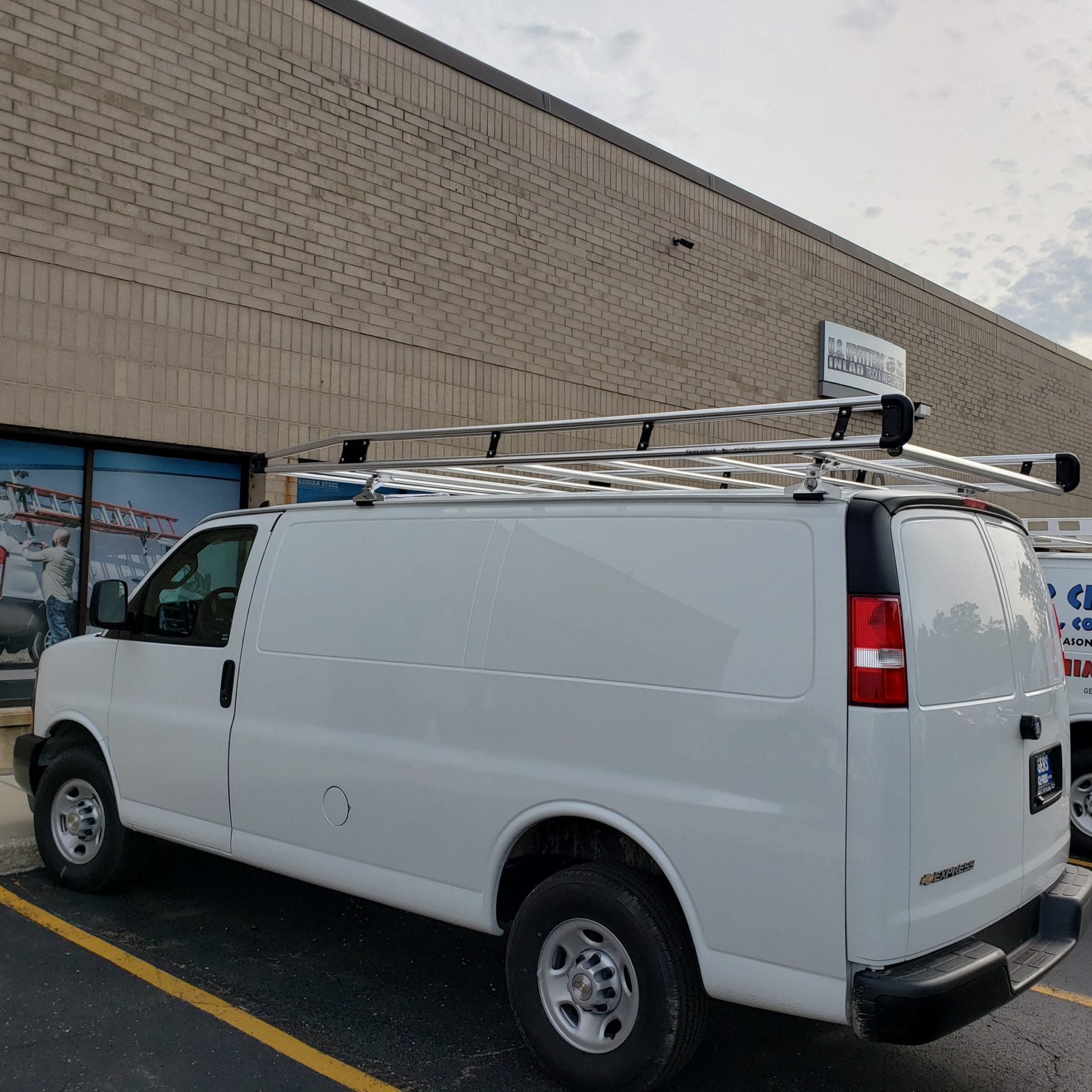
The noise generated by roof racks and roof bars is caused by a phenomenon known as “Karman vortex streets”. In simple terms, a series of noisy vortices forms when airflow strikes the first cross bar. Now, Syncro engineers have designed the new ULTRASILENT profile for application under the first cross bar to eliminate this annoying noise. By breaking up the air flow that passes between the cross bar and the van roof, the new profile prevents the formation of vortices and dramatically reduces roof rack noise. Even before this latest innovation, Alurack roof racks were particularly silent thanks to their specially shaped aluminium cross bars. Alurack ladder racks are made of aluminium bars, with a rear stainless steel roll and side aluminium wall.
Now, with the new Ultrasilent ribbed profile in place, noise is slashed by an additional 50%, making your van superbly silent even at motorway speeds and above. These new noise-reducing profiles are extremely light, do not take up useful load space and do not interfere with the use of ropes or straps to secure cargo.
ROOF RACKS FOR VANS
If a single ladder slide is fitted, the remaining section of roof rack is fitted with rubber top profiles, fittings, side fence and rear loading roller. No more heavy lifting to get your ladders on to the roof of your van! Here is the ideal complement to any van roof rack!
DOUBLE-SLIDE LADDER RACKS
Double-slide ladder racks comprise a set of van roof fittings and two pivoting or damped-action slides for easy and fatigue-free loading and unloading of ladders in full compliance with all relevant health and safety legislation. Cary your ladders safely and effortlessly! Here is the ideal complement to any van roof rack!
LOADING LADDERS ON TO YOUR VAN’S ROOF WITHOUT FATIGUE
Syncro ladder racks make loading and unloading ladders to and from the roof of your van easy and safe. Pivoting ladder racks pivot ladders just beyond their centre of gravity. Operator effort during loading and loading is therefore significantly reduced by the weight of the ladder itself. This type of ladder rack is ideal for vans with low roofs, like the Doblò, Berlingo, Kangoo, Transporter, Vito etc..
Damped-action ladder racks incorporate a damper that slows the descent of the slide and, in some cases a gas spring to reduce loading effort. Thanks to their special design, these ladder racks lower the ladder all the way to the ground irrespective of the height of the vehicle. It is not necessary to lift the ladder on or off the slide. These ladder racks are ideal for medium and large vans like the Vivaro / Trafic, Ducato, Master, Daily, Sprinter etc.
UNDER-ROOF LADDER RACKS
The latest innovation from Syncro System is ideal for van users who want to carry a ladder inside their vans but do not want to do without racking or clutter up the floor. Syncro’s new under-roof racks hold your ladder securely in place under the van roof, leaving the cargo compartment beneath free. The adjustable stop can be folded away for easier access to the cargo compartment.
These ladder racks feature an automatic system for locking the slide at the end of its travel and an adjustable stop for holding the ladder at the rear. Operation is extremely quick, easy and safe. The ladder locks in place automatically at the end of its travel and, once secured with a strap at the back, remains firmly in place. This system offers clear advantages: your ladder travels hidden from sight and you don’t need the hassle of added bulk of a roof rack, meaning that you save in fuel too. And fuel economy is something we can’t afford to forget …
ALUMINIUM PIPE CARRIERS FOR VANS
Syncro aluminium pipe carriers integrate perfectly with the Syncro modular roof rack system. They can be fitted to roof bars, roof racks and in conjunction with ladder racks, in any position and on any make and model of van. As with all Syncro System van racking products, pipe carriers represent a future-proof investment. You can move them easily from one van to another when needed. They are made from aluminium with a tough, oven-hardened paint finish for excellent weather resistance. They come with two lockable access doors for maximum security on the road. The standard length is 3000 mm.
STAINLESS-STEEL PIPE CARRIERS
These ladders, for installation on the rear door, provide safe and easy access to the roof of your vehicle. They are made from lightweight and weatherproof aluminium and can be installed without drilling the bodywork. Ladders and fittings are available for most medium and large vans.
With vans now in all shapes and sizes, from small compact models to long wheelbase, high-roof models, a plethora of available van upfitting options are available to fleet managers.
Ladder Racks
Adrian Steel Drop-Down & Grip Lock Ladder Racks
Adrian Steel’s new ladder rack family caters to individual fleet needs. The new ladder rack family consists of the Drop-Down ladder rack for van and the Grip Lock Ladder Rack.
Solve safety, efficiency, and accountability challenges with fleet tracking
The Drop-Down Ladder Rack includes exclusive “Twist to Adjust” patent pending adjustment knobs that allow the user to set up the ladder rack to their ladder in just seconds versus 30-45 minutes of traditional drop-down racks.
The new, low profile outboard design lowers the handle down for simplified operation. The easy-to-reach rotational handle and two-stage drop provides an ergonomic load and unload height, with technicians 5-foot 4-inches and taller safely and easily able operate the drop-down ladder rack.
The Grip Lock Ladder Rack includes a new tilt angle design, which enhances ease of operation. Simplified loading and unloading make it easier than ever for users 5-foot 7-inches and taller to operate. Clamps secure the ladder during transportation, eliminating the need for straps or bungee cords to keep a ladder in place. In addition, all ladder racks are protected from the elements and are corrosion resistant. The natural aluminum finish reduces corrosion and is 15% lighter than traditional steel racks.
Leggett & Platt Ladder Racks
The easy-to-use and dependable ladder racks from Leggett & Platt can hold various sizes and styles of ladders. Ladders are clamped to the side of the van and easily raised to the roof, helping prevent strain for the user and damage to the vehicle or ladder. For security, drivers can simply lock the handle with a standard padlock to protect the ladder from theft. In addition, vinyl-coated clamps resist abrasion and the convenient operating handle securely locks ladders in place, extending the life of both the ladder and the ladder rack.
With only one moving part, ladder racks are designed to be maintenance-free for a lifetime. In addition, many racks install to existing vehicle hardware, which means no drilling is required. Other racks include roof-mounted bolt-through feet and reinforcement plates; some drilling is required. The racks are also adjustable to fit multiple step and extension ladders.
Cargo Solutions
American Eagle’s new heavy-duty aluminum drawer systems provide heavy-duty mobile storage with weight savings up to 41% compared to its steel counterpart. The American Eagle Aluminum Series Heavy-Duty drawer systems feature 500-pound capacity rated slides to support heavy tools and other parts and equipment. Each drawer is constructed of lightweight aluminum to offer weight savings and corrosion resistance. Each drawer is fitted with a non-slip liner that adds additional protection for valuable tools and aids in drawer organization.
The heavy-duty aluminum drawer systems also offer such standard features as individual locking drawers that use a single-handed T-Handle, powder-coated drawer fronts, and removable drawers to assist in installation as well as on-the-job convenience.
The drawer system also comes with dividers, a telescoping top shelf, a 2 ½-inch riser built-in, and concealed latching hardware for durability and security. All American Eagle drawer systems are engineered and custom-made to fit the user’s specifications. A drawer system measurement guide is available online to assist with proper upfitting and ordering.
Masterack SmartSpace Cargo Storage
The SmartSpace product line from Masterack is a modular cargo management system that offers a variety of shelves, drawers, and accessories that slide into upright panels for infinite storage possibilities. Made from structural foam and aluminum materials, this system provides weight savings over comparable steel interiors. These quiet, composite shelves hold as much weight as steel, with heavy-duty grade-8 fasteners to secure the system to a vehicle.
The modular design features 22-inch stackable uprights designed for use in any cargo vehicle size as well as a variety of shelves, drawers, and accessories that slide into the upright panels for infinite storage possibilities. Modules can be installed at 90 or 180 degrees for convenient side or rear door access and the heavy-duty aluminum rail mounting system engineered to secure system in the vehicle. Additionally, sound-absorbing shelves, uprights, and secured drawers deter tools and equipment from rattling while the vehicle is in motio
Whether you are hauling cargo or you need a place for work tools and supplies, the 2021 Chevy Express cargo van can go to work for you. This vehicle offers you a capable performance and some customizable features and technologies so that you can get exactly what you need.
What does the 2021 Chevy Express offer you in terms of performance, features, and technology? You can learn all about this below. Also, reach out to us if you have any questions about this vehicle.
Performance and Engine Options
When you are purchasing a cargo van, you want to be sure it can work for you. This type of vehicle can be used as a work vehicle for contractors, plumbers, electricians, and more, and you can customize the performance of this vehicle based on your needs. Check out the different engine options and other performance considerations below.
2500 Express vs. 3500 Express
When you are looking into a 2020 Chevy Express Cargo Van, you will have to choose between the 2500 version and the 3500 version. These two vans are not significantly different, but there are a couple of differences. These vehicles are the same size, but the 3500 is slightly more heavy-duty. This option offers you a higher gross vehicle weight rating and a higher payload capacity.
In the Express Cargo Van 2500, you have a gross vehicle weight rating of 8,600 pounds and a payload capacity of 3,280 pounds. In the 3500, you have a gross vehicle weight rating of 9,900 pounds and a payload capacity of 4,250 pounds. This means that you can haul more cargo in the Express 3500.
Engine Options
Whether you want the Chevy Express 2500 or 3500, there are three engine options. The V6 engine comes standard in both vehicles, but you can upgrade to get more powerful options if that is what you need. Check out your engine options below.
4.3-liter V6 – Your standard engine with the 2020 Chevy Express Cargo Van is the 4.3-liter V6 engine. This engine gives you 276-horsepower and 298 pound-feet of torque. This engine also has variable valve timing and direct injection to improve your performance and efficiency.
6.0-liter V8 – You also have a V8 engine that is available with this van. This 6.0-liter V8 engine produces 341-horsepower and 373 pound-feet of torque. This engine can be paired with a six-speed automatic, heavy-duty transmission.
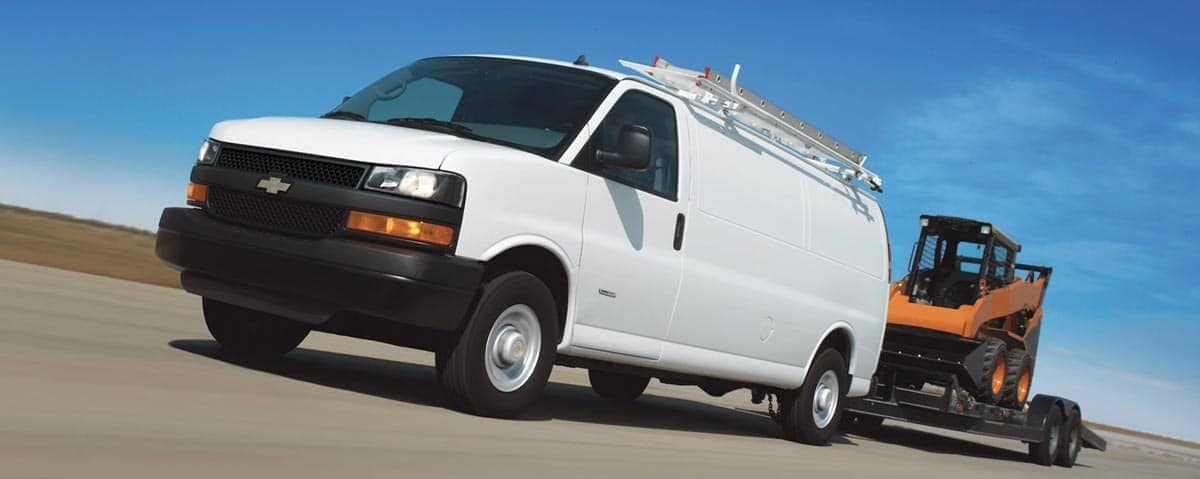
2.8-liter four-cylinder turbo-diesel – Your third engine option is a turbo-diesel. This engine is a 2.8-liter four-cylinder turbo-diesel engine. It produces 181-horsepower, and it gives you 369 pound-feet of torque. This engine gives you the ability to tow up to 7,000 pounds.
Above, we talked about the different engine options and how this vehicle can perform for you, but this vehicle also offers you other features and capabilities in terms of helping you get the job done. Check out more about the features found with this vehicle below.
Exterior
The exterior of the Chevrolet Express Cargo Van was built tough and powerful for you. This vehicle has a standard 135-inch wheelbase, but you can get an extended wheelbase of 155 inches. The exterior of this van also has features like heated power-adjustable side view mirrors. You can find this vehicle in exterior colors like Red Hot, Silver Ice Metallic, Summit White, and Black. There are also options like sliding doors, hinged cargo doors, and ladder racks to customize your exterior further for your needs.
Interior
The Chevy Express is available as a cargo van or a passenger van. The passenger version can seat up to 15 people, but if you are using the cargo van, you have room for equipment and tools.
You can customize the interior of your 2020 Express Van by giving it different features and equipment packages. There are options like cargo management systems, interior shelves, fold-up shelving, and more. This can make your vehicle ready to store packages for deliveries, tools for contractors, and so much more. You can talk to your Chevy dealer about how to personalize this vehicle to your specific business needs.
Technology
There are plenty of great technology features found on the inside of the 2020 Chevy Express. This cargo van gives you features to help you stay connected with your technology and your people. Check out some of these features right here.
Bluetooth – You have the ability to connect your phone to your Chevy Express Cargo Van with Bluetooth. This technology feature allows you to take calls and texts hands-free so that you can keep your hands on the wheel and your eyes on the road.
myChevrolet Mobile App – The myChevrolet mobile app allows you to connect your mobile device to your vehicle. You will be able to get important vehicle information from your mobile device.
120-Volt Power Outlet – The Chevy Express Cargo Van also offers you a 120-volt power outlet to help you keep tools and other devices powered up when you are away from home or work.
Rear Vision Camera – Parking or going in reverse in your cargo van does not have to be hard with the rear vision camera that this vehicle offers. This can help you safely go in reverse because you can see what is directly behind you.
Wi-Fi Capability – Chevy Express Cargo Vans also offer you Wi-Fi capability. This can be a great option for you if you are using your van for work. Having access to an internet connection when you are driving to a job or on a job can be very beneficial. This can make your van a mobile office for you.
6.5-inch Touchscreen Infotainment – You also have the option to upgrade your cargo van to get yourself a 6.5-inch touchscreen infotainment system. This can give you access to apps, music, navigation, and more all at the touch of your fingertips. This system can keep you connected when you are on the road for a job.
As you can see, there are plenty of available technology options for your 2020 Chevy Express Cargo Van. This vehicle can keep you connected, and it can operate as a mobile office for you. However, there is also some safety technology you can find in this vehicle. Learn more about all of this below.
Safety
When you purchase a cargo van for work or business use, you want to be sure you keep that vehicle and your cargo as safe as possible. That is why there are available active safety features that can be found with the Chevy Express Cargo Van. This van has available driver assistance features like a rear vision camera, rear park assist, a tire pressure monitoring system, side blind zone alert, lane departure warning, and forward collision alert. You can learn more details about some of these features below.
Forward Collision Alert – This safety feature can help you prevent or lessen the impact of a front-end collision. It does this by monitoring the space in front of you. It alerts you if you are following a vehicle too closely, or if it detects that a front-end collision is imminent.
Side Blind Zone Alert – The side blind zone alert feature looks out for vehicles that may be in your blind spot, which can help you avoid a potential collision. This feature will provide you with a side mirror alert if it detects a vehicle in your blind zone.
Rear Park Assist – Parking a larger vehicle like this cargo van is not always easy. With the available rear park assist feature, you can park more safely because this feature provides distance alerts for nearby objects.
How to Use Social Media to Build Your Cargo Van Business
Online social media is all about connecting to customers and building brand recognition. It gives you a way to deliver helpful tips, friendly stories and insightful ways to use your products to the very people most likely to become your customers – and you can do a lot for free.
It’s flexible, too. You can improve and upgrade your messages at will (weekly is the norm for routine social media postings) for no cost at all, except for a small investment of your time. After you get into ‘the swing of things’ with postings it becomes fun as well, especially when people start responding to your marketing messages.
Commercial Fleets and Brand awareness
Every business wants to be known as the ‘go to’ source for their product. But word of mouth advertising is too slow, and traditional methods are not much faster and cost too much.
Blogs, though, and social media postings let you achieve ‘top of mind awareness’ with the people who matter most, while letting you exclude people who are not likely to ever buy your product or service. Marketing messages that you can target with pin-point accuracy – what more could you ask for?
An invitation from the market for you to send those messages, that’s what you could ask for, and receive. No wonder social media has become the new marketing medium to master.
And, when you later decide to try paid social media advertising, you can even target those messages directly to the customers of your competition. Imagine that. Never before has this level of accuracy been possible in advertising. To learn how to do all that, though, you have to start somewhere.
Tactics That Will Drive Visitors to Your Website
Since social media marketing is worth learning, consider instances you’ve probably used it already. You’ve probably clicked on social media links to websites for more information about products you were not yet ready to buy. Why? Because clicking a link is immediate, it costs you nothing and is a confidential way to shop and gather information.
Tactics businesses use to drive (rather, to attract) traffic to their websites include:
Offers of free information
A chance to read the remainder of a story that was introduced by a posting
Videos of someone using the product
Videos of someone demonstrating the product
Videos of someone installing the product
Photographs of all the above
Ideas on various ways to use the product
And more!
The possibilities for attracting web traffic are limited only by your imagination.
3 (Easy) Steps to Get You Started
Even if you don’t consider yourself to be technically savvy, if you can use a cell phone you can start and run a simple social media page for your cargo van business. Just follow these steps:
1st, Choose Your Platform
There are dozens of platforms to choose from. You will already recognize the most popular ones, even if you don’t use them in your personal life, like Facebook, LinkedIn, Twitter, Google+, YouTube, and Pinterest; the list goes on and on.
Here’s a tip. If any person you would like to sell to regularly visits any social media site, they will always at least have a Facebook account. They might sometimes visit other sites as well to shop, socialize or to network, but even if they don’t use other sites, they will almost always use Facebook.
So, if you are new at this, start a Facebook page for your business and forget about the rest till you gain some experience. See how simple it can be to get a start? Did we mention that a Facebook page for your business is FREE?
2nd, Set Your Goals & Measure the Results
Everybody wants to sell, increase website traffic and create brand awareness, but don’t fall for that trap. In essence, you use social media mostly to offer help, not to make sales pitches. Think ‘invite’ or ‘attract’ instead of ‘proclaim.’
The rule of thumb for postings is that for every four posts you put up, three should be helpful tips and only one should be an offer to sell something. Attract and help, not compel and be overbearing, is the name of the game for social media marketing. The more appealing and helpful that people find your messages, the more they will ‘share’ them with their friends.
Initially you will set goals for the number of people you want to ‘like’ your page. Then you set goals for the number of times people ‘share’ your posts with their friends. You will recognize that sharing as a way of getting referrals.
3rd, Post Regularly
Once weekly is the norm. Too many postings, and you run the risk of people opting out of receiving your messages, even if they don’t ‘unlike’ your page. Be a good guest, but don’t overstay your welcome, just like in real life.
You Don’t Have to be Everywhere.
Like i said, if you are on Facebook you are only one click away from billions of fellow users. That’s enough to get started and to gain some experience. LinkedIn is also a good way to stay connected with people from your industry.
5 Tips to Help Select the Best Commercial Van Floors for your Vehicle
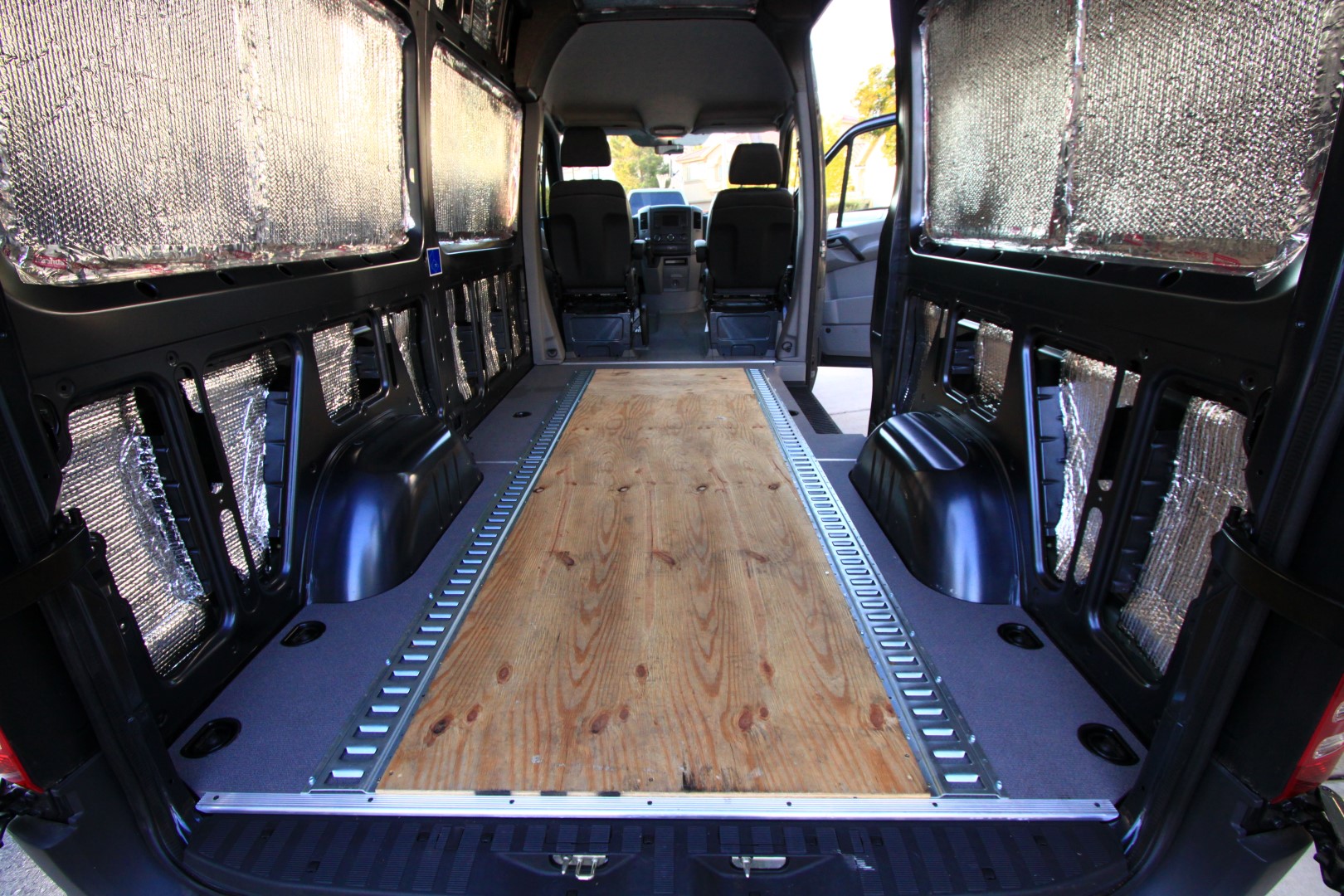
Protect Your Van’s Floor with a High-Quality Flooring Kit
A high-quality cargo van flooring kit will protect your commercial van floors. Rigid and strong, a van liner protects the floor from scraping, dents, impacts, scratches and spills. Avoid the hassle of making a do-it-yourself floor. You can buy a heavy-duty floor system that’s made to perfectly fit your service van.
Make Sure Your Employees are Safe
A good floor kit also minimizes the chances of your employees slipping in the cargo area. It also helps to prevent cargo from shifting around. Impact and Puncture Resistant high-quality van flooring kits provide added safety and a quieter ride.
Select a Surface that is Easy to Clean
A good stable floor gives your technicians a durable surface to work on that is also easy for them to clean. Look for van floors with a non-porous surface that are liquid-resistant to eliminate bacteria and mold formation.
Always Look Professional
Give your work vehicle a clean, professional look that is easy to maintain. Commercial van floors that have aluminum sills add a nice finishing detail, and they give a crisp look to the van floor covering.
Choose Van Floors that are Durable
You will probably want van floors that are made of very high quality, eco-conscious rubber and are guaranteed for the entire time you own your vehicles. You can choose from rigid floors and extremely rigid floors. The best van flooring systems are built to resist cracking and splitting.
Ideal for Fleets
By installing sprinter commercial van flooring in combination with other accessories , your vehicles will have the most complete and professional look in vehicle upfitting. Don’t forget, a quality flooring system will enhance the resale value of your vehicles at lease end.
Fleet safety has never been a more pressing issue. Besides costing businesses millions of dollars in liability, fleet accidents can leave drivers traumatized and give companies a bad reputation. That is why fleet managers make it a priority to protect their drivers on the road and during jobs. Fortunately, with the rise of modern technology, more and more driver safety devices are becoming available on the market. Below are just a few of the tools you can invest in to build a safer fleet.
1. Track the position of your commercial fleet
Global Positioning Systems (GPS) and Automatic Vehicle Location (AVL) are tracking devices that can be installed in all the vans in a fleet and are connected to either a website or a company server. GPS and AVL allow managers to track the progress or position of vehicles while they’re out on the road. Both systems can also monitor how the vans are being driven, generating alerts if a driver is speeding or braking harshly. Not only are GPS and AVL designed for fleet safety, but they can also be extremely practical. Traffic headquarters can use these tools to determine drivers’ whereabouts and give customers an accurate ETA
2. Increase fleet safety with in cab video
In cab video is highly effective for helping prevent road accidents. It enables fleet managers to oversee the habits of their staff and ensure they are driving as safely as possible. On the driver’s end, in-cab video provides an incentive to drive more carefully. The cameras can be used to provide evidence if someone is suspected of driving dangerously, for example, or to help identify the cause of a collision to help prevent future accidents.
3. Equip your fleet with emergency buttons
Although emergency buttons are used mainly in public transport vehicles, they can be implemented in large fleets as well. The emergency button is a simple device that installs on a vehicle’s dashboard. In the case of extreme emergencies, where the driver may be alone and injured, pushing the button will immediately alert traffic headquarters, or even the police. The emergency button can also be linked to an AVL system, making it easy to pinpoint a van’s exact location, so that authorities can reach the driver as soon as possible.
4. Monitor your vehicle maintenance
Installing maintenance monitoring technology fleet-wide, generates up-to-date reports on the condition of the commercial vans. These types of systems can be connected to a computer or even downloaded in the form of a mobile app. They generate warnings in the case of serious engine problems and other vehicle issues so that the trouble can be fixed before it can escalate. Maintenance monitoring tools can help prevent accidents, as they reduce the likelihood of vehicles breaking down unexpectedly. They can even be programmed to signal when a van begins to run low on fuel. All in all, van maintenance tools can help drivers avoid mishaps on the road, as well as cutting back on potential repair costs.
5. Ensure up-to-date communications
It’s imperative that drivers always have a direct line of communication with traffic headquarters. While radio systems have been used in the past, modern in-vehicle computers are a much more effective form of interaction. They ensure that drivers are connected to the office at all times and able to inform headquarters immediately of any trouble. They can also be used by the traffic office to issue weather warnings to individuals or even groups of drivers to re-route them around congestion and road blocks. Similarly, drivers can communicate with other vans to alert one another of potential obstacles, or requests for help.




 Commercial Van Solutions