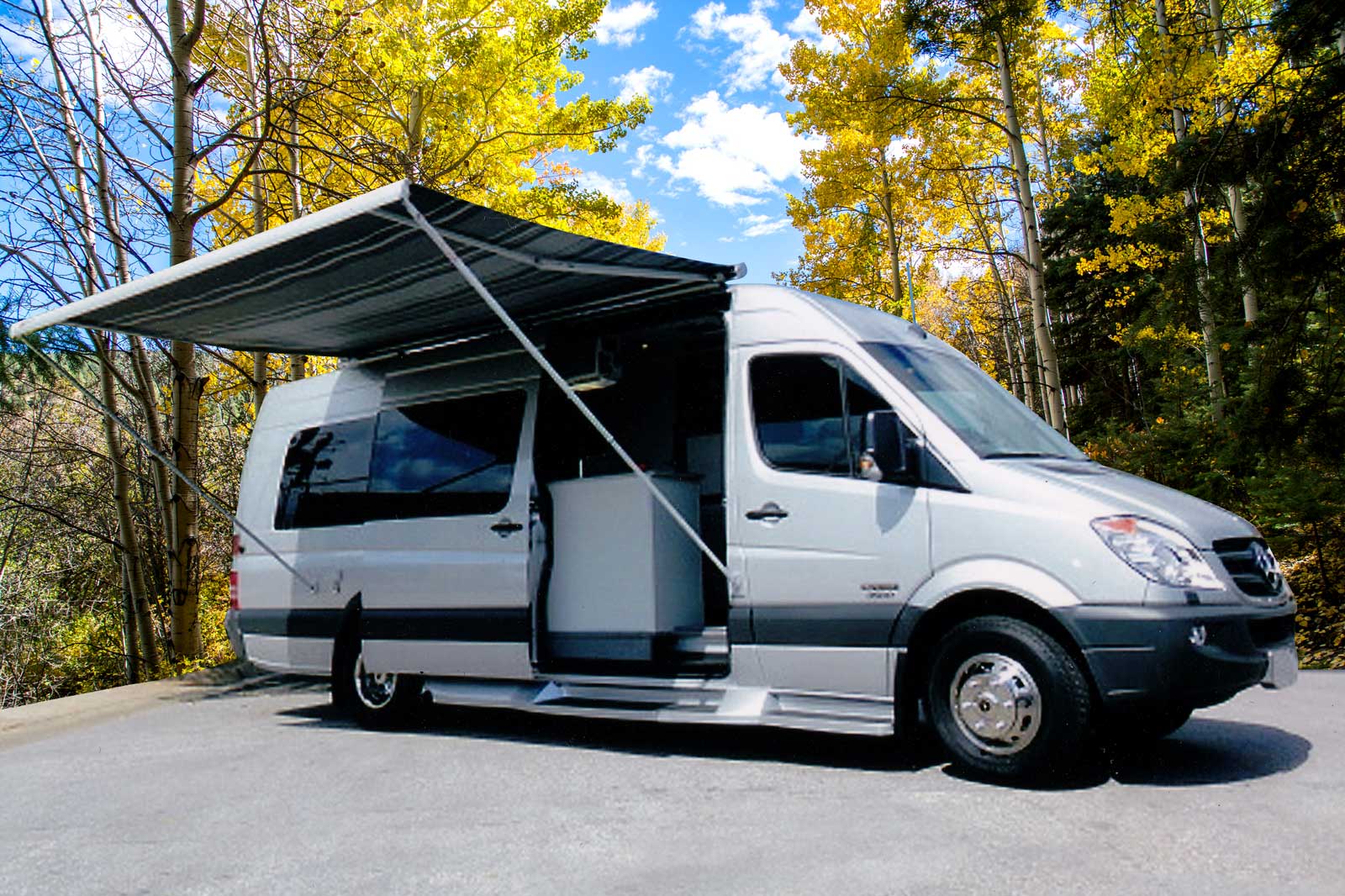
Posted in RV AWNINGS

5 Best RV Awnings and Sunshades

5 Best RV Awnings and Sunshades

RV awnings are a great way to stay out of the sun while prolonging your time chilling outdoors at your campsite. And, whether you’re looking to replace your old awning or add one, there are plenty of options on the market.

We’ve narrowed it down to what we consider the five best ones. Keep reading to learn more.

Let’s jump in!

What Is An RV Awning?

An RV awning is a thick material, usually fabric or vinyl, that attaches to the outside of your RV. Their purpose is to provide shade and protection from rain or other elements, so manufacturers typically place awnings above the door or windows. They expand to various widths and lengths. In addition, you can roll them in and out manually or electronically.

A sunshade typically hangs from your awning to provide additional sun protection and some privacy. 

How To Measure For An RV Awning

If you already have arms for the RV awning, measure the awning from the center of the left arm to the center of the right arm. The awning fabric tends to be about 9” smaller than the size of the awning, so you’ll want to factor that in. We also recommend confirming how to measure with the brand you’re purchasing from. Most will surely have instructions on their website.

The 5 Best RV Awnings and Sunshades

#1 – Solera Universal Fit Awning

About the Solera Universal Fit Awning: Made of vinyl, it’s designed to work with Solera, Dometic, and Carefree awning products. The awning is available in sizes from 10 to 21 feet and comes in nine different colors. 

Stand Out Features: The Solera Universal Fit Awning has an integrated LED light track. In addition, the awning has been cold-crack tested at -25 degrees Fahrenheit and reinforced for leak-proof seams.

Best For: Any Class RV

#2 – Shade Pro Vinyl Awning

About The Shade Pro: This vinyl RV awning is available in sizes from 10 to 21 feet and comes in various colors and patterns. It works with Carefree, Dometic, Lippert, Carter, and Faulkner awning parts.

#3 – SunWave Awning

About The SunWave Awning: The SunWave is made from 15-ounce vinyl with a 16-ounce vinyl weather guard that’s heat-welded onto the main vinyl. This awning comes in various colors and sizes, from 8 to 22 feet. It will work with Dometic, Carefree, and Carter awning parts. 

Stand Out Features: The SunWave Awning has a projection of about 8 feet. It has a ¼ inch poly cord for the rail and a 3/16 inch poly cord for the roller tube with a pull strap. 

Best For: Any Class RV

#4 – Recpro Awning

About Recpro RV Awning: This awning is made of premium vinyl with a tensile strength of 140 PSI. It comes in three colors and sizes from 12 to 22 feet. 

Stand Out Features: The Recpro RV Awning has heat-welded seams. It is also known to be easy to install.

Best For: Any Class RV

#5 – Tentproinc Sunshade

About The Tentproinc RV Awning: The Tentproinc is an RV awning sunshade. It attaches to your awning and blocks about 86% of UV rays. The sunshade comes in four colors and several sizes.
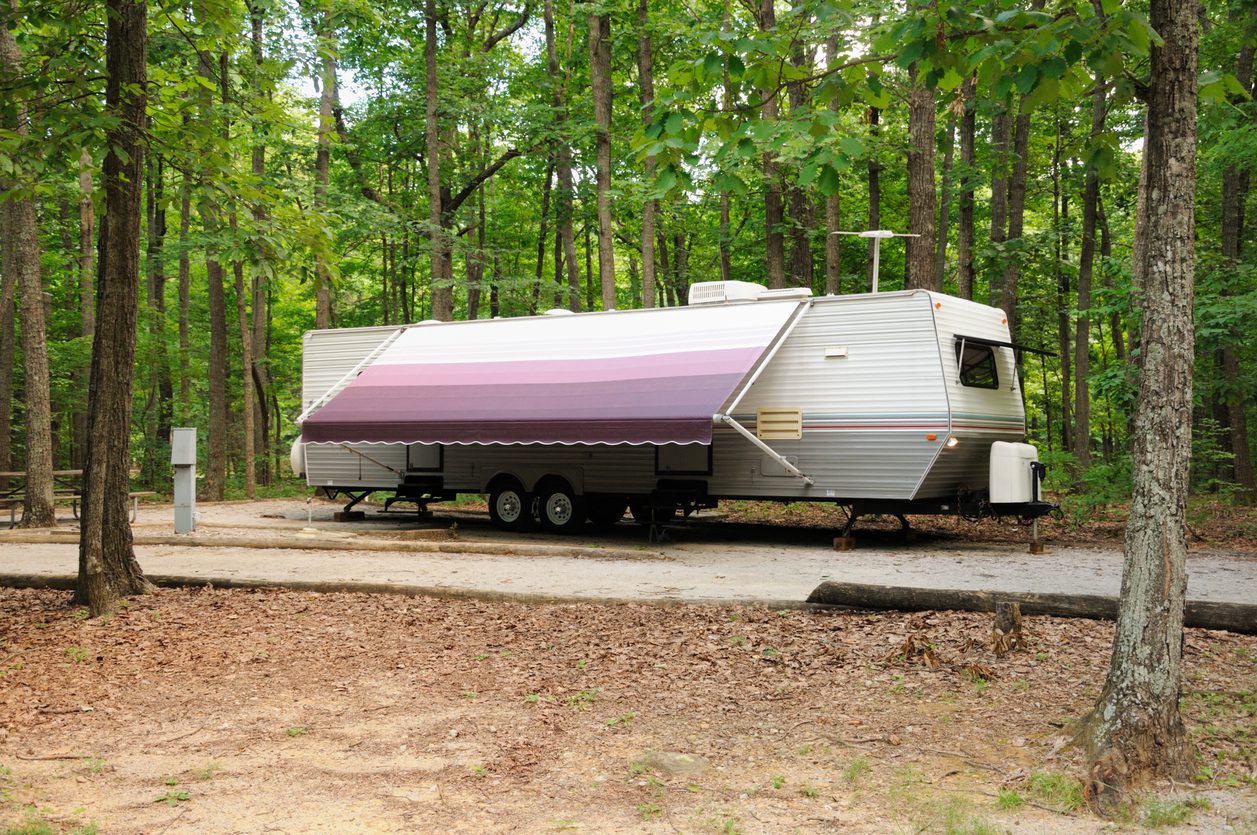
Posted in RV REPAIR

RV REPAIR ESSENTIALS TO TAKE ON THE ROAD

RV REPAIR ESSENTIALS TO TAKE ON THE ROAD

Recreational vehicle (RV) owners know repairs on the road are never fun and no amount of careful inspection before your trip is guaranteed to prevent the unexpected. You’ve spent too long planning your RV road trip to let a leaking roof or broken awning ruin your fun.

While you can’t always prevent disruptions on your trip, you can be prepared by packing your RV repair kit with the essentials you need to tackle an RV repair. Spend less time worrying about repairs and more time enjoying the road by reading these RV travel tips on what repair essentials to bring with you on your next road trip.

1. Waterproof Lubricant Spray

When you’ve arrived at the campground or location where you’re going to park your RV for the day, the last thing you want is a stuck window or creaking door to interrupt your peace and quiet. Lubricating various parts of your RV is one of the simplest ways to maintain your RV and keep it functioning properly. Enjoy your road trip to the fullest by packing a waterproof lubricant spray in your RV repair kit.

2. RV Awning Repair Tape

Relaxing under your RV’s awning is an excellent way to relax and take in the sights and sounds that nature offers. Awnings can provide you with shade during those hot summer days or keep you dry during rain showers. But what do you do when you notice a hole in the awning material? Even a small puncture or tear can rapidly become a larger and potentially more expensive problem.

When it comes to RV awning repair, a good rule of thumb is to always inspect your awning before leaving for your trip. Checking your awning for holes and rips at home should provide you with ample time to complete repairs with your RV awning repair kit. As soon as you notice the issue, quickly repair the vinyl or canvas with a durable RV awning repair tape. It’s also a good idea to always bring your RV awning repair kit on the road with you as wear and tear can occur during your trip.

3. RV Roof Repair Kit

The awning on your RV isn’t the only material over your head that can cause a problem. A hole in your camper’s roof can cause major water damage and ultimately diminish the structural integrity of your RV. While warning signs like discoloration or decay can be spotted before you leave the driveway, sudden weather conditions can cause hail or falling branches that can also damage your roof.

4. Putty Tape

Leaks can happen inside your RV’s kitchen or bath just as suddenly as above your head. From a leaky sink to a dripping shower head, putty tape is often an easy solution for road repairs when applied correctly. There are two different types of putty tapes to consider when buying one for your RV repair kit. Regular putty tape is cheap and easy to use but can dry out over time. Butyl tape, on the other hand, is much more expensive and difficult to apply, but will last longer than regular putty tape.4

Butyl tape is recommended for working on rubberized roofs while regular putty tape can solve your kitchen and bath leak issues. Reaching the leaky areas can be a challenge in small camper spaces, so carefully examine water lines and valves before sealing anything with your putty tape.

Posted in RV Awning

Signs Your RV Awning Needs Replacement

Signs Your RV Awning Needs Replacement

Like we said, it’s not always obvious when it’s time to replace your RV awning, but here are some of the tell-tale signs you should watch for:

Cracking Material

If you see cracks in the fabric, or if it’s torn or ripped, you can patch it… but you’re just delaying the inevitable. Once a crack begins, it’s a sign that the awning fabric has aged from exposure to the elements, and it’s going to spring new cracks with ongoing use. This is also a good time to do a full inspection of the awning hardware (the arms, mounting brackets, roller tube, etc) to ensure it’s still in good shape.

Splitting Seams

Like deteriorating fabric, when you see that your canopy is coming apart at the seams, that’s a definite danger sign. Awning fabric is stitched to create the pockets needed to hold it to the side of the RV and onto the roller tube… so when that begins to go, it’s time to start shopping for a replacement.

Heavy Mildew Build-Up

Mold and mildew aren’t going to cause your awning to lose its function, but it can often smell (BAD!) and is hard to remove completely. A lot of cheaper awning material is actually made from two pieces of fabric that are “glued” together. Mold/mildew can grow between the two layers, so no matter how hard you scrub, you can’t get it all out. And because it’s a health hazard , you sure don’t want to let it hang around or spread to other areas of your RV.

Looks Out Of Date (Style)

Maybe you want a new look, and there’s nothing wrong with that. Sometimes retro is cool … and sometimes it’s not. Change is good, and maybe the time is right for a different color, pattern, or style. Current awnings look a whole lot better than those manufactured ten years ago.

Fabric Has Stretched Over Time

When water collects on your RV awning during a heavy rain, it can cause the fabric to stretch. This makes the canopy droop or sag… which only makes it MORE likely to collect water. You might be able to fix it temporarily by pulling it tighter, but the damage is pretty much already done.

Posted in RV Awning

5 Signs You Need To Replace Your RV Awning

5 Signs You Need To Replace Your RV Awning

Awnings are an important, yet often overlooked, element of RV living. Whether it is sunny or rainy outside, awnings provide the shade and shelter necessary to comfortably enjoy the great outdoors. No matter how well you preserve your awning, it is eventually going to have to be replaced, and knowing when the time is right can be tricky. So to give you a better idea, here are 5 signs it’s time to replace your RV awning.

Your awning won’t open and close properly

If you have to stress and sweat to close your RV’s awning, it is probably time to swap the old out with the new. Properly functioning awnings should smoothly open and close without resistance, so if you have to fight to get your awning in place, think about replacing it.

There’s noticeable damage to your awning’s structure

Don’t wait until you’re questioning the structural integrity of your awning before getting it replaced. You should routinely inspect your awning’s hardware for dents, bends, and any warping that can occur over time. Compromised awnings can collapse during use and cause serious injury, so if you notice visible damage, replace your awning as soon as possible.

You can’t properly adjust your awning

Being able to control and lock the pitch of your RV’s awning is essential to ensuring that rainwater flows properly off of it. If you find yourself forcing components into place when adjusting the pitch of your awning, you could be causing additional damage to your RV. Don’t underestimate or ignore what you think is a minor awning issues. Replace your old one and avoid any larger damage to your RV.

The fabric of your awning is unsightly

It is recommended that you clean your awning fabric at least once per year, but even with proper upkeep your awning’s material can still develop ugly mildew and mold stains, sun damage, and rot spots. If any of these eyesores look familiar, you might not need to get an entirely new awning, but you will want to replace your awning’s fabric before the problems worsen.

Your awning shows signs of excessive wear

Mother Nature can take a toll on your RV’s awning with excessive rain, sun damage, and possible snow build-up. Holes, tears, and fraying are all tell-tale signs of excessive wear letting you know that it’s time to replace your RV’s awning.

Awnings do more than just protect from the elements, they extend the living area of your RV to let you enjoy the outdoors under shelter and shade. Don’t overlook the importance of making sure your awning is performing properly. If you notice any of these 5 signs while evaluating your RV, invest in a new awning and enjoy your next adventure free from worry and uncertainty.

Posted in RV solar panels

What Are RV Solar Panels?

What Are RV Solar Panels?

Solar energy is green, free to collect, and once you set it up, it can provide most (or even all) of your RV’s power needs. Follow along to learn about RV solar panels and which ones are the right choice for you and your rig.

What Are RV Solar Panels?

Van solar panels collect sunlight in their cells and turn it into energy that can be stored. The panels produce DC (direct current), which is managed by a charge controller and stored in a battery bank. The panels produce DC (direct current), which is managed by a charge controller and stored in a battery bank, like a rechargeable lithium battery.

An inverter can then convert the DC electricity into AC (alternating current), which we use to run things like household appliances. You usually mount the panels on the RV’s roof, but they can also be free-standing.

How Many Solar Panels Do I Need For My RV?

The number of solar panels you’ll need depends on electrical usage within the RV, your battery bank size, and what you want to do at any given time. The more solar panels you have, the more energy you can create, given the availability of the sun. Keep in mind that you can only generate as much power as you have the battery capacity to store it.

The size of your rig is a good indicator of how many panels you’ll need as well. A small travel trailer with an RV refrigerator and a few lights will require fewer solar panels than a large class A with a residential refrigerator and a larger battery bank to re-charge.

Additional Components Necessary for an RV Solar System

In addition to solar panels, you’ll need a charge controller (or a couple of charge controllers, depending on the size of your solar array) to properly manage the output of the panels.

Solar systems also require a battery bank to store the power they generate. If you’re going to the time, energy, and cost of installing solar on your RV, you’ll most likely want to maximize your battery bank. Due to their capacity, lower maintenance requirements, and ease of charging, many people are opting to upgrade their batteries to lithium.

Posted in RV solar panels

Tilting RV Solar Panels? Yes You Should!

Tilting RV Solar Panels? Yes You Should!

Adding solar panels for vans to your RV’s electrical system is a popular option for any motorhome or travel trailer. But just putting panels on the roof may only help you gain a fraction of the power available if you’re not using them to ‘follow the sun.’ But by tilting RV solar panels to directly face that big ball of fire in the sky, you can dramatically increase the amount of energy you have available on any camping trip.

Benefits of RV Solar Panels

Having solar onboard is a great way to keep your batteries full, especially if you enjoy boondocking.

Many RVers like to get off-grid, and although they might have a generator to recharge their batteries, it’s a noisy alternative that can ruin the peace and quiet you went out of your way to find.

RV solar panels are almost like having a free energy source (at least after paying the upfront cost for the equipment!) that helps you enjoy the tranquility of a dispersed campsite without all the noise of an engine running.

What Does Tilting RV Solar Panels Gain?

When the sun is directly overhead (during the summer months), solar panels mounted flat on your roof can often fully charge your batteries in just a few hours, since they’re facing more directly toward the sun, and thereby maximizing their output.

But if you’re camping during the winter season, the sun stays lower on the horizon (that would be the southern horizon in the Northern Hemisphere), even during the middle of the day. This means that the sun doesn’t ever hit the panels straight on, so the cells on the solar panels aren’t absorbing the sun’s rays as efficiently… and, thus, aren’t producing as much power to charge your batteries.

Tilting your RV solar panels helps to solve this problem.

By raising or lowering one side of each solar panel to aim it more directly at the sun (while it’s lower on the horizon), you’re giving the panels fuller, more direct exposure to the sun’s rays. This angle will increase the energy your panels produce… and decrease the time needed to recharge your batteries completely.

Posted in CAMPER AWNINGS

FOUR THINGS YOU NEED TO KNOW ABOUT BUYING CAMPER AWNINGS

FOUR THINGS YOU NEED TO KNOW ABOUT BUYING CAMPER AWNINGS

Awnings were not something I had ever looked at before. So I had to spend a large chunk of time with about 25 tabs open on my laptop (naturally while tandem feeding the twins) in order to even start to get my head around it. I learnt a few essential things about buying an awning and thought it would be worth sharing them with you.

1. There is a difference between a caravan awning and a campervan awning

The first thing I did was to get carried away looking at spectacular camper awnings with multiple rooms that came in all different sizes colours and styles. I then quickly realised that the majority of these were in fact for caravans not campervans. It’s not always clear on an eBay listing which it is for so always go on the website of the awning brand to check.

2. There are very different types of camper awnings

A driveaway awning is like a very large tent. You can use them for eating in, sleeping in (most of them require you to purchase an additional compartment), storing stuff in etc. They are enclosed on all sides and will protect you from wind and rain as well as excessive sun (not my first concern when I was thinking of purchasing an awning). The other cool feature is that you can leave them erected while you drive off in your van for the day. They do obviously require putting up, which some people might feel detracts from the ease of using a campervan. But I reckoned it would be worth it for those trips when you’re settling in the same place for a few days. Especially if the weather is bad, which let’s face it is not a rare occurrence on this lovely island of ours. Driveaway camper awnings are either erected using inflatable poles and a pump, or traditional tent style poles.

A sun canopy is an awning which is permanently attached to the side of your campervan. It can be pulled out and held up by two poles and a couple of guy ropes. It provides, as you may have guessed, shade from the sun and would provide some protection from the rain depending on what angle it was coming in at 

I knew I was looking for additional space. Space which could be used regardless of the weather for small children with cabin fever to crawl around in. So a sun canopy was not going to do the job. However, I don’t like the very functional, modern look of many of the driveway awnings. I knew I wanted a retro style of awning with poles.

3. You get what you pay for

Well this is probably a lesson for life  I quickly realised when buying camper awnings you could spend anything from £50-£1500. As this awning will be used by customers as well as us, it’s essential to get something that we know will do the job, be totally reliable and last. So sadly, that excluded a 1950s awning bought off eBay. But it also excluded other apparent bargains which I knew would have poles that may bend or break and fabric that may turn out not to be waterproof or would get ripped in strong winds. But I also wasn’t looking for another house – you do want to still know you’re camping after all. So I figured around the £500 mark would probably be about right.

4. As with everything, it’s all about the accessories!

Once you’ve got your awning, you don’t need to stop there. You can add awning carpets, awning coat racks, awning tidies and curtains, to name but a few. I could see this was going to be fun. But other than the carpet, I wouldn’t be buying these items from that camping shop – where’s the creativity in that? Nope, I would use this as inspiration, but do it my way.

We will certainly have sheepskins and cushions galore. I’ll probably use some of my beautiful old leather suitcases as storage. We already use meat hooks hanging from a copper pipe to hang our coats in the house. So I will borrow a few of the extra hooks and hang them from the tentpole. Finally, I have been eying up some beautiful solar fairy lights. These will clearly be an essential part of awning life. 

I decided I wanted a brand-new but retro style driveaway camper van awning.

Posted in RV Awning

How to Maintain your RV Awning

How to Maintain your RV Awning

RV awnings needs to be well maintained; otherwise, you will end up replacing it sooner than you should have. Here are some tips to help you take care of your awning. 

➢   If you have an acrylic or vinyl awning, use water to hose it off. Check the awning to see if there are still any dirty spots. You can use a mild detergent that has been specifically designed for this process, as this will protect the waterproof coating and keeps the fabric in excellent condition

Too much scrubbing can damage the fabric. You can reinstall a waterproof coating to keep the RV awning in excellent condition. The frequency of cleaning depends on the weather condition and where you park and drive your RV

➢   Aluminum awnings don’t rust, but you can add a finish to remove oxidation and salt damage if you want the metal to maintain its color

➢   Check the construction of your fixed awning. If the metal parts look rusty, have them replaced

➢   If you install a fixed awning, try to keep one corner lower than the other. This won’t affect the benefits the awning will provide but will prevent the water from pooling on top of it

The water’s weight can put too much strain on the structure and can damage the awning permanently. When the water slides off, this will prevent the growth of mold and mildew, keeping your awning in perfect condition for the longest time possible

➢   Retractable van awnings should be left to dry out completely before rolling them up. Rolling the fabric while it’s still wet will cause the growth of mold and will damage it forever

Moreover, it can cause a bad odor that you can smell when you’re inside your RV. Use a mold remover if you see any stains on your RV awning

➢   Don’t overexpose your RV awning to UV rays. Although the awning’s job is to protect you from the sun rays, you shouldn’t leave it extended if you’re not using it

UV rays can damage the acrylic and vinyl fabric, and you will eventually have to replace your awning too soon. Even when it’s rolled up, you can use a PVC or aluminum cover to protect the fabric from damage

➢   Invest in a stabilizer kit. This will work if you’re extending your RV awning in windy conditions. It protects the construction and guarantees that the awning will last for a long time. You can also de-flapper clips to keep the awning stable in rain and wind

Posted in Awning Materials

Different Awning Materials

Different Awning Materials

In addition to the models, there are several types of materials available. Each one of them comes with some pros and cons. Understanding the features of each material will help you decide on the most suitable one for your RV. 

Acrylic Awnings

These are the most popular types of RV awnings. Acrylic awnings are made of synthetic materials that are highly resistant to weather conditions. They’re more durable than natural cotton blends and are incredibly versatile. 

Pros

  •     Reasonably priced
  •     Provides good air circulation and breathability in hot weather
  •     Resistant to bugs
  •     Can handle sun, rain, snow, ice, dirt, and dust
  •     In wet weather, they repel most of the water and dry quickly, keeping the awning in good condition   

Cons

  •      With time, the fabric stretches, and the awning starts to move in the wind. This affects its ability to provide shade and protection, and can also cause an annoying sound that deprives you of sleep when the wind hit the awning. 

Vinyl Awnings

Just like acrylic awnings, these ones are made of an affordable synthetic fabric that handles different weather conditions. 

Pros

  •     Vinyl is fade, scratch, and puncture-resistant
  •     Can slow down the spread of fire
  •     These awnings are waterproof
  •     The fabric stays taut on the frame
  •     Highly resistant to pollution, grime, bugs, and sun rays, and provide better protection than the acrylic awnings

Cons

  •      The water pools on top of the vinyl awning, so it can increase the risk of mold and mildew growth
  •      Vinyl attracts dust and requires regular cleaning

Metal Awnings

If you’re planning to keep your RV parked for a long time, you might need to think about something more durable. Metal awnings are usually made of aluminum, which is usually used in fixed awnings. 

Pros

  •        They’re highly durable
  •      Resistant to extreme weather conditions
  •      Looks more elegant than fabric awning
  •      More expensive than other materials
  •      100% waterproof

Cons

  • They’re more expensive than other materials
  • The sound of rain and hail falling on a metal awning can deprive you of sleep
  • They require a lot of maintenance to prevent rust and corrosion
  • Metals attract heat and will be extremely uncomfortable in hot weather

Wood

If you’re looking for an environmentally-friendly option, then you need to think about installing a wood awning. 

Pros

  •     Less expensive than metal
  •     You can make your own awning if you have the right tools 

Cons

  • Not Waterproof
  • Can easily get damaged
  • Needs to be replaced more often
Posted in RV Awning Types

RV Awning Types

RV Awning Types

RV awnings are an excellent investment, providing shade and increased functionality of your RV. But before buying and installing an awning, it’s important to understand the features of the different types available.

Depending on your preference and RV lifestyle, there are many different awnings to choose from, including: Manual, automatic, or fixed. Keep reading to find out which type of awning is right for you!

Every accessory added to your RV can make your outdoor experience more comfortable, especially something like an awning which increases your ability to utilize more outside space. Here are the various types of RV awnings available: 

Fixed

This awning will work for you if you’re not planning to move your RV around. It’s sturdy and practical, so it will protect you from the sun and rain when you’re chilling next to your RV. These awnings are designed to withstand the elements because they are permanent. 

However, this is the least flexible option because you can’t adjust the awning. Moreover, it might fall out when you’re driving your RV. 

Slide Out (Retractable Awning)

Retractable van awning can be slid out when you want some shade. Retractable awnings are perfect for campers and beachgoers, so you can alternate between sun and shade according to your needs. 

If you’re using your RV in the rain, you need to roll out the awning and let it dry to prevent mold growth. These awnings are manual, so you can easily adjust the shade depending on your needs. They are made of canvas, metal, acrylic, or vinyl, and they tend to be quite affordable. 

Automatic

Automatic awnings are designed to overcome the shortcomings of the other models. They’re adjustable, easy to maintain, and easy to use. Using a simple button, you can fold or unfold the awning when needed. This will also protect the awning when you’re driving your RV.

However, these automatic awnings are the most expensive ones. They’re pretty tricky to install, and you will probably have to hire a professional to do the job. Moreover, if the awning gets damaged, repairs can be quite expensive.