Posted in Commercial Van, Ideas & Tips, Multifunction Power Systems, Van Ladder Racks

5 Van Racking Ideas You Can Do Yourself

Having a mobile workshop is great and all, but it has its limitations which is mostly space. Since this is your workplace, getting the shelving right is – next to air conditioning – your number one priority.

I’m sure you know how to put the shelving in. Getting it right isn’t the problem here, but coming up with great ideas can be tricky. But you don’t have to reinvent the wheel. This article gives you 5 work van shelving ideas to get started right away. So let’s dive in.

In this article:

  1. Create a false bed with access at the rear and side doors
  2. Build a cabinet in the side door for crates and toolboxes
  3. Place your side door cabinet on a swivel foot
  4. Create a slide-out workbench
  5. Create long slide out drawers for your lengthy tools

Create a false bed with access at the rear and side doors

This is a no brainer if you’re a carpenter and need to transport large pieces of plywood. Creating a false floor definitely adds a lot of storage to your mobile workshop.

This is the perfect hiding place for large 8×4 panels.

Ensure access at the rear and side door by using panels out of ply. If you only use supporting legs on the sides with supporting beams across, you can easily slide in large sheets of 8×4 ply from the rear. Create a removable hatch at the bulkhead to have access to smaller materials from the side door.

Pros: a lot of flexible storage space for large materials.

Cons: the height you take out at the bottom can limit your standing height in the van. If you need to work inside the van, make sure you have a high roof (H2 or H3) to ensure you can stand up straigt. Or use tip number … to simply work outside.

Build a cabinet in the side door for crates and toolboxes

Building a van-high cabinet in the side door allows for easy access to your most-used tools and materials. Plan out the cabinet to fit your ‘definitely-need’ tools. A cabinet with 2 columns of wide, high shelves from the flooring up for about 3/4 should do the trick. Make sure these shelves are made-to-measure for your specific toolboxes and crates.

Above it, create a shelf for storing small materials such as cannisters, tape, hearing protection, etc. Provide this shelf with an edge to prevent anything from falling of.

Finish the cabinet by placing a column of solid plywood next to the two columns, and use this space to hang your screwdrivers and pliers from. This way, all your need-to-have tools are within reach, and you lose about 15″ in your load area. It get’s better in the next tip.

Pros: most-used tools at hand at all times.

Cons: the cabinet is bulky, you lose some space in the load area, and it’s only accessible from the outside, which sucks when it’s raining. But there’s a solution, read on.

Place your side door cabinet on a swivel foot

If you want to be able to access this cabinet from the inside as well, simply place the entire cabinet on a swivel plateau. This way, if you’re ie. working inside of your van and need your favorite tools at hand, you simply rotate the entire cabinet. The front becomes the back, and your entire toolbox cabinet is now facing the inside.

This requires some serious measuring, since the cabinet can only rotate towards the bulkhead. Just don’t forget to place a lock which secures the system in place while driving.

Pros: flexibility in deciding where you need your tools.

Cons: you need to keep the bulkhead area clear, so you can’t build an inside cabinet there.

Create a slide-out workbench

Gonna do a full length workbench? If you plan it right, you can fit a slide-out workbench at the rear or side of the van. A simple sheet of (thick) plywood with foldable legs will get the job done. This allows you to work outside and extend your working space considerably. You do however need to keep three things in mind:

  1. If it rains, you will get, and so will your equipment (you can fix this though, check out tip …).
  2. You can’t use this workbench as a regular storage shelf whenever it’s inside the van. Or you need to like to move everything on the shelf whenever the sun’s out and you feel like working outside.
  3. Also, make sure the legs are adjustable, so you can offset the height of the curb/your van when loaded. Nobody likes a slanting workbench.

If you do this right, you can fit on your miter saw.

When planning your workbench, run the slide out top over the entire length of the load area. To create the slide out system, use heavy duty rails or gliders at the sides of the worktop.

Make sure to stop the inside workbench about 40cm in from the rear. This way, the slide out top will stick out of the inside workbench for about 40cm.

Now you can mount your miter saw at the end, using the strength of the side gliders to keep the weight.

If you pull out your worktop, the miter saw comes out of the van, and rests on top of the legs. You can use it inside as well. Two birds, one stone.

Pros: easily create double the workspace, work outside when it’s sunny, operate the miter saw both in and outside the van.

Cons: you can’t use this slide out top as a regular shelf.

Create long slide out drawers for your lengthy tools

If you do plan on false flooring, make sure to reserve a spot at the rear. It’s the perfect storage space for your levels and other long tools. Place the drawers at the side for keeping the main under-floor storage clear. This should give you plenty of space to still slide in loads of 8×4’s.

If you do a shallow drawer at the side door as well, you get a perfect storage for small materials or tools. This way, you make optimal usage of the entire length of the load area, and it only costs you about 40cm of the load area.

Pros: protects your fragile levels and straight edges, doesn’t cost a lot of space, the side drawer is perfect for easy access to accessoiries and small tools such as pliers or drills.

Cons: not many, you lose a narrow strip of the under-floor storage, drawers are less flexible (but more organized!).

Posted in Ideas & Tips, Multifunction Power Systems, News & Updates, Refrigerated Van

The History of Refrigerated Vans

Refrigerated Vans: The Past, Present and Future

Here at Cool Running Rental we specialise in providing temperature controlled vehicles for hire to specialist services that need them. Many people fail to realise the importance that refrigerated vehicles hold in today’s world, and many more people are unaware that the technology is actually older than you might think!

So why is mobile refrigeration important? Well, without it many of the simple things we enjoy in life wouldn’t be possible. For instance the mass transport of perishable foods from one place to another, the key factor in the success of Supermarkets, would be impossible without the help of refrigerated vehicles!

Another key role that refrigerated vans perform is transporting vital medical supplies such as blood and vaccines through the cold supply chain to hospitals and other places where they are desperately needed. Refrigerated vans haven’t just made our lives easier, you could say they also save lives.

But where did modern refrigerated transport start? With one, very talented man.

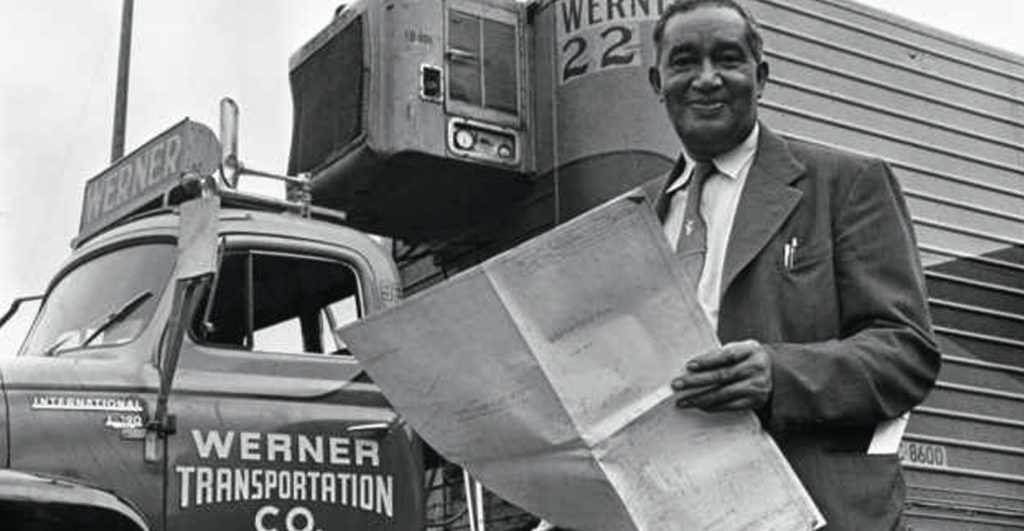
Frederick McKinley Jones – The “King of Cool”, and the father of modern mobile refrigeration.

Frederick McKinley Jones standing next to a refrigerated van circa 1950
Image credit: worldkings.org

Frederick McKinley Jones was a remarkable man, who battled a difficult upbringing and eventually became one of the great success stories of 20th Century America. 

Early Life

He was born in May of 1893 to parents of different races in Cincinnati Ohio, and it wasn’t long before his childhood had taken him down a difficult path. Jones’ mother had abandoned him and his father, and by the age of 7 Jones had been sent to live with a Catholic Priest in Kentucky, after his aging father could no longer care for him.

Little is known about these years in Jones’ life, apart from that his father died just 2 years after sending him away. Another year later, at the young age of 11, Jones decided to run away from Kentucky, and seek work in his hometown of Cincinnati.

Upon arriving back in the Ohio city, Jones managed to get by doing a variety of odd jobs and piecing together a wage. One of these jobs however, would be the making of Frederick McKinley Jones. He had began work as a cleaner in an automotive garage, sweeping floors and tidying tools, and over time developing a keen interest in the mechanics of motorcars.

This budding passion grew, and Jones spent several years working at the garage, steadily moving from janitor to apprentice, and eventually from apprentice to foreman. He had mastered the trade of vehicle mechanic by the age of 19, and had set himself up for greatness.

Pre-War

In 1912 Jones decided to leave the Cincinnati garage that had been his home for the better part of a decade, and set out to find work elsewhere, eventually landing at a farm in Hallock Minnesota. Here his job was to fix and maintain the farm’s vehicles, and this was also an opportunity for him to expand his knowledge of other technologies and machinery.

During his time in Hallock, America joined the First World War, and as a young male Jones was drafted to go and serve on the European continent. Jones’ service was no detriment to his learning though, as he was employed to make repairs to a wide variety of machines and other equipment.

Post War

After the war, Jones returned to the farm in Hallock and continued to learn as much as he could, this time in the field of electronics. His experience in the war had no doubt aided his learning, and before long he was embarking on a very large project. The town of Hallock had decided to fund a new radio station and they needed an engineer to fabricate the transmitter needed for the station.

Naturally Jones took to the challenge like a fish to water and before long the new Hallock radio station was operating successfully, relying every day on the remarkable talent of a man with no formal education. This new-found skill for electronics brought Jones onto the radar of a man called Joseph Numero, a leading name in the Cinema industry whose company made filming equipment. Numero hired Jones to improve the sound equipment made by Cinema Supplies Inc., based upon a device Jones had created on the farm in Hallock that could combine sound with motion pictures and revolutionised the cinema industry.

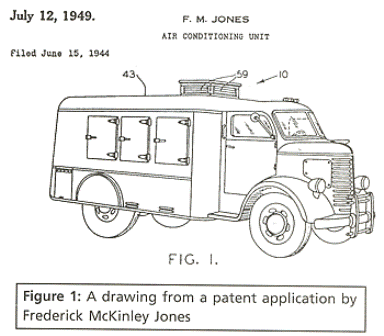
This friendship with Numero would soon turn into Jones’ greatest success. In 1938 Jones invented the first truly portable air cooling unit that was designed for vans (where all the predecessors had been mounted on trains due to their size). Originally designed for businesses transporting perishable foods, Jones’ units gathered success quickly as they allowed small shops to sell their wares much further-a-field, as opposed to before where they had only been able to service their immediate localities.

Following the successes of Jones’ invention, his friend Numero decided to sell Cinema Supplies Inc., and together they partnered a new company: the US Thermo Control Company, which later went on to become the Thermoking that we still use today!

The patent drawing for Jones' refrigerated van
Image credit: worldkings.org

World War 2

Like many other technology companies, the Thermo Control Company (TCC) found themselves benefitting from the necessities of war. With the outbreak of conflict in Europe, Africa and Southeast Asia the Army’s needs for rations, both food and medical, grew at an alarming rate. Jones and Numero were well suited to this growing need, as their vans could preserve supplies and take them further to the Army’s hospitals, or right onto the front line.

Specialist logistics units sprang up across the Army, including the aptly nicknamed “Penguin Fleet”, whose job it was to transport blood, medicine and food to ensure that the fighting lines were well provisioned, and the wounded received the treatment they needed. This vital service that TCC’s refrigerated vans were serving was well compensated, and by 1949 TCC had grown to be worth $3million, a mighty sum equivalent to 10 times that number today!

How have modern vans changed?

In truth, modern refrigerated vans haven’t changed their core mechanics much since Frederick McKinley Jones’ pioneered the technology. The units have become smaller and more efficient, and the insulation of the vans has become more effective, but the core concept remains the same!

The major modernisation in refrigerated vans has come in the vehicles that they are based on! As time has progressed, the trusty “white van” has become more and more accessible to smaller businesses, and with them the refrigerated conversions.

Commercial suppliers like Mercedes and Volkswagen have helped to create an industry aimed solely at providing transport for these small to medium sized companies, and combined with the modern Thermoking refrigeration units the transport of perishable goods has never been easier.

Where is the future of refrigerated vehicles headed?

With the advancements in electric vehicles, it is no surprise to see that refrigerated vans aren’t far behind the curve.

Nissan have already released their e-NV200 which can be readily converted, and we’re very excited to see what can be done with Mercedes’ eVito, as we have already used the traditional engine Vito to great effect!

Posted in Commercial Van, Ideas & Tips, Multifunction Power Systems, Refrigerated Van

HOW TO KEEP A REFRIGERATED TRUCK CLEAN AND IN GOOD CONDITION

As a business owner of a refrigerated trucks hauling fleet, you understand the importance of purchasing the best equipment. After all, your bottom line depends on your ability to provide fast and efficient reefer hauling services.

Another less evident issue involving reefer hauling is keeping a refrigerated truck in good condition. For transporting foods in particular, you must also maintain clean refrigerated medium box trucks to comply with Food and Drug Administration (FDA) regulations.

Learn how to keep your reefer fleet of trucks clean and in good condition with these maintenance tips for refrigerated trucks.

Utilize Truck Washes

A truck wash is your greatest ally in keeping your small refrigerated box truck in pristine hauling condition. For a medium box truck, target areas for the trailer wash-out include the floor, walls, drain holes and door crevices. The refrigerated box truck wash-out process must be documented to comply with regulations. In addition, if the trailer is made using wood, this needs to be treated to meet the Food Safety Modernization Act rules.

For reefer trucks, search for a truck wash that also provides reefer trailer wash-out services. An alternative is to handle cleaning your refrigerated trailer after every load. For the majority of truck drivers and trucking companies, the most cost-effective solution to maintaining a clean reefer truck is by outsourcing truck wash services.

Protect Refrigeration Units

The power source of a refrigerated trailer is the cooling unit. Increase the efficiency and lifespan of your equipment with a single move — turn off the cooling unit when loading and unloading freight. As the doors to a small or medium-size refrigerated box truck are constantly opening, the temperature is fluctuating inside the truck.

This puts extra work on the engine, which causes your drivers to use more fuel. In addition, when warm, humid air enters the truck, this could condense on the evaporator coil, interrupting the airflow and causing the unit to kick into defrost. By making this one change, you can save your company money and improve the lifespan of your reefer trucks.

Perform Routine Maintenance and Inspections

Refrigerated truck maintenance and service by a professional truck leasing company is another way to keep your truck in good operating condition. Maintenance protects against wear and tear and is the best way to identify early signs of malfunction. However, you should also do your part to perform truck inspections for your reefer fleet.

Each of your drivers should be conducting pre- and post-trip inspections. This is key to ensuring the refrigerated truck units are operating in optimal performance. Even the slightest temperature fluctuation can cause a driver to lose his or her freight to spoilage. By monitoring the truck temperature and refrigeration unit periodically on every delivery, your drivers provide front-of-the-line protection against truck breakdowns.

Maintain a Quality Reefer Fleet

Along with maintaining FDA compliance for refrigerated food hauling, a clean trailer speaks volumes about your trucking company. Maintain your medium box trucks and refrigerated trailers in the same way that you will maintain your customers’ freight. A clean reefer truck also allows your drivers to safely transport freight for your shipping customers. This provides your company with job security — all thanks to keeping your refrigerated truck in good condition.

Posted in Ideas & Tips, Multifunction Power Systems, News & Updates, Refrigerated Van

SAFE AND EFFICIENT TRANSPORT: WHY CHOOSE A REFRIGERATED TRUCK?

There are many circumstances under which you might need a refrigerated truck rental. Normal trucks are not climate controlled and you might have perishable items that require a specific level of temperature while being transported. Refrigeration is important to keep the products in good shape until they reach their destination.

Here are the top reasons you need refrigerated trucks for your business.

Products that Require Refrigeration During Transit

Some products require continuous refrigeration to stay fresh or effective. These include fruits and vegetables, freshly cut flowers, dairy, meat, and seafood, as well as chemical, hazardous, and pharmaceutical products.

It is ideal to use a refrigerated truck to transport these items, as you can maintain the right temperature throughout the journey. It’s better to pay for the service of a refrigerated transport carrier than to incur losses due to spoilage and damage.

Adhesives and Artwork

Most adhesives become ineffective when exposed to extremely high temperatures. Similarly, valuable paintings and other works of art require effective temperature control, as extreme heat can ruin them.

A range of other delicate products will benefit from being transported in a refrigerated truck. This type of shipment offers complete protection for all materials and items that are highly sensitive to temperature fluctuations. Refrigerated trucks also provide a clean transport environment for your shipments.

Transporting products is part of the operational processes of many companies. Whether you ship perishable items or dry goods, it’s important to make sure they will reach their destination fast and in good condition.

It is ideal to consult a reputable trucking service provider when you need to ship any product that requires temperature control. Depending on the shipment size, the prevailing climate conditions, and the distance, trucking companies can advise you on the type of truck that suits your needs.

Posted in Multifunction Power Systems

Engineers devise new method of powering hybrid heavy-duty trucks

According to the research, the concept involves using a plug-in hybrid engine system, in which the truck would be primarily powered by batteries, but with a spark ignition engine (instead of a diesel engine).

Washington: In new research, engineers have devised a new way of powering heavy-duty truck that could drastically curb pollution, increase efficiency, and reduce or even eliminate their net greenhouse gas emissions.

The study was presented at the annual SAE International conference meeting.

Heavy-duty trucks used for transportation across the world are virtually all powered by diesel engines accounting for a major portion of worldwide greenhouse gas emissions, but little has been done so far to curb their climate-change-inducing exhaust.

According to the research, the concept involves using a plug-in hybrid engine system, in which the truck would be primarily powered by batteries, but with a spark ignition engine (instead of a diesel engine).

That engine, which would allow the trucks to conveniently travel the same distances as today’s conventional diesel trucks, would be a flex-fuel model that could run on pure gasoline, pure alcohol, or blends of these fuels.

While the ultimate goal would be to power trucks entirely with batteries, the researchers said, this flex-fuel hybrid option could provide a way for such trucks to gain early entry into the marketplace by overcoming concerns about limited range, cost, or the need for excessive battery weight to achieve longer range.

The new concept was developed by MIT Energy Initiative and Plasma Fusion and Science Center research scientist Daniel Cohn and principal research engineer Leslie Bromberg

“We’ve been working for a number of years on ways to make engines for cars and trucks, cleaner and more efficient, and we’ve been particularly interested in what you can do with spark ignition (as opposed to the compression ignition used in diesel), because it’s intrinsically much cleaner,” Cohn said.

Compared to a diesel engine vehicle, a gasoline-powered vehicle produces only a tenth as much nitrogen oxide (NOx) pollution, a major component of air pollution.

In addition, by using a flex-fuel configuration that allows it to run on gasoline, ethanol, methanol, or blends of these, such engines have the potential to emit far less greenhouse gas than pure gasoline engines do, and the incremental cost for the fuel flexibility is very small, Cohn and Bromberg said.

If run on pure methanol or ethanol derived from renewable sources such as agricultural waste or municipal trash, the net greenhouse gas emissions could even be zero.

“It’s a way of making use of a low-greenhouse-gas fuel” when it’s available, “but always having the option of running it with gasoline” to ensure maximum flexibility, Cohn said.

The engine they propose for such a hybrid is a version of one the two researchers have been working on for years, developing a highly efficient, flexible-fuel gasoline engine that would weigh far less, be more fuel-efficient, and produce a tenth as much air pollution as the best of today’s diesel-powered vehicles.

In order to match the efficiency of diesel, a mix of alcohol with the gasoline, or even pure alcohol, can be used, and this can be processed using renewable energy sources, they found.

Detailed computer modelling of a whole range of desired engine characteristics, combined with a screening of the results using an artificial intelligence system, yielded clear indications of the most promising pathways and showed that such substitutions are indeed practically and financially feasible.

In both the present diesel and the proposed flex-fuel vehicles, the emissions are measured at the tailpipe, after a variety of emissions-control systems have done their work in both cases, so the comparison is a realistic measure of real-world emissions.

The combination of a hybrid drive and a flex-fuel engine is “a way to enable the introduction of an electric drive into the heavy truck sector, by making it possible to meet range and cost requirements, and doing it in a way that’s clean,” Cohn said.

Bromberg said that gasoline engines have become much more efficient and clean over the years, and the relative cost of diesel fuel has gone up so that the cost advantages that led to the near-universal adoption of diesel for heavy trucking no longer prevail.

“Over time, gas engines have become more and more efficient, and they have an inherent advantage in producing less air pollution,” he said. And by using the engine in a hybrid system, it can always operate at its optimum speed, maximizing its efficiency.

Methane is an extremely potent greenhouse gas, so if it can be diverted to produce a useful fuel by converting it to methanol through a simple chemical process, “that’s one of the most attractive ways to make a clean fuel. I think the alcohol fuels overall have a lot of promise,” Bromberg said.

“The engines are cheaper, exhaust treatment systems are cheaper, and it’s a way to ensure that they can meet the expected regulations. And combining that with electric propulsion in a hybrid system, given an ever-cleaner electric grid, can further reduce emissions and pollution from the trucking sector,” said Cohn.

Pure electric propulsion for trucks is the ultimate goal, but today’s batteries don’t make that a realistic option yet, Cohn said: “Batteries are great, but let’s be realistic about what they can provide.”

And the combination they propose can address two major challenges at once, they said, “We don’t know which is going to be stronger, the desire to reduce greenhouse gases, or the desire to reduce air pollution,” Cohn said.

Do you want to know more details about the custom van shelving and ranger shelving then please drop your questions in the comment section.

Posted in Multifunction Power Systems

5 Key Benefits of VMAC’s Multifunction Power System

VMAC’s Multifunction power system is one of the best ways to power your job site! Featuring electric, pneumatic, hydraulic and welding power in one tidy package, the Multifunction is an efficient and convenient way to power your equipment.

In this article, we’ll talk about 5 benefits that make VMAC’s Multifunction a smart choice for mobile operators who know how to get things done!

5. Design the exact system you want

Don’t settle for less or pay for more than you need! With VMAC’s Multifunction, you can design a multi-power system that meets your exact needs. Simply choose the components that are right for your work and we’ll put it together in one convenient multi-power design.

Here are some of the choices you get to make:

Power source

  • AC Generator + DC Welder
  • AC Generator only
  • No Generator or Welder

Hydraulics

  • PTO w/ 5, 8, or 10 GPM @ 3,500 psi (max) pump
  • PTO port only
  • No PTO

Fuel Supply

  • Transfer Fuel Pump
  • 7-Gallon Diesel Tank
  • None

Factory-Installed Options

  • Cold Climate Protection
  • Positive Air Shutoff System (PASS)
  • Terminal Strips for Generator/Welder
  • Receptacles for Generator/Welder

Case Color

  • Black
  • White

There are more than 2,000 possible configurations that you can design with VMAC’s Multifunction power system.

4. Easily switch between multiple tasks

You never know what you’re going to encounter on the job site, but the Multifunction ensures you’re ready to tackle it all. VMAC’s multi-power system ensures you’re ready to take on any task and allows you to quickly and seamlessly switch between welding, charging or boosting batteries, and operating both pneumatic and electric tools.

Small teams also benefit from the Multifunction’s ability to run more than one power source at a time. For example, one person could weld while another grinds, as the sturdy Kubota engine produces up to 23.5 HP.

Check out what one of our existing customers has to say:

“I am impressed with the versatility of the VMAC Multifunction Power System. I can very quickly and easily go from using the on-board air system to welding and air arcing. The unit has been great, reliable and easy to use. I would highly recommend one if someone was setting up a shop/service truck.”
Great West Equipment

To summarize, the Multifunction makes your job easier by providing a simple yet effective way to power numerous types of tools and equipment at a time.

3. Free up space on your truck

VMAC’s Multifunction system helps you save space by combining multiple power sources into one convenient package. You’ll be able to power all your tools and equipment, without needing to carry space-consuming welders, generators, air compressors, and battery boosters as separate components.

Use your extra space for other equipment, more tools, or additional storage compartments!

2. Reduce GVW by up to 400 lbs

A Multifunction power system allows you to reduce GVW by up to 400 lbs. VMAC accomplishes this in two ways:

  1. Combining multiple components into a single multi-power system uses space and weight more efficiently than having individual pieces of equipment.
  2. VMAC intentionally chooses components that are compact and lightweight, without compromising on power or durability.

This innovative approach to design has paid off, as VMAC created a multifunction system that is notably lighter than competing brands offering comparable multi-power systems:

VMAC 6-in-1 Multifunction570 lbs
Competitor A852 lbs
Competitor B832 lbs

1. Minimize vehicle maintenance & fuel costs

Turn your truck off on the jobsite and save big in engine hours and fuel costs! You also benefit from the VMAC’s Multifunction’s control system, which automatically idles the multi-power system’s engine up or down with air demand, and also turns the engine off and on, as needed. These smart features help keep your money in your pocket.

If you want to know more about the multi function power system and custom ladder rack in commercial vans then please write us by submitting your comments.