Posted in cargo van, Commercial Van, van insulation

Looking into van insulation

Gruau van insulation is supposed to stop or slow down the flow of heat or noise. An empty Sprinter is a big metal oven in the summer, trapping and amplifying the heat of the sun. During the winter it loses its heat quickly to the outside. The climate control in the dash can’t keep up with the massive area of the van.
Looking into van insulation

Everybody has varying requirements when it comes to camper vans insulation. Maybe you want a van that can accommodate two or three people or you need special amenities like customized cooling.

Evaluate your demands carefully before you build your own camper van insulation. Will you have to load stuff into the van regularly? Is the van for daily use? Such considerations are critical. A camper van insulation is a valuable asset, especially for a person who travels a lot.

Consider your Budget

The extent of the refurbishments that you can do when building a camper van will depend on your spending power. Every alteration from the insulation to the ventilation costs money. Set aside a budget so that you can design the camper van affordably.

Readymade kits offer cost savings because the refurbishments involve less work compared to handling everything from scratch. Remember to track expenses during the project. Don’t fit a stove that will take up a lot of space in the van. Pick the fuel that suits your budget, needs, and environment.

  • Conduction is where the heat moves through a substance. The van’s metal body is a very good heat conductor. Heat in one part of the body spreads to other places fast. 
  • The heat from the sun gets spread from the outside to the inside of the metal van walls by conduction. You stop conduction by making a thermal barrier. In other words, you use a substance that does not conduct heat well (some foams, for instance) to block the transfer of heat.
  • Radiation is where the heat is given off by a surface. You can put your hand near the inside van walls on a hot day and feel the heat being given off radiated even without touching them. 
  • The sun heated up the metal and now that heat is being re-radiated inside the van. Again, anything that blocks the heat from being radiated will be a good insulator.
  • Convection is where the heat is transported through the air. Once the sun’s heat gets radiated inside the van, it heats up the air in the van. Warm air is lighter, so it rises and pushes cold air down. 
  • That creates air currents to move the heat around inside the van. You stop convection by filling gaps so the air can’t be transported. If you stop air from moving close to the hot metal on the inside of the van, it won’t be able to warm up from the radiated heat and then move that heat inside through convection.
  • Insulation is measured by how good it is at preventing heat from getting through. The unit of measurement most people use is the R value. The R value measures how well a material stops heat from being conducted through it, but not how well it prevents convection or radiation.

How does noise move?

Sound waves hit the metal walls of your van. The walls flex. The flexing recreates the same sound on the other side. You also get some noise transferred from the road through the suspension and into the vehicle frame. That makes the wall panels flex (resonate) and create the same noise inside the van.

So to stop the sound, you need to stop the panels flexing as much as you can (“dampen” them), and then muffle any remaining sound energy they produce. The dampening is done by sticking relatively heavy butyl rubber and foil pads on any flexy metal surfaces. The muffling is done by using a layer of closed cell foam and if necessary a layer of free-floating heavyweight material such as mass loaded vinyl.

Just remember, you aren’t necessarily going for the same level of soundproofing as their products will offer. Also, some of your heat insulation products will help with noise insulation too, whereas others will not.

Posted in cargo van, Commercial Van

Home Delivery Van

Home Delivery Van
Home Delivery Van

One of the most recognizable and efficient home delivery van styles in the market today is the step van. It is far more than just a package or parcel delivery system. Step vans feature an open driving area, and more than enough room for packages, linens, and even foodservice packaging within their spacious cargo hold. Though originally built to serve package delivery operations, the step van now succeeds in serving markets both within and beyond the package delivery sectors.

Chassis

When researching step vans, your first vehicle considerations should include the size and volume of your delivery operation, as well as how the walk-in van will support those qualities. Most step vans come in half to one-ton configurations, and often feature increases in payload capacity, with respect to increases in chassis size. Material weight, coupled with your delivery frequency, is a deciding factor in choosing the proper walk-in van for your business, as well as in your team members supporting it.

Partition

The walk-in van cargo area delivers ample space for a variety of product and packaging types, but also provides the driver with the useful ability to access cargo from multiple entry points. Rather than repeatedly taking trips around the vehicle to access, the driver can now easily unbuckle, and enter the cargo hold through a sliding partition, effectively decreasing delivery time while increasing output. This value-laden accessory serves a dual-purpose in providing access to the cargo hold, while also serving as a protective barrier for the driver.

And while the product delivery aspects of your organization need to be fast, they also need to be safe. Once installed, the steel or aluminum partition ensures that any packages that happen to shift in transport will not harm the driver in any capacity.

Body Length

Often ordered in lengths ranging from 12 to 24 feet, the step van can accommodate a variety of product and material types within its roomy cargo area. Although it is extremely spacious and accessible, it’s also important to think about the unused space in your walk-in van, as much as the space that you do use.

Too much space can open your operation up to shifting products, and can actually damage your goods further than if all the products and packages were snugly-packed. On the other hand, too tight of a space can limit your operation and reduce efficiency in your deliveries. Be sure to identify your delivery needs, in order to maximize the output and final presentation of your delivered products.

Body Height

In addition to body length, interior height is a key dimension to consider when acquiring your operation’s ideal step van. The average step van features an interior height of around 80-85 inches and allows most operators to freely stand and walk about the cargo area without the risk of head or back injury. This increased height helps to keep your team healthy, efficient, and ready to deliver packages as you see fit.

Rear Door Type

When delivering with a step van, time (as always) means money, and finagling with inefficient door designs slows down even the most efficient of delivery operations. Most step vans are upfit with efficient rear swinging or roll-up style doors, and for good reason.

For one, both rear door styles feature designs that don’t interfere with accessing the cargo area. In cases where dollies of heavy boxes or bags of laundry may be delivered, this aspect of the step van proves instrumental in minimizing head and back injuries. Add a low-step bumper, coupled with a metal grab-bar for three-contact support, and your deliveries will continue to become safer, faster, and more reliable.

Cab Type

The walk-in van adds an even deeper focus on efficiency within the stand-or-sit cab style. This increased cab height allows your operator to choose between standing and sitting during operation and lends itself to the quick-access nature of the vehicle as a whole. When fast deliveries are required – and when aren’t they? – the ability to be ready to hop out of the cab as soon as the vehicle comes to a stop is largely untouched, in other delivery systems.

Posted in cargo van, Commercial Van, van insulation

CARGO VAN SHELVING IDEAS

CARGO VAN SHELVING IDEAS

Metal shelving systems come in many sizes and are often adjustable, so they can easily fit into a wide variety of vans. They are also more durable and easy to maintain than other types of shelving, such as wood, for example. That’s why the vast majority of cargo vans incorporate this first type of shelving.

Different materials can be used for metal shelving; these are most commonly steel, aluminum or composites. Traditional steel shelves tend to be more cost-effective up front and are very durable. Steel is the preferred choice for those carrying lots of heavy-duty equipment. 

For those who frequently drive on roads that aren’t in such great shape, it will keep your equipment and drivers protected. On the other hand, aluminum is lighter-weight and can help improve gas mileage and fuel efficiency. If you require lots of drawers and shelving to carry small parts, keeping the load light with aluminum or composites may be best.

Composites are sometimes favored because of their noise-reduction capabilities. Metal shelving can either be closed or open. While closed shelving units prevent items from falling and breaking, opened shelves allow you to quickly grab what you need. Custom van shelving systems for your cargo van provide an organization system tailored exactly to your needs. You get to create your own idea about what you want and then leave it up to the professionals to put together, to save you time and hassle.

Custom shelving is great for those working in more specific industries, such as electricians, plumbers, or pest-control workers, with unique equipment and needs. Deciding to make your own shelves will require more of your time and may appear less professional, but can save you money.

If you have the time and know how to build shelves in a cargo van, you can use plywood to make DIY custom shelving. One neat idea to try: build cabinets into the shelving for stuff you want to keep covered while you drive. Once you learn how to build van shelves yourself, you open the door to all sorts of conveniences.

Another convenient shelving trick is to build a shelf that runs the length of the van, like a false floor. This works for organizing large amounts of carpet, siding, or other long materials, that you do not want to stack. If you aren’t 100% confident in your skills or want to ensure optimal results, you may want to leave the van shelving installation to the professionals.

Posted in cargo van, Refrigerated Van, wheelchair van

5 Key Benefits of Owning a Wheelchair Accessible Van

5 Key Benefits of Owning a Wheelchair Accessible Van

When you have a disabled or special needs family member, simply getting around can be a challenge. Trips to the doctor or store in a car involve folding and unfolding the wheelchair can be difficult and uncomfortable for wheelchair passengers. Fortunately, these types of mobility problems can be avoided with the use of a wheelchair van.

Easier to Get in and Out of the Van

Smaller cars, trucks, and even minivans can make getting in and out very difficult for someone in a wheelchair. No more folding, unfolding, or cumbersome seat transfers – wheelchair vans make the process so much easier, with ramps and lifts that enable wheelchair passengers to safely and easily enter and exit the vehicle. Lowered floors and raised roofs and doors make getting in easy without bending over or tilting the wheelchair.

It’s also easier for drivers and caregivers to get around inside. A high roof conversion van makes it simple to check on passengers, tie down wheelchairs, and adjust equipment.

More Comfortable

Transferring a wheelchair passenger into a vehicle that is not wheelchair accessible can be painful and exhausting for both passenger and caregiver. It can put pressure on the shoulders, back, or both, depending on how the transfer is performed. A wheelchair van eliminates these issues with ramps and lifts for easy access. Tie-downs keep the wheelchair in place. And since disabled passengers can remain in their wheelchairs, the ride is more comfortable.

Wheelchair Ramps or Lifts

A wheelchair ramp or lift makes it easy for wheelchair users to safely enter and exit the vehicle. There is no need to transfer to a passenger seat or fold and stow the wheelchair. Depending on the vehicle, manual spring assisted ramp or power lift are available to accommodate the needs of passengers. 

Increased Safety

FR Conversions’ wheelchair passenger vans are also built for ultimate safety. A secure Q’straint wheelchair locking system keeps wheelchair passengers secure while riding in the van. They include a stable tub floor and tie-downs, so your wheelchair-bound passengers will experience a safe ride. 

Also, our conversion vans are subjected to rigorous safety tests. They are crash-tested in five locations: front, rear, driver’s side, interior, and undercarriage. Each of the requirements set by the federal government and insurance industry are exceeded. Taking trips outside the house doesn’t have to be a struggle. They are easy to get in and out of, comfortable, versatile, safe, and durable.

Commercial wheelchair vans are widely used to transport wheelchair passengers of large numbers comfortably and safely to their destination. Lifting, transporting, and then dropping the wheelchair user’s safety comes with huge responsibility hence when purchasing your commercial wheelchair accessible vans, paratransit conversions, buses or ambulate choose a vehicle with all the latest features and accessories and have peace of mind.

Posted in cargo van, van insulation

Van insulation

Van insulation
Van insulation

Building out your van conversion is a complex process with lots of moving parts. While it’s fun to choose paint colors and flooring, one of the most important elements is actually something you never see: insulation. Ok, insulation might not be all that exciting but it’s a key player for year-round comfort. Whether you’re spending time in cold weather or beating the heat in the summer, choosing the right van insulation is critical.

There are lots of different ways to insulate your van, ranging in price and effectiveness. With so many different options, searching for the best type of insulation can be confusing, so we’ve done the work for you. With lots of research under our belts, we’ve put together this camper van insulation guide to summarize our findings and explain what worked best in our van build. 

Insulation or van insulation is one of the most important steps of any van build, and it pays to take the time to do it right. There’s also a lot of confusion and debate over the best way to insulate a campervan, and it can be tough to wade through all the opinions and figure out what to do.

Van life is commonly associated with willy-nilly travel and glamorous images on social media, but the reality of this lifestyle is often far different than it is portrayed. Van life is the process of taking control of your life. It’s about leaning into your fear of the unknown in order to pursue what makes you feel alive.

It’s about meeting strangers from all over the world and accepting them for their differences, while openly seeing the commonalities we all share with each other. There are many reasons why people choose this lifestyle. Some do this part time, some for a temporary road trip. Still others sell off their belongings and commit to van life full time.

Posted in cargo van, Commercial Van, Refrigerated Van

Reasons Your Business Needs a Refrigerated Van

Reasons Your Business Needs a Refrigerated Van

Many modern products require not just secure transport but precise temperature control as well throughout their journeys to clients. Floral arrangements, pharmaceuticals, food and beverage products, and more benefit from delivery in refrigerated vehicles.

These products are the foundation of a cold supply chain that millions of people rely on. Their careful preservation is of paramount importance for both customer health and satisfaction. There are many types of vehicles that provide insulation or refrigeration. Among them, refrigerated vans have distinct advantages over a larger reefer truck for some companies.

When hiring an outside company, there are natural boundaries between your business and theirs. Though they operate as an extension of your company, they have their own priorities and other clients that they work for.

An external party cannot work according to your schedule all the time, particularly when an issue comes up that delays things. Operating your own vans affords you the flexibility to work according to your clients’ needs without the limitations of a third party. The efficiency you gain in doing so is another reason your business needs a refrigerated van. By controlling these logistical elements, you ensure deliveries consistently get to your customers when they expect them.

The refrigerated van is such a more efficient choice than the classic box truck that it begins to cut costs. The compressor in a truck has to work double time just to keep the product at temperature, due to the size and seals of the rear compartment. The horribly inefficient seals for the back door cause the cold to leak out and let warmer air in.

Be aware of your budget regarding refrigerated home delivery van and how much interest and monthly payments will cost. Some commercial truck and home delivery van offer various financing options that you could consider. Another marked advantage is a refrigerated van’s relative maneuverability.

More compact than a truck, a van can reach where a truck can’t, often allowing you to deliver your product closer to a customer’s point of entry. This cuts down on the time your cool product spends in an unregulated, potentially hot environment. Also, they’re simply easier for your staff to operate.

Though this is a peripheral reason to buy a refrigerated truck, you can’t ignore the unique marketing opportunities of operating your own vehicle or fleet. Using your own branded vans gives your business more outside visibility, increasing would-be customers’ knowledge of your business. Over time, this has an overall positive effect on your business.

Posted in cargo van

SHELF HELP: THE ULTIMATE GUIDE TO VAN SHELVING

SHELF HELP: THE ULTIMATE GUIDE TO VAN SHELVING

Have you ever seen a cargo van that looks like the owner’s business exploded inside it? Imagine the impression a messy scene like that can make on a customer or potential customer. Plus, it’s not a fun or safe work environment. Don’t let this be your van!

Now picture a perfectly organized van with every tool and piece of equipment in its own designated space and plenty of room to get things done. Van customization and organization can keep you focused and help you avoid losing equipment or running late trying to find it. There are many ways to improve organization, but installing shelves is a great place to start. With the right shelving, your van will not only be more organized, but more professional-looking, enjoyable and safe.

AN INTRODUCTION TO VAN SHELVING

One of the primary reasons businesses choose vans over trucks is the ease of creating a custom, enclosed and mobile workstation to conveniently get work done on-site and keep employees and equipment protected from the elements.

Van interiors can be customized to meet the needs of many specific industries and professions, from plumbers to electricians and many more. Perhaps that’s why full-sized vans are one of the fastest-growing and most-lucrative vehicle types.

No matter what industry you’re in, you’ll likely require shelving and storage in your van interior, and there are a wide variety of options to consider. Adjustable metal shelving is a great option, and comes in a wide variety of sizes to meet your storage needs.

Open shelving is ideal for storing tools or materials that you need to access regularly and easily. For more protected storage, there are plenty of storage modules available that combine drawers, cabinets and shelving to keep everything you need secure and organized.

BENEFITS OF COMMERCIAL SHELVING FOR YOUR BUSINESS

Shelving may seem like a simple addition to your van, but it can make a world of difference for your business and your day-to-day tasks. Commercial van shelving is popular for many reasons, including the following benefits:

  • A well thought-out and organized workstation can improve your efficiency and productivity. By getting more done more quickly, you can thereby increase your revenue and profitability.
  • With all your tools and equipment in their designated spots, you’ll have more open space to work with.
  • An organized van looks more professional and reflects positively on your business and brand image. Each passerby is a potential customer, so you want your van to be neat and organized at all times.
  • Loose tools and equipment present risks and hazards. Storing everything properly and securely will improve safety while on the road and on the job.
  • Knowing exactly where everything is kept in your van will allow you to keep a more accurate inventory.
  • Having all your equipment and tools secured can reduce noise and damage while you drive.
  • Studies show that visible clutter can cause mental clutter. A clean and organized work space can lead to a more enjoyable and fulfilling work life.

With these great benefits in mind, it’s clear why most work vans view shelving as a must. Today, a growing number of small business owners seek customized van shelving. Custom van shelving helps many companies increase efficiency. By labeling essential tools and supplies such as electrical components, plumbing parts, keys, nails, cleaning products, or other loose materials.

Posted in cargo van, Van Ladder Racks, wheelchair van

Is Your Handicap Van Maintenance Up to Date?

Is Your Handicap Van Maintenance Up to Date?

No matter where you are or what you are doing, when your vehicle breaks down it causes a big inconvenience. You have to figure out where and how to get it fixed and you may need to cancel plans or appointments while you find alternate transportation methods.

But for wheelchair users, their handicap van breaking down usually leads to a loss of independence, as alternate transportation may not be an option at all. And while vehicle breakdowns cannot always be altogether avoided, there is one thing that vehicle owners can do to help prevent them. Simply put it is routine maintenance.

Routine vehicle maintenance helps keep a vehicle in proper working order and helps to reduce the likelihood of any unexpected breakdowns caused by mechanical or technical components being in need of repair. So, how do you know if your van’s maintenance is up to date? In this post, we will cover that question and more. We will take a look at why maintenance is important for a wheelchair van, ways owners can help with the upkeep at home, how to know if the routine maintenance is up to date and why wheelchair van owners should schedule their next service appointment.

The Importance of Handicap Van Maintenance

Vehicle maintenance is one of the most important things any owner can do for their vehicle. But, it is even more important for wheelchair van owners. This is because converted vans have additional mechanical components beyond that of a standard vehicle from the original equipment manufacturer (OEM).

Conversion features added to vans like hand controls, ramps, lifts, tie down devices, transfer seats, among others require specific maintenance to remain in working order. By maintaining these features and the vehicle as a whole, wheelchair users are less likely to run into costly unexpected repairs.

Ways to Help Upkeep Your Wheelchair Van At Home

Routine maintenance by a service technician should be completed roughly twice per year. But outside of those service appointments, there are ways to help with the upkeep and maintenance of a wheelchair van at home.

Start by checking the interior and exterior lights (including headlights and tail lights), checking fluid levels (including but not limited to engine oil, windshield washer fluid, engine oil and transmission fluid), and checking tire tread depth and pressure. These should be checked on a daily or at least weekly basis if the vehicle is not being used every day.

Prior to using the van each time, check that the sliding door is free of debris, check the door alignment to ensure they open and close smoothly, lightly lubricate the kneeling chain, check the ramp to ensure it can be operated without sticking or jamming, check the wheelchair tie down tracks to ensure they are clear of debris, and check the hinges on the ramp (if it is a folding ramp). Folding ramps should be sprayed on the upper and lower hinges with teflon based lubricant and in-floor ramps should have their hinge sprayed with teflon based lubricant, as well (as needed).

Every time the vehicle is running, make sure to listen to ensure the engine sounds normal and there are no strange noises or rattling. Additionally make sure to check the electronic components like the navigation display, back up camera, etc. to ensure they are in proper working order.

Why Schedule a Routine Maintenance Service Appointment?

While at home measures can truly help the longevity of a vehicle’s maintenance, regular service appointments are the only sure thing that can help vehicle owners avoid unexpected costly repairs and keep their vehicle out on the open road. At a vehicle service appointment, the technicians will conduct any oil or fluid changes that need to be completed, they will check the battery and also rotate the tires and adjust the tire pressure.

They will also check for any OEM recalls that may require work to be completed on the vehicle. Some recalls by Dodge, Chrysler, Ford, GMC or Toyota can be completed during routine maintenance appointments, but other more time consuming fixes may require an additional appointment. The technician will go over these options should a recall arise during a service visit.

For a wheelchair van, the service appointment will also include conversion equipment maintenance like checking the sliding door wiring and alignment, lubricating and checking the hand controls, tightening and lubricating the 6-way trackless transfer seat, checking the tie down device and alarm are in proper working order, and much more based on each unique conversion van equipment and needs.

Posted in cargo van, Ideas & Tips

Why Do I Need Work Van Flooring?

Why Do I Need Work Van Flooring?

Work van flooring protects your investment, provides a safe environment for your employees, and makes sure your work van is the ultimate work tool.

Work Van Flooring Is Important For a Professional Workspace

Many people consider shelving, workbenches, ladders, and conduit carriers to be the goal of upfitting, and an organized work van is important, but the flooring for vans should never be overlooked. In fact, work van flooring is the base where all upfits should start. The right flooring is certainly visually appealing, but the benefits go well beyond simple aesthetics.

This blog will take a look at why work van flooring is vital to protecting your investment and providing a safe work environment for your employees, while also exploring popular flooring materials and other design considerations that will make your work van the ultimate work tool.

CUSTOM WORK VAN FLOORING IS THE FOUNDATION OF YOUR WORK VEHICLE

Most factory-direct vehicles feature bare-metal flooring. This is mainly because manufacturers know that fleet operators and van owners have specific flooring needs. Flooring is an integral part of most upfits and here’s why:

Protect Your Investment – When you bring your van to the job site, whether it be for plumbing, HVAC, construction, landscaping, or dog washing, it is going to take a beating, and the flooring will most likely be the target of most of the abuse. Hammers get dropped, remainders of conduit get tossed on the floor, equipment can leak chemicals, and a sharp turn or sudden stop can scatter parts. Work vans even double as mobile workstations, which means they need to be treated with the same care and forethought as a stationary workspace. Flooring is a wise investment that absorbs this damage, so you never have to worry about accidents spoiling the floor or wear and tear taking its toll. Even small punctures in the floor can allow chemicals and moisture to get beneath the floor and cause major damage in the long run. By protecting your vehicle, you protect its resale value.

Provide a Safe Workspace – It’s no secret that safety is paramount, but one fact that is often overlooked is that everything you do to enhance safety is also an investment in efficiency and productivity. Work van flooring can prevent slips, especially in wet weather or at muddy or icy job sites. Losing your grip in a work van when surrounded by metal tools and caustic chemicals is a major risk. Rubberized and grip flooring provides traction, which allows staff to easily and safely load and unload large and bulky items with ease. Never take chances with the health and safety of employees; install sturdy, rubberized flooring to keep workers safe on the job. 

Reduced Noise – Work vans are loud. Even with the best shelving and equipment storage possible, items will still rattle around in the back. Rubber work mats and flooring stop shifting cargo and help dampen noise from the cargo area, reducing distractions and further increasing safety. 

Easy to Clean – Work vans get messy, and bare metal floors aren’t designed to be cleaned, especially if they have been beaten out of shape and worn down by rough use. Custom van flooring is molded to fit specific vehicles, can withstand the dirt, grime, and dust, and can be cleaned with ease.

Flooring Can Be the Difference Between an Old, Worn-Out Van, and One that Looks Brand New

Your work van is a representation of your business, and a van that can’t stand up to wear and tear or always has a dirty, disorganized appearance is a bad sign for customers. Not only is work van flooring easier to clean, but it also looks much nicer than the bare metal from the manufacturer. Custom van shelving ideas delivers a polished, professional appearance that makes your van look and feel well-maintained. A company that takes good care of its equipment and tools also takes care of its customers.

The Styles of Cargo Van Floor Protection

Rubberized Cargo Van Mats – Rubber mats are cut for specific vehicle models and wheelbases. They are a great option for upfitters that need the protection of rubberized flooring but the flexibility to provide great traction while still making it easy on knees. Rubber is shock absorbent, strong, and sturdy enough to maintain good looks for a long time. Rubber flooring for cargo vans is an important upgrade. 

Composite Van Flooring Material – Composite materials combine the anti-slip safety of rubber with enhanced protection from dropped tools and general wear and tear. Layered with a rubberized top for traction, a mesh center for flexibility, and a TPO bottom for strength and durability, they come in panels of two or three for easy installation depending on the wheelbase of your vehicle.

At Advantage Outfitters, we excel at helping you get the most out of your work van build, from the floorboards up. We offer competitive online prices, quick shipping times, and personalized service that guides you through the entire upfitting process and helps you customize one van or a fleet of 100 or more. Call to speak to one of our experts or head to our how to buy page for more information about how we can help you get the ultimate work tool that will transform everything you do.

Posted in cargo van, Commercial Van, Van Ladder Racks

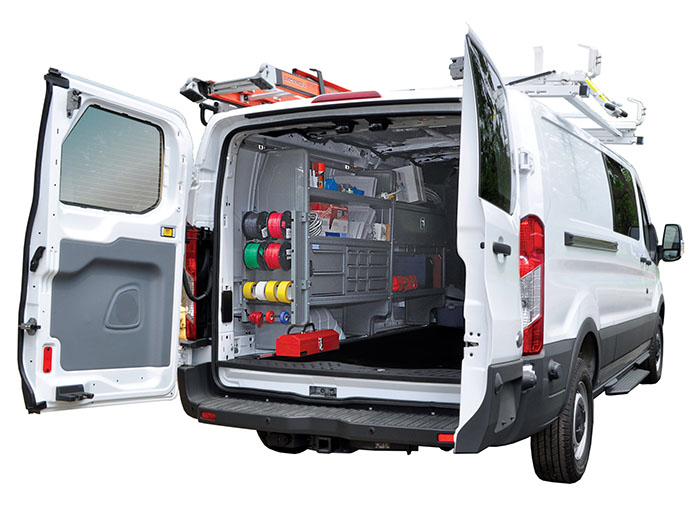
Utility Van Storage Organizer

Utility Van Storage Organizer

Public utility maintenance vans are always on the go, whether you work in electricity, water, natural gas, sewage, phone lines, etc. Quality utility van organization is vital to a safe and productive environment for you and your workers.

Maximize Storage Space With Utility Van Organizers

Shelving and storage systems allow you and your team to maximize cargo space to its fullest potential, increasing productivity and enhancing employee safety.

WORK SMARTER WITH SHELVING UNITS

Shelving units and packages help you maximize your vehicle investment. Ranger Design shelving systems are innovative, tough, and economical. They’re also backed with a lifetime installation warranty, which allows you to transfer them from one vehicle to another if your van breaks down.

PUT ESSENTIAL TOOLS IN DRAWER CABINETS

Van storage drawers provide safe storage and easy access to all of your most crucial utility tools without having to enter the van. Storage drawers are modular and customizable to fit a specific space in your van; they’re lightweight and can be individually locked for additional protection.

Side Door Drawer Systems offer lockable tool drawers and parts drawers, which are easily accessible outside the van. Compact Drawer Cabinets and other cabinet options are also available; however, they take up more space in your van’s cargo area. Compact Drawer Cabinets are typically used for hand tools and hardware parts.

KEEP SMALL PARTS HANDY WITH CASE STORAGE UNITS

Parts storage cabinets are handy and allow you to carry the necessary tools to the jobsite easily. Without having an efficient place to store pieces of equipment, the van can get disorganized and chaotic. Parts keeper units are an excellent solution for your trailer organization because they’re universal and can fit in any van.

How To Organize a Utility Van

In addition to shelving units and packages, there are other ways to organize your utility maintenance van.

IMPLEMENT HOOKS AND CABLE CADDIES

Van shelving ideas is one of technique to put your cables, cords, hard hats, etc., organized. They keep everything you need in one place, and you’ll always know where to locate them. Installing hooks and cable caddies outside of your shelving, closest to the rear doors, making them easily accessible and allowing you to retrieve them from outside the van.

TAKE ADVANTAGE OF REAR DOOR SPACE

Often, many people forget to utilize rear door space, which can be crucial for an efficient utility maintenance van setup. There are many ways to utilize door space, but its always recommend to use back doors as additional storage. Rear door space is a great location to store essential tools and equipment, whether it’s a drill, shovel, manhole hook, pliers, etc.

INSTALL LADDER RACKS

Van ladder racks are an efficient way to transport ladders because they allow you to maximize your interior van space for other components. Ladder racks are secure for transit yet easily accessible when you need them. These ladders are suitable for high-roof vans.

Both ladder rack options enable single-person operations, which means you don’t need multiple workers to help bring a ladder down or secure it back up to the roof. They both also offer padlock security options for additional security when you’re away from the vehicle.

KEEP EQUIPMENT CHARGED WITH DC/AC POWER INVERTER SYSTEMS

Utility maintenance workers are always on the road, driving from one jobsite to another. DC/AC Power Inverter Systems enable your workers to use and charge required tools and equipment for the project from the van. This eliminates the issue of having to find a power source at the jobsite. Power inverters turn your van into a self-sufficient workstation that’s capable of handling any problem you may run into.

Its always suggest to use Low-Frequency (heavy duty) Power Inverter/Charger Systems for utility maintenance vans. Their surge ratings are up to 16,000W; there are also hardwire and breaker box options for multiple outlets. The unit’s built-in charger enables shore power options up to 30A.