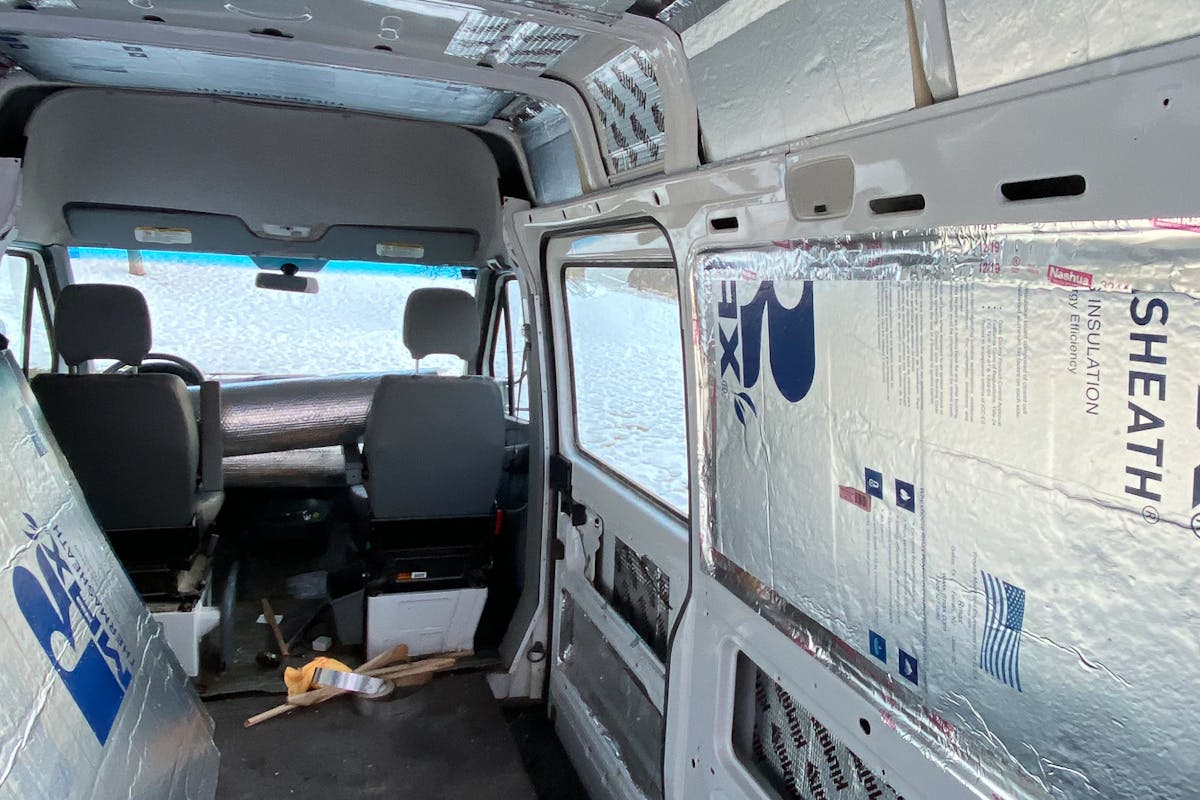
Knowing how to heat your van in winter is essential to comfort and overall enjoyment when living in a van. There is more involved than grabbing a portable heater and hitting the road. It may go without saying, but the most effective way to avoid the cold is to head south for the winter. If you do happen to find yourself in a colder area, there are a few common and affordable options to heat your van.
The five most common heating solutions for people in vans, RVs, or tiny houses are: electric heaters, wood stoves, propane, butane and diesel heaters.
Each has their advantages and disadvantages and it’s important to come up with a heating solution that’s tailored to your needs. What may work for one van might not be economic or efficient for others.

Alternatives To Heating Your Van
Proper insulation is the most important factor keeping your van warm. Before turning on a heater be sure to insulate the walls, floors and windows of your van. The more insulation involved, the less energy you need to spend keeping warm. Spray foam and silicon caulking are your friend.
If you do not have the money or means to do a full van insulation, a cost effective and fast solution is to purchase insulation panels for the windows. Insulation panels are typically made out of reflective foil that can be stuck to the glass.
A slight increase in your van’s temperature will be noticeable with just this simple step. Not to mention, insulation panels are great for privacy. No more peeping neighbors!
Wear Quality Gear
A few must-have winter items can make a huge difference in your comfort level.
Feet: Always keep a pair of warm socks or slippers nearby.
Wool: Wool is tried-and true material because it can retain heat even when wet. Wool fibers are also durable and made to last for years. The makeup of wool fabric allows for small air pockets within the fibers which increases the insulation level significantly compared to cotton.
Head: Keep your head and feet covered against cool drafts. Your head loses more heat than the rest of the body when left uncovered so don’t neglect this crucial body part!
Blankets: Store lots of blankets and duvet covers within the van. Many people choose to sleep in a high-quality sleeping bag that is rated to zero degree weather.
Be aware that even the highest quality sleeping bags on the market are rated for survival. They are not rated based on a comfort level. What this means is if the bag is rated for 30 degree weather, you will not freeze in 30 degrees. However, this doesn’t mean you will be cozy all night.
Layers: When planning your sleeping set up, use layers. You may have one blanket that works well in the summer, one sleeping bag for the fall, and an extra comforter that you can combine with all three for extra cold nights.
Add this to a good hat and socks and you will be able to adjust for most situations.
Warm Yourself With The Hot Water Bottle Method
If you happen to find yourself on a cold night with no Mr. Buddy heater around hot water bottles are a cheap and easy way to stay toasty. Simply boil some water and pour it into a water bottle or covered container that you can use to heat the bed or lay next to. Water bottles can stay warm for up to 6-8 hours at night and may be all you need.
Cover the bottle with a towel or cloth while pouring warm water inside, use extra caution not to burn yourself. Make sure the lid is twisted on tightly so there are no spills. A word of warning: Do not overfill the water bottle. ¾ full is all that is necessary to keep hot.
Finally, never use a hot water bottle at the same time you are using an electric blanket for heat. You do not want to take the risk of water and electricity coming into contact with each other.

Electric Heaters
If you are parked in a friend’s driveway or have the luxury of a campsite with hookups, electric heating is a great option. Electric heaters are lightweight, emit no sound, have no smell, and are safe to use in tight spaces.
There are many different types of electric heaters with the most common being ceramic, infrared, and oil radiators. Although they may seem like the ideal solution, do not assume your van’s battery will keep you warm all night and startup in the morning – it won’t.
Ceramic heaters can be a great option if you have a power source. Electric heaters produce a consistent heat output that can be easily adjusted. Plus, they will expel hot air in one direction allowing you to aim the heat where you need it.
Most electric heaters will range between 500 and 1500 watts. The lower the wattage, the longer it will take to heat an area. Electric heaters are relatively inexpensive to purchase, often they can be found for under $50. Once you own one, it’s just the cost of electricity you need to worry about.
When running an electric heater there are a few things you need to remain cautious about. Many heaters have safeguards built-in to avoid overheating or tipping over. Being in a small area like a vehicle, you should be aware of your surroundings to avoid burns. In addition, not all electric heaters are quiet, so be prepared for a soft hum.

 Commercial Van Solutions
Nice post!! this is definately going to help me for future. I really want to appreciate you for this quality work.
LikeLiked by 1 person
Wow this blog is fantastic i love reading your articles. Keep up the good work. Many individuals are searching around for this information, you could aid them greatly.
LikeLiked by 1 person
Thank you for sharing good knowledge and information. Its very helpful and understandable, as i was looking for this information since long time.
LikeLiked by 1 person
Found your post interesting to read. I can’t wait to see your post soon. Good Luck with the upcoming update. This article is really very interesting and effective.
LikeLike